


More than 100 people walked under indoor artificial trees and on wooden boards mimicking forest trails with green plants alongside them and sounds of insects in the air, as they learned about Taiwan’s forests and nature conservation in a public exhibition at Huashan Creative Park in Taipei yesterday afternoon.
In celebration of the Republic of China’s centenary and the UN’s International Year of Forests, the Forestry Bureau opened an exhibition on Friday to share with the public the history, challenges, policies and future prospects of forestry in Taiwan.
At the opening ceremony, Forestry Bureau Deputy Director-General Yang Hung-chih (楊宏志) said that because of the unique geological environment in Taiwan, 58 percent of the country’s land was covered with forests, so forests have always linked together life on the island and thus hold treasures of cultural, social, economic and ecological benefits.
Yang also said the exhibition would introduce the diversified aspects and roles of forests, not only the ecology of abundant species, land security and recreational usage, but also their important roles in maintaining water sources and carbon sequestration — the capturing of carbon dioxide from the atmosphere.
The exhibition is divided into eight sections by topic, such as the technology of aerial photography and remote sensing; 100 recommended forest trails and 18 National Forest Recreation Areas; forestry culture and eco-friendly products; biodiversity; as well as other issues pertaining to ecological engineering and threats from invasive alien species.
Basic facts about Taiwan’s ecosystem were revealed, telling visitors there are about 950 million trees, more than 5,300 species of animals and plants, an average of 2,510mm of rainfall per year (about 3.44 times more than the world’s annual average) and that forests holds 26 percent more water than farmland in the country.
Visitors enjoyed a hands-on experience to understand how aerial photography and remote sensing functions in natural resource and disaster investigations. Numerous colorful photographs, samples and videos of animals and plants from forests were displayed, as well as handmade artifacts made of wood, sponge cucumber, seeds and other natural materials. Some visitors gazed at terrain models while guides explained the design and actual effects of different types of fish ladders.
To emphasize the concept of forest protection and carbon reduction, all exhibition displays and stages were made from recycled materials and could be recycled after use, the bureau said.
The exhibition is free and runs through Saturday. It is open from 9:30am to 6pm. Lectures and activities for parents and children will be held throughout.
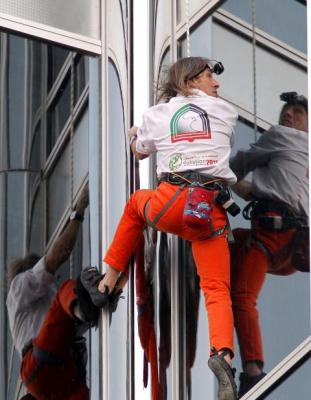
Alain Robert, known as the "French Spider-Man," praised Alex Honnold as exceptionally well-prepared after the US climber completed a free solo ascent of Taipei 101 yesterday. Robert said Honnold's ascent of the 508m-tall skyscraper in just more than one-and-a-half hours without using safety ropes or equipment was a remarkable achievement. "This is my life," he said in an interview conducted in French, adding that he liked the feeling of being "on the edge of danger." The 63-year-old Frenchman climbed Taipei 101 using ropes in December 2004, taking about four hours to reach the top. On a one-to-10 scale of difficulty, Robert said Taipei 101

Nipah virus infection is to be officially listed as a category 5 notifiable infectious disease in Taiwan in March, while clinical treatment guidelines are being formulated, the Centers for Disease Control (CDC) said yesterday. With Nipah infections being reported in other countries and considering its relatively high fatality rate, the centers on Jan. 16 announced that it would be listed as a notifiable infectious disease to bolster the nation’s systematic early warning system and increase public awareness, the CDC said. Bangladesh reported four fatal cases last year in separate districts, with three linked to raw date palm sap consumption, CDC Epidemic Intelligence
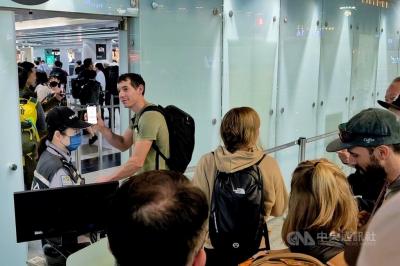
US climber Alex Honnold left Taiwan this morning a day after completing a free-solo ascent of Taipei 101, a feat that drew cheers from onlookers and gained widespread international attention. Honnold yesterday scaled the 101-story skyscraper without a rope or safety harness. The climb — the highest urban free-solo ascent ever attempted — took just more than 90 minutes and was streamed live on Netflix. It was covered by major international news outlets including CNN, the New York Times, the Guardian and the Wall Street Journal. As Honnold prepared to leave Taiwan today, he attracted a crowd when he and his wife, Sanni,
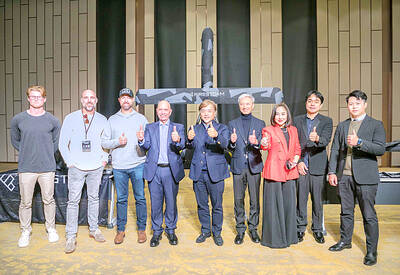
Taiwanese and US defense groups are collaborating to introduce deployable, semi-autonomous manufacturing systems for drones and components in a boost to the nation’s supply chain resilience. Taiwan’s G-Tech Optroelectronics Corp subsidiary GTOC and the US’ Aerkomm Inc on Friday announced an agreement with fellow US-based Firestorm Lab to adopt the latter’s xCell, a technology featuring 3D printers fitted in 6.1m container units. The systems enable aerial platforms and parts to be produced in high volumes from dispersed nodes capable of rapid redeployment, to minimize the risk of enemy strikes and to meet field requirements, they said. Firestorm chief technology officer Ian Muceus said


 RSS
RSS