


Local sushi bars that import fish from Japan yesterday tried to ease consumers’ concerns about eating food potentially contaminated by radioactive fallout following explosions at a nuclear power plant on Japan’s northeastern coast.
The Fukushima Dai-ichi nuclear power plant is located in northeastern Honshu, which is known for its fish and fishery products. Radiation levels at the plant have been surging after it was disabled by a major earthquake and tsunami on Friday.
However, Japanese restaurants in Taiwan said that not all of their ingredients come from that part of Japan, adding that given transportation and logistical concerns, they stopped buying from suppliers in the area soon after the earthquake struck.
“We stopped purchasing from quake-affected areas of Japan one day after it hit and started buying things like scallops from farmers in Hokkaido, a more remote region,” said Chang Yen-chuan, spokesperson for the Mitsui Food and Beverage Enterprise Group, owner of several well-known Japanese restaurants in Taiwan.
“We have decided to absorb the extra costs of transportation of the scallops and have no immediate plans to raise prices,” Chang said.
Chang advised customers not to panic because few of the ingredients the restaurants use originate from the disaster-hit area.
Sushi Express Group, a company that manages 143 sushi restaurants nationwide, said its business had not been affected because it only imported salmon roe and scallops from Japan.
“Our fish comes from Norway and Taiwan mostly,” an executive at the group’s headquarters said. “Our last stock came in before the earthquake and our inventory can last until summer. We also have a contingency plan to change suppliers.”
To reassure consumers, Sushi Express has set up signs outside its restaurants stating that it had enough supply to meet demand and that its food is free of radioactive substances.
Another sushi bar that serves cheaper set meals in Taipei said it uses only locally supplied fish.
“Taiwan has higher quality fish than Japan,” said the restaurant’s owner, who identified herself only by the surname Wang. “I’ve also heard that the shortage in Japan because of the earthquake and the tsunami could trigger an increase in fish exports by Taiwan.”
Based on international customs regulations, fresh produce from contaminated areas should not be harvested, the Food and Drug Administration said.
The agency added that it would conduct random inspections of food shipments from Japan at their point of entry to safeguard food safety.
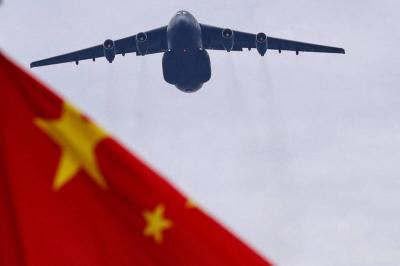
Beijing could eventually see a full amphibious invasion of Taiwan as the only "prudent" way to bring about unification, the US Department of Defense said in a newly released annual report to Congress. The Pentagon's "Annual Report to Congress: Military and Security Developments Involving the People's Republic of China 2025," was in many ways similar to last year’s report but reorganized the analysis of the options China has to take over Taiwan. Generally, according to the report, Chinese leaders view the People's Liberation Army's (PLA) capabilities for a Taiwan campaign as improving, but they remain uncertain about its readiness to successfully seize

Taiwan is getting a day off on Christmas for the first time in 25 years. The change comes after opposition parties passed a law earlier this year to add or restore five public holidays, including Constitution Day, which falls on today, Dec. 25. The day marks the 1947 adoption of the constitution of the Republic of China, as the government in Taipei is formally known. Back then the Chinese Nationalist Party (KMT) governed China from Nanjing. When the KMT, now an opposition party in Taiwan, passed the legislation on holidays, it said that they would help “commemorate the history of national development.” That

Taiwan has overtaken South Korea this year in per capita income for the first time in 23 years, IMF data showed. Per capita income is a nation’s GDP divided by the total population, used to compare average wealth levels across countries. Taiwan also beat Japan this year on per capita income, after surpassing it for the first time last year, US magazine Newsweek reported yesterday. Across Asia, Taiwan ranked fourth for per capita income at US$37,827 this year due to sustained economic growth, the report said. In the top three spots were Singapore, Macau and Hong Kong, it said. South

Snow fell on Yushan (Jade Mountain, 玉山) yesterday morning as a continental cold air mass sent temperatures below freezing on Taiwan’s tallest peak, the Central Weather Administration (CWA) said. Snowflakes were seen on Yushan’s north peak from 6:28am to 6:38am, but they did not fully cover the ground and no accumulation was recorded, the CWA said. As of 7:42am, the lowest temperature recorded across Taiwan was minus-5.5°C at Yushan’s Fengkou observatory and minus-4.7°C at the Yushan observatory, CWA data showed. On Hehuanshan (合歡山) in Nantou County, a low of 1.3°C was recorded at 6:39pm, when ice pellets fell at Songsyue Lodge (松雪樓), a


 RSS
RSS