


Aboriginal and human rights activists yesterday protested the abolition of Aboriginal townships in counties to be administratively upgraded to special municipalities on Saturday, urging legal revisions to allow them to maintain their autonomous status.
“This is not our first time here, we’ve been here several times, making the same demands over and over, and received promise after promise from the government,” Aboriginal Action Alliance Convener Lituan Takelutuen told a press conference held at the Legislative Yuan.
“But we’ve never seen the government take any actual measures in response to our demands,” he said. “Hence, we’re here to condemn the government.”
Lituan was referring to the downgrading of Aboriginal townships to city districts when Taipei, Taichung and Kaohsiung counties become special municipalities on Saturday.
At present, Wulai Township (烏來) in Taipei County and -Heping Township (和平) in Taichung County, as well as Namasiya (那瑪夏), Maolin (茂林) and Taoyuan (桃源) townships in Kaohsiung County, are designated as “mountain Aboriginal townships” with elected councils and mayors — and mayoral seats in mountain Aboriginal townships can only be served by “mountain Aborigines.”
However, when these townships become districts in new special municipalities, district chiefs are to be appointed by the mayor, with no prerequisites.
“President Ma Ying-jeou (馬英九) gave the five mountain Aboriginal townships the loss of local autonomous status as a Christmas gift,” said former Examination Yuan member Iban Nokan, who is an Atayal.
Iban said he could not accept the Ministry of the Interior’s response to their protest that the rights of residents in mountain Aboriginal townships “would not be compromised due to the change.”
“This is very irresponsible, and is not true at all,” Iban said. “I can’t believe this would appear in an official letter issued by the ministry.”
Taiwan Association for Human Rights secretary-general Tsai Chi-hsun (蔡季勳) called it a serious violation of human rights.
Tsai noted that the legislature has ratified the International Covenant on Civil and Political Rights (ICCPR) and the International Covenant on Economic, Social and Cultural Rights last year, and adopted a law to give these two covenants the status of domestic laws last year.
“The first article [of the ICCPR] states that ‘all peoples have the right of self-determination,’ but what the government is doing is just the opposite,” Tsai said. “If the government fails to respond positively to Aborigines’ demands, we will contact relevant international bodies or individuals, such as the UN special rapporteur on indigenous rights James Anaya, to investigate into the issue.”
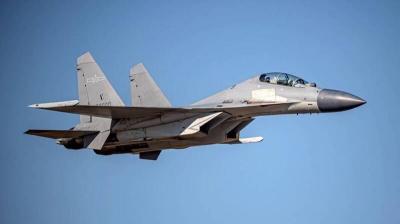
Eight Chinese naval vessels and 24 military aircraft were detected crossing the median line of the Taiwan Strait between 6am yesterday and 6am today, the Ministry of National Defense said this morning. The aircraft entered Taiwan’s northern, central, southwestern and eastern air defense identification zones, the ministry said. The armed forces responded with mission aircraft, naval vessels and shore-based missile systems to closely monitor the situation, it added. Eight naval vessels, one official ship and 36 aircraft sorties were spotted in total, the ministry said.
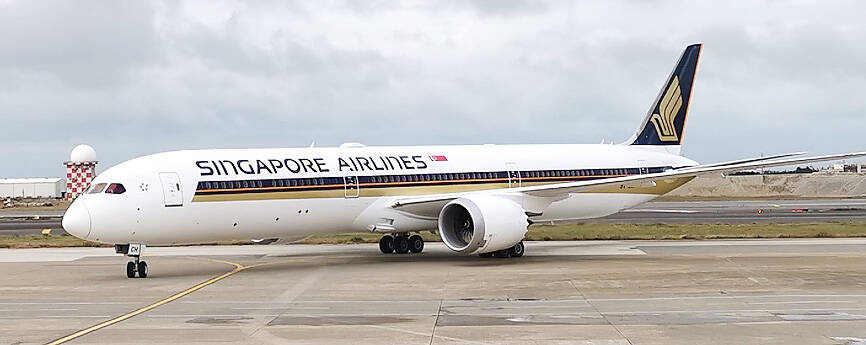
INCREASED CAPACITY: The flights on Mondays, Wednesdays, Fridays and Sundays would leave Singapore in the morning and Taipei in the afternoon Singapore Airlines is adding four supplementary flights to Taipei per week until May to meet increased tourist and business travel demand, the carrier said on Friday. The addition would raise the number of weekly flights it operates to Taipei to 18, Singapore Airlines Taiwan general manager Timothy Ouyang (歐陽漢源) said. The airline has recorded a steady rise in tourist and business travel to and from Taipei, and aims to provide more flexible travel arrangements for passengers, said Ouyang, who assumed the post in July last year. From now until Saturday next week, four additional flights would depart from Singapore on Monday, Wednesday, Friday
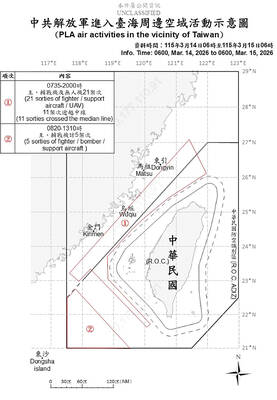
The Ministry of National Defense yesterday reported the return of large-scale Chinese air force activities after their unexplained absence for more than two weeks, which had prompted speculation regarding Beijing’s motives. China usually sends fighter jets, drones and other military aircraft around the nation on a daily basis. Interruptions to such routine are generally caused by bad weather. The Ministry of National Defense said it had detected 26 Chinese military aircraft in the Taiwan Strait over the previous 24 hours. It last reported that many aircraft on Feb. 25, when it spotted 30 aircraft, saying Beijing was carrying out another “joint combat

Taiwan successfully defended its women’s 540 kilogram title and won its first-ever men’s 640 kg title at the 2026 World Indoor Tug of War Championships in Taipei yesterday. In the women’s event, Taiwan’s eight-person squad reached the final following a round-robin preliminary round and semifinals featuring teams from Ukraine, Japan, Thailand, Vietnam, the Basque Country and South Korea. In the finals, they swept the Basque team 2-0, giving the team composed mainly of National Taiwan Normal University students and graduates its second championship in a row, and its fourth in five years. Team captain


 RSS
RSS