


Retired US Admiral William Owens — the former vice chairman of the Joint Chiefs of Staff who wants to end arms sales to Taiwan — is now aiding an effort by China’s Huawei Technologies to supply equipment to Sprint Nextel and operate in the US.
A team of eight US senators has written to the administration of US President Barack Obama warning that the move by Huawei could “undermine US national security.”
A national carrier in the US servicing 41.8 million customers at the end of the second quarter, Sprint Nextel is also a supplier to the Pentagon and US law enforcement agencies.
In an e-mail sent on Tuesday, China expert Arthur Waldron said: “I never cease to be amazed at the naivety of some retired American military figures and as a retired Naval War College professor, it pains me to say several of them are admirals.”
An article has also appeared this week in Defense News — written by the magazine’s Taipei-based Asia bureau chief, Wendell Minnick — detailing Owens’ role.
“If our electronics are compromised, we are cooked,” Waldron said in his e-mail sent to a wide circle of China watchers.
“Who is to say that subsystems bought from China will not have back doors and hidden links to their suppliers? We would be mad to think otherwise. The Chinese are not stupid,” he wrote.
In their letter to General James Clapper, director of National Intelligence, with copies to the US Treasury, Commerce and General Services Administration, the eight senators — all of them Republicans — emphasized that Sprint Nextel “supplies important equipment to the US military.”
The letter said Huawei has a “concerning history” with links to Iran, the Taliban and the People’s Liberation Army (PLA).
“We have been informed that Huawei is the preferred provider of telecommunications products and services to the PLA and Chinese embassies,” it said.
“Given China’s well documented focus on developing cyber warfare capabilities, Huawei’s ties to the PLA have aroused concern in a number of other nations in which it does business. According to reports, British, French, Australian and Indian intelligence agencies have either investigated Huawei or expressed concern that its products could facilitate remote hacking and thereby compromise the integrity of the telecommunications networks in their countries,” the letter said.
Senators Jon Kyl, Christopher Bond, Richard Shelby, James Inhofe, Jim Bunning, Jeff Sessions, Richard Burr and Susan Collins signed the letter. Five are members of the Senate Taiwan Caucus.
In his article, Minnick said Huawei was China’s largest networking and telecommunications equipment provider and that it is looking to bid for subcontracts offered by Sprint Nextel.
“The Chinese firm’s effort is being spearheaded by Amerilink Telecom, a Kansas-based company whose chairman is retired US Navy Adm. William Owens,” Minnick wrote
Owens, who retired from the US Navy in 1996, wrote an article for the Financial Times in November last year in which he called for a “thoughtful review” of the TRA (Taiwan Relations Act). He said it was “outdated” and that US arms sales to Taiwan were “not in our best interest.”
Now, in his new role of promoting Huawei Technologies, Owens appears to be moving even closer to support for Beijing’s policies.
Ten years after his retirement, Owens moved to Hong Kong to become managing director of AEA Holdings Asia, an equity investment firm.
Owens became chairman of Amerlink last year while still keeping his AEA job.
In October 2008, Huawei announced it had been selected by Bell Canada, the nation’s largest communications service provider, to provide network infrastructure for its national overlay High Speed Packet Access technology for wireless network. As part of the multi-year, multimillion-dollar agreement, Huawei will provide Bell with radio access network technology for its new next generation wireless network.
ADDITIONAL REPORTING BY STAFF WRITER
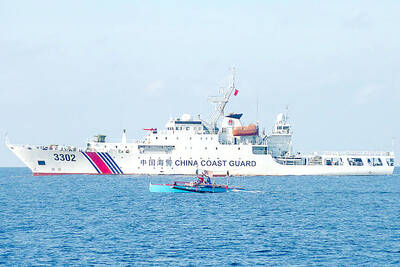
EXPANSIONIST: China deploys an average of 40 to 50 warships and coast guard vessels daily in the South China Sea, despite pledges not to militarize the region, an official said China is attempting to expand its influence across the First Island Chain and increase pressure on Japan by sending coast guard vessels into waters off of Taiwan under the pretext of maritime negotiations with Japan and the Philippines, a national security official said yesterday. China’s recent actions in the waters east of Taiwan and Japan and the Philippines’ exclusive economic zones (EEZ) are attempts to establish dominance in First Island Chain waters, said the official who declined to be named, adding that this is “expansion disguised as law enforcement.” Framing China’s actions solely as a cross-strait issue is a serious misjudgment that
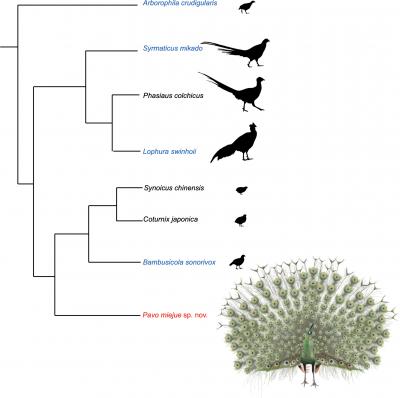
Through analyzing fossil evidence, a research team at National Taiwan University (NTU) discovered the largest endemic bird to have lived in Taiwan, naming it Pavo miejue, or extinct peafowl (滅絕孔雀). The Mikado pheasant, which is printed on the back of the NT$1,000 bank note, was previously believed to be the biggest endemic bird to Taiwan. The research team’s findings suggest that Pavo miejue lived during the Pleistocene epoch tens of thousands of years ago. It is the first endemic extinct bird species discovered and formally named in Taiwan. The study was coauthored by NTU Institute of Ecology and Evolutionary Biology professor Tsai Cheng-hsiu (蔡政修),
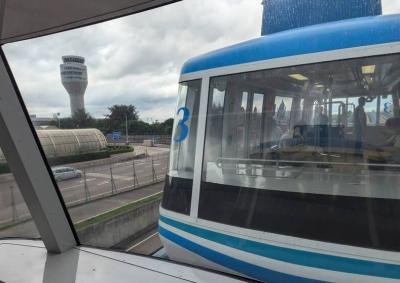
Taiwan Taoyuan International Airport is to suspend its automated Skytrain service connecting Terminal 1 and Terminal 2 starting on July 1 to facilitate connection works for the upcoming Terminal 3, the airport operator said today. Passengers and staff who need to travel between the two terminals after the suspension can instead use the Taoyuan MRT or the airport's 24-hour shuttle bus service, Taoyuan International Airport Corp said. The Taoyuan MRT Airport Line directly links the two terminals, while the shuttle buses are to operate around the clock, the company added. The Skytrain provides free transportation between the airport’s two terminals for travelers and
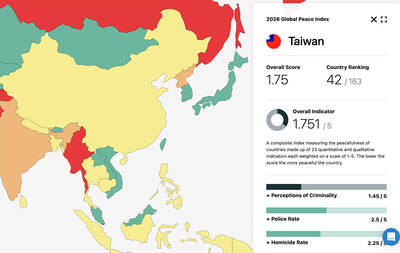
Taiwan ranked 42nd in terms of peacefulness among 163 countries, down five places from last year, according to this year’s Global Peace Index. With an overall score of 1.751, Taiwan dropped from 37th last year, the report published by the global Institute for Economics and Peace showed. The overall score measures a country’s level of peacefulness using 23 quantitative and qualitative indicators across three domains — ongoing domestic and international conflict, societal safety and security, and militarization. While Taiwan ranked 42nd worldwide, it was listed in ninth place among the 19 Asian-Pacific countries in the report, after New Zealand, Singapore, Japan, Malaysia,


 RSS
RSS