

The outlying Matsu island group is launching a drive to attract more foreign tourists in the hope that a boost to local tourism can prevent its marginalization amid seemingly warmer ties between Taiwan and China.
“If Matsu does not try to leverage its geographic advantages, its economy will be marginalized as cross-strait direct flights are now running at full steam,” Lianjiang County Government Tourism Bureau director Tsao Erh-yuen (曹爾元) said.
Matsu, an archipelago in the Taiwan Strait, lies 190km from Keelung and 19km from the Chinese coast, and is administered by Taiwan as part of Lianjiang County.
Tsao said that the local economy received a boost in 2001 after the implementation of the “small three links” that allow limited postal, transport and trade links between several Chinese cities and Kinmen and Matsu.
However, since direct flights, shipping and postal routes between Taiwan proper and China were fully implemented in 2008, Matsu has become merely a “stopover” en route to Taiwan for Chinese tourists, Tsao added.
“Generally speaking, our local tourism really needs a shot in the arm,” he said.
The Lianjiang County tourism bureau said that total tourist arrivals to Matsu were about 20,000 in 2004, increasing to more than 80,000 last year. Kinmen attracts far more travelers than Matsu — a 5-1 ratio.
For this reason, Matsu, which is known for its liquor production, traditional Fujianese architecture and military tunnels and fortresses, intends to do everything it can to attract more foreign tourists, who account for less than 10 percent of its annual visitors, Lianjiang County Commissioner Yang Sui-sheng (楊綏生) said.
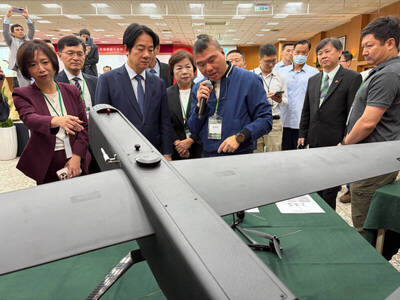
Two executives of drone supplier Jiin Ming Industry Co (錦明實業) have been detained and held incommunicado over the company's alleged use of prohibited China-made chips and camera lenses in drones supplied under recent military contracts, the Taoyuan District Prosecutors' Office said today. In a statement, prosecutors said they raided the offices of Jiin Ming — headquartered in Taoyuan — as well as those of its subsidiaries and its suppliers on Thursday last week. The raids followed a report that the company had breached its procurement contracts by putting the prohibited components into drones delivered to the military. During the raids, prosecutors summoned
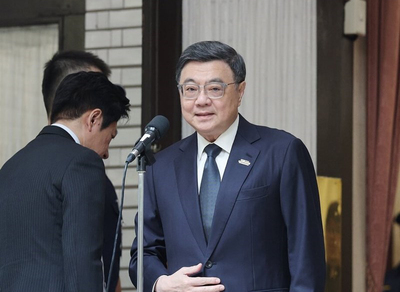
The government would continue monitoring online rumors that a pneumonic plague outbreak has spread from Russia into China and could enhance existing quarantine measures, Premier Cho Jung-tai (卓榮泰) said today. During a legislative meeting, Democratic Progressive Party Legislator Wang Ting-yu (王定宇) said rumors were circulating that the disease had spread across several Chinese provinces. He asked Cho whether the government was prepared to prevent the disease from spreading to Taiwan, given the frequent exchanges between Taiwan and China, and how concerned the government was about the alleged outbreak. The Ministry of Health and Welfare implemented border quarantine measures after briefing the Executive Yuan

South Korean boy band BigBang drew 120,000 fans to three concerts at Taipei Dome from Friday through yesterday, as the band thanked them for their support over their 20-year career. The Taipei Dome concerts were part of BigBang's "2026-2027 World Tour XX: Cosmos." Friday's concert was BigBang's first performance in Taiwan in 11 years. During the encore, group leader G-Dragon (GD) shouted "I love you" in Chinese and said he was especially happy to perform in Taiwan with bandmates Taeyang and Daesung. "Taipei, I'm very grateful to you all," GD said in Chinese, asking fans to wait for the band's return. Daesung thanked
A Chinese People's Liberation Army (PLA) Navy aircraft carrier group was being monitored after entering the western Pacific, the Ministry of National Defense said today, after Beijing yesterday criticized Taiwan for using a water cannon against a Chinese fishing boat near the Pratas Islands (Dongsha Islands, 東沙群島). A Chinese naval task group led by the aircraft carrier Liaoning (遼寧) yesterday sailed to the western Pacific for training, Chinese state-run Xinhua news agency quoted the PLA Navy as saying. “The drill is part of the annual routine training plan aimed at testing and improving the troops’ combat readiness and enhancing their ability to


 RSS
RSS