


Taipei City Hall Bus Station, the major transit hub between Taipei and northern and central Taiwan, opened to the public yesterday, with traffic jams in surrounding areas expected to intensify as a result.
More than 1,700 buses from 14 bus companies will travel daily in and out of the station, which is located at the intersection of Keelung Road and Zhongxiao E Road, and is expected to see about 10,000 people pass through every day between Taipei and Keelung, Yilan, Taoyuan, Hsinchu, Miaoli and Taichung.
Although the Traffic Police Division dispatched more than 140 traffic police to control traffic around the station, Keelung Road and Zhongxiao E Road Sec 5 — which are traditionally crowded during rush hour — still experienced heavier traffic jams.
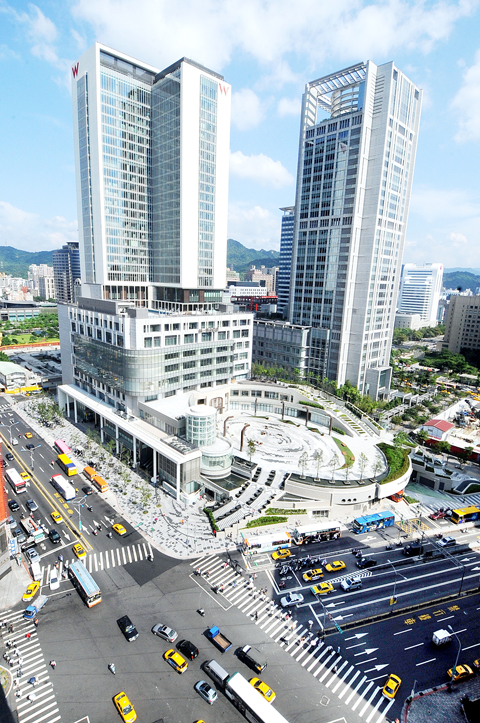
PHOTO: FANG PIN-CHAO, TAIPEI TIMES
Speaking at the opening ceremony, Taipei Mayor Hau Lung-bin (郝龍斌) called on the public to be patient during the “transition period,” adding that the station was expected to boost businesses in Xinyi District (信義).
“We will use the successful model used at Taipei Bus Station in west Taipei. Taipei City Hall Bus Station, along with the shopping mall above, will bring more people and business opportunities to the Xinyi area,” he said.
The bus station was a build-operate-transfer project under the city government. Its terminals and waiting area occupy about 2,400 ping (7,934m²) of the 43,000 ping building.
The 31-story building, built by Uni-President Group, also features a shopping mall and a hotel.
The Uni-President Hankyu Department Store — a joint venture between Taiwan’s and Japan’s Hankyu Hanshin Department Stores — will open in October.
Democratic Progressive Party Taipei City Councilor Hsu Shu-hua yesterday blamed the traffic congestion on the small space at the bus station and accused the city government of favoring private enterprises by giving up most of the space to contractors for the shopping mall.
“The traffic will only get worse when the shopping mall opens and attracts large crowds,” she said.
Passengers also complained about a lack of seats in the waiting area, urging the city government to improve the situation.
“It’s hard to believe there are only two rows of seats at the bus station. Most people are forced to stand around with their luggage. The city government should not have made such a mistake,” said Huang Ai-ju (黃愛如), a Taipei resident waiting for a bus to Yilan.
Luo Shiaw-shyan (羅孝賢), commissioner of the city’s Department of Transportation, said the waiting area had 77 seats, adding that this was sufficient because most bus routes served short-distance commutes, which required short waiting periods for passengers.
He dismissed concerns that the seating area was purposely designed to be small to provide more room for the shopping areas. He said the department could always add more seats if needed.
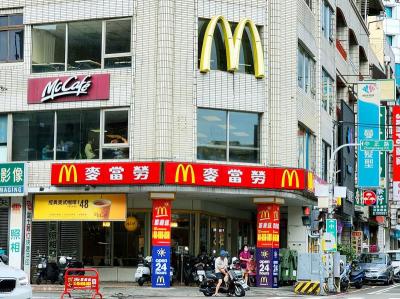
Fast food chain McDonald's is to raise prices by up to NT$5 on some products at its restaurants across Taiwan, starting on Wednesday next week, the company announced today. The prices of all extra value meals and sharing boxes are to increase by NT$5, while breakfast combos and creamy corn soup would go up by NT$3, the company said in a statement. The price of the main items of those meals, if ordered individually, would remain the same. Meanwhile, the price of a medium-sized lemon iced tea and hot cappuccino would rise by NT$3, extra dipping sauces for chicken nuggets would go up
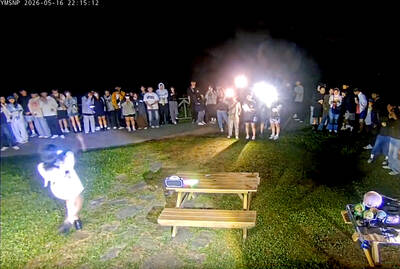
Yangmingshan National Park’s Qingtiangang (擎天崗) nature area has gone viral after a park livestream camera observed a couple in the throes of intimate congress, which was broadcast live on YouTube, drawing large late-night crowds and sparking a backlash over noise, bright lights and disruption to wildlife habitat. The area’s livestream footage appeared to show a couple engaging in sexual activity on a picnic table in the park on Friday last week, with the uncensored footage streamed publicly online. The footage quickly spread across social media, prompting a tide of visitors to travel to the site to “check in” and recreate the

Minister of Digital Affairs Lin Yi-ching (林宜敬) yesterday cited regulatory issues and national security concerns as an expert said that Taiwan is among the few Asian regions without Starlink. Lin made the remarks on Facebook after funP Innovation Group chief executive officer Nathan Chiu (邱繼弘) on Friday said Taiwan and four other countries in Asia — China, North Korea, Afghanistan and Syria — have no access to Starlink. Starlink has become available in 166 countries worldwide, including Ukraine, Malaysia, the Philippines and Vietnam, in the six years since it became commercial, he said. While China and North Korea block Starlink, Syria is not
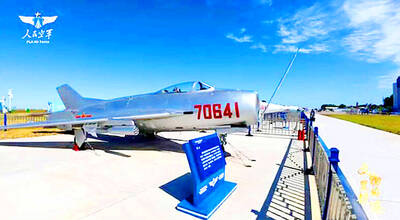
GROUNDED: A KMT lawmaker proposed eliminating drone development programs and freezing funding for counterdrone systems, despite China’s adoption of the technology China has deployed attack drones at air bases near the Taiwan Strait in a strategy aimed at overwhelming Taiwan’s air defense systems through saturation attacks, the Mainland Affairs Council (MAC) said. The council’s latest quarterly report on China said that satellite imagery and open-source intelligence indicate that the Chinese People’s Liberation Army (PLA) had converted retired J-6 fighter jets into J-6W drones, which the PLA has stationed at six air bases near Taiwan, five in China’s Fujian Province and one in Guangdong Province. The report cited J. Michael Dahm, a senior fellow at the US-based Mitchell Institute, as saying that China has


 RSS
RSS