


Two Taiwanese nationals have been detained in a Tanzanian prison since March last year after a Taiwanese vessel was seized for allegedly poaching in Tanzanian waters, the Ministry of Foreign Affairs (MOFA) confirmed yesterday.
FV Tawariq-4, an Omani-registered fishing boat with a Taiwanese owner and a crew composed of two Taiwanese, 15 Chinese, five Vietnamese, eight Filipinos, five Indonesians and three Kenyans, was detained on March 8 and the crew have been held in two prisons ever since, according to a report from maritime watchdog Ecoterra International.
Samuel Chen (陳士良), director-general of the ministry’s Department of African Affairs, confirmed the case and the detention. He said the ship owner did not seek help from the ministry until last October.
The Philippines’ Department of Foreign Affairs confirmed the detention of the eight Filipinos.
MOFA’s Department of African Affairs section chief Volkan Huang (黃志揚) said the ministry first learned of the case after receiving information from the Taiwan External Trade Development Council (TAITRA) office in Nairobi late last year.
The ministry said upon learning the news that it had asked representatives of the TAITRA office in Nairobi to visit the detained fishermen and provide necessary assistance and relief.
Overseas Taiwanese in Tanzania also helped arrange the visit and communication, Huang said, adding that the case is now in the Tanzanian judicial system, with the next trial expected to take place next month.
In other news, the ministry yesterday corrected the number of casualties on a Taiwanese fishing boat that had been held by Somali pirates for more than 10 months.
On Feb. 11 when the Win Far 161, held since April last year, was freed after the owner paid a ransom, the ministry issued a release saying the boat and crew members were all safe. Some foreign wire agencies, however, quoted Ecoterra as reporting that three of the boat’s original crew of 30 died during their captivity.
Chen yesterday said the ministry was not told by the owner until Feb. 14 that two sailors — one Indonesian and one Chinese — had died.
Chen said the ministry only learned the news from the owner after the boat was freed, adding that the ministry had not asked him about the causes of their death.
A Reuters report dated Feb. 11 cited the maritime watchdog as saying in a statement that the three died during the 10-month “horror-ordeal” and the crew members had been “left by the shipowner and their respective governments in an awful condition, despite the pleas of a humanitarian organization to at least provide relief food and water.”
When asked for a comment, Huang said Ecoterra had given out information and made comments on many other hijacking incidents in the past, “some of which were correct, while some were not.”
“During their captivity, only the owner was able to contact the crews ... and when the condition was unclear, we could only choose to trust the owner and respect his position [when he was negotiating the ransom],” Huang said.
Wire reports said that, during the 10-month ordeal, the Win Far 161 had been used as a “mother ship” to attack vessels, including the US-flagged Maersk Alabama, and that the US’ FBI wanted to question the owner in connection with the attack.
Chen said the ministry was not aware of the FBI’s request.
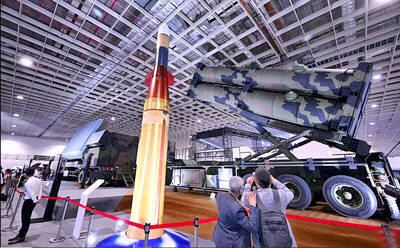
Taiwan is to commence mass production of the Tien Kung (天弓, “Sky Bow”) III, IV and V missiles by the second quarter of this year if the legislature approves the government’s NT$1.25 trillion (US$39.78 billion) special defense budget, an official said yesterday. Commenting on condition of anonymity, a defense official with knowledge of the matter said that the advanced systems are expected to provide crucial capabilities against ballistic and cruise missiles for the proposed “T-Dome,” an advanced, multi-layered air defense network. The Tien Kung III is an air defense missile with a maximum interception altitude of 35km. The Tien Kung IV and V
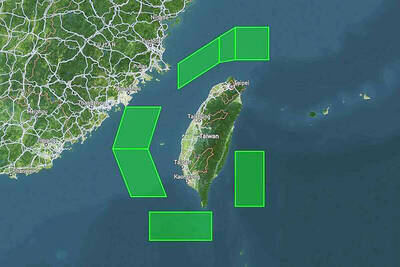
The disruption of 941 flights in and out of Taiwan due to China’s large-scale military exercises was no accident, but rather the result of a “quasi-blockade” used to simulate creating the air and sea routes needed for an amphibious landing, a military expert said. The disruptions occurred on Tuesday and lasted about 10 hours as China conducted live-fire drills in the Taiwan Strait. The Civil Aviation Administration (CAA) said the exercises affected 857 international flights and 84 domestic flights, affecting more than 100,000 travelers. Su Tzu-yun (蘇紫雲), a research fellow at the government-sponsored Institute for National Defense and Security Research, said the air
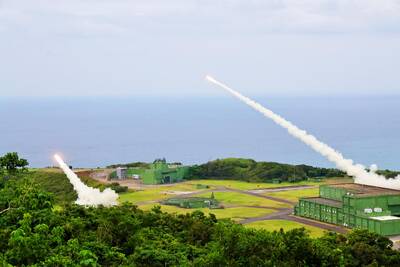
Taiwan lacks effective and cost-efficient armaments to intercept rockets, making the planned “T-Dome” interception system necessary, two experts said on Tuesday. The concerns were raised after China’s military fired two waves of rockets during live-fire drills around Taiwan on Tuesday, part of two-day exercises code-named “Justice Mission 2025.” The first wave involved 17 rockets launched at 9am from Pingtan in China’s Fujian Province, according to Lieutenant General Hsieh Jih-sheng (謝日升) of the Office of the Deputy Chief of the General Staff for Intelligence at the Ministry of National Defense. Those rockets landed 70 nautical miles (129.6km) northeast of Keelung without flying over Taiwan,
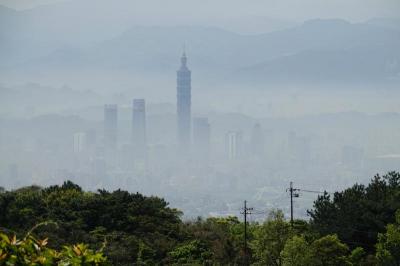
A strong continental cold air mass is to bring pollutants to Taiwan from tomorrow, the Ministry of Environment said today, as it issued an “orange” air quality alert for most of the country. All of Taiwan except for Hualien and Taitung counties is to be under an “orange” air quality alert tomorrow, indicating air quality that is unhealthy for sensitive groups. In China, areas from Shandong to Shanghai have been enveloped in haze since Saturday, the ministry said in a news release. Yesterday, hourly concentrations of PM2.5 in these areas ranged from 65 to 160 micrograms per cubic meter (mg/m³), and pollutants were


 RSS
RSS