


Academia Sinica said yesterday that researchers have detailed the structure of an enzyme involved in the production of the scent given off by the mint plant, adding that the research was published in the US journal The Plant Cell on Feb. 5.
In an effort to better understand the process by which the mint plant produces its scent, Academia Sinica vice president Andrew Wang (王惠均) and his team from the Institute of Biological Chemistry (IBC) used x-ray crystallography, as well as biochemical and genetic studies, to map the structure of an enzyme that catalyzes the first critical step in the biosynthesis pathway of the mint scent formation.
MEDICINAL VALUE?
The volatiles that evaporate from plants to produce scent are very important in nature to attract pollinators and herbivorous predators and emit signals that ward off pathogens. They are also of interest to humans as medicines, but very little is known about them.
The group discovered that the enzyme is composed of two proteins — a catalytic protein and a regulatory protein. Through protein-protein interactions, the regulatory protein can remodel the active-site cavity of the catalytic protein for synthesizing the precursor of menthol, which is released from the plant as mint scent.
The research was conducted and financed by Academia Sinica and the protein crystallography synchrotron facility was supported by the National Genomic Medicine Research Program, a project funded by the National Science Council.
ONLINE
The article, titled “Structure of a Heterotetrameric Geranyl Pyrophosphate Synthase from Mint (Mentha piperita) Reveals Intersubunit Regulation” is available on The Plant Cell Web site at www.plantcell.org/cgi/content/abstract/tpc.109.071738v1.

FUKUOKA SITUATION: Japanese media reported that the pathogen is expected to be identified by the summer, while the CDC downplayed the idea that it was hMPV A “mysterious cold-like illness” reported in Japan’s Fukuoka Prefecture does not seem to be a new disease, but Japanese authorities have been asked about the situation, the Centers for Disease Control (CDC) said yesterday. The Fukuoka Prefectural Medical Association on Wednesday told a news conference that a “mystery cold” that has become a hot topic on social media is “highly likely to be caused by some kind of viral infection,” Japan’s KBC News reported. “Many people are experiencing symptoms starting with a sore throat, followed by a runny nose, phlegm and a severe cough,” KBC News reported, citing association officials. Health authorities are

Nvidia Corp CEO Jensen Huang (黃仁勳) arrived in Taiwan yesterday ahead of upcoming AI and technology events, saying he plans to meet with clients and Taiwan Semiconductor Manufacturing Co Chairman C.C. Wei (魏哲家) during his visit. After landing at Taipei Songshan Airport, Huang posed for photos with fans and handed out Yakult drinks to reporters and supporters waiting at the scene, saying he has “a lot to do” during the trip. Asked about reports that Nvidia’s planned headquarters site in Taipei’s Beitou Shilin Technology Park could break ground on May 27, Huang said that if the company holds an event, he would

The Ministry of Finance this afternoon announced the winning numbers for the March-April uniform invoice lottery. The winning number for the NT$10 million (US$318,060) special prize is 19531471, and the winning number for the NT$2 million grand prize is 85941329. Three numbers were drawn for the NT$200,000 first prize: 07225810, 20231230 and 83518781. Those with receipts matching the last seven digits of any of the first-prize numbers will win the NT$40,000 second prize, while those matching the last six digits will win the NT$10,000 third prize. Those whose receipts match the last five digits of the first-prize numbers can claim the NT$4,000 fourth prize,
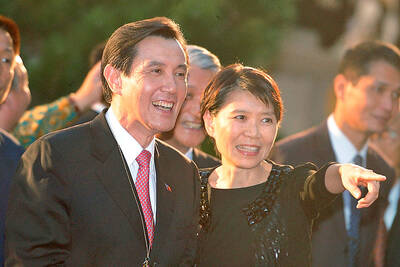
Former president Ma Ying-jeou (馬英九) yesterday expressed “shock and regret” over a statement issued by his wife without his consent, and rejected her assertion that his eldest sister, Ma Yi-nan (馬以南), would manage his medical care or act as his spokesperson amid an ongoing embezzlement probe into his foundation. Ma Ying-jeou in a statement said he was shocked by a statement by his wife, Chou Mei-ching (周美青), regarding his affairs. Ma Yi-nan “must not” be in charge of his healthcare and other personal affairs, nor can she be allowed to represent the Ma family, the former president said. He said he was also


 RSS
RSS