


Minister of Transportation and Communications Mao Chi-kuo (毛治國) said yesterday that regulations governing the operation of casinos would be in place by the end of the year.
“[Casinos] are a means of boosting tourism in the outlying islands,” Mao said on the first day of a two-day cross-departmental seminar on policymaking yesterday.
The minister said establishing casinos could have “side effects,” which is why “we need to have complementary measures ready when we execute the policy.”
The government is planning to issue two casino licenses in Penghu County, with the county scheduled to hold a referendum on the subject.
Mao said gaming is a new business and could pose a real challenge to civil servants, which was why the seminar could help representatives from different government agencies prepare themselves as policymakers.
The minister said all government agencies involved in the gaming business had to complete all personnel training and overseas visits this summer so that they could start drafting the main law on casinos.
Commenting on the changes needed, Mao cited police officers as an example, saying they were trained to crack down on gambling but now had to learn how to protect legal gambling.
He said the Bureau of Standards, Metrology and Inspections also had to establish a certification mechanism for equipment used in gambling. Meanwhile, the Ministry of Justice (MOJ) had to ensure that casino operators are not involved in organized crime or international money-laundering, while the Council of Labor Affairs (CLA) had to draft plans to train local workers in the gaming business.
Aside from the CLA and the MOJ, representatives from the Financial Supervisory Commission, the Ministry of Economic Affairs, the Ministry of Finance, the Ministry of the Interior and the Ministry of Transportation and Communications also attended the seminar.
When asked how government employees were supposed to regulate casinos if they did not even know how to play blackjack or poker, Mao said that the ministry’s task was to draft laws to oversee the operation of casinos and coordinate efforts among different government agencies.
“Our job is to create an equal and fair environment for gamblers,” he said, describing the job as more like “work behind the scenes of a play.”
While more than 100 government department officials had signed up to take what Mao described as a “three-credit course,” only about 70 attended the seminar.
Mao said the nation should follow the example set by Singapore, where casinos are part of the recreational facilities offered in hotel resorts. There should also be restrictions on the space allocated to gambling establishments, he said.

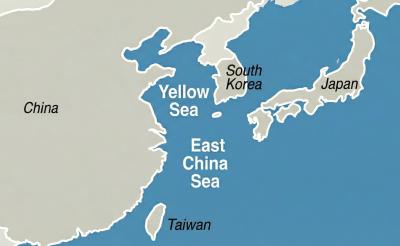
China has reserved offshore airspace in the Yellow Sea and East China Sea from March 27 to May 6, issuing alerts usually used to warn of military exercises, although no such exercises have been announced, the Wall Street Journal (WSJ) reported yesterday. Reserving such a large area for 40 days without explanation is an “unusual step,” as military exercises normally only last a few days, the paper said. These alerts, known as Notice to Air Missions (Notams), “are intended to inform pilots and aviation authorities of temporary airspace hazards or restrictions,” the article said. The airspace reserved in the alert is

South Korea is planning to revise its controversial electronic arrival card, a step Taiwanese officials said prompted them to hold off on planned retaliatory measures, a South Korean media report said yesterday. A Yonhap News Agency report said that the South Korean Ministry of Foreign Affairs is planning to remove the “previous departure place” and “next destination” fields from its e-arrival card system. The plan, reached after interagency consultations, is under review and aims to simplify entry procedures and align the electronic form with the paper version, a South Korean ministry official said. The fields — which appeared only on the electronic form
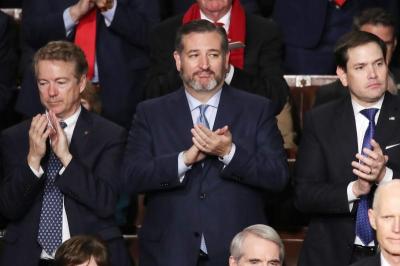
A bipartisan group of US senators has introduced a bill to enhance cooperation with Taiwan on drone development and to reduce reliance on supply chains linked to China. The proposed Blue Skies for Taiwan Act of 2026 was introduced by Republican US senators Ted Cruz and John Curtis, and Democratic US senators Jeff Merkley and Andy Kim. The legislation seeks to ease constraints on Taiwan-US cooperation in uncrewed aerial systems (UAS), including dependence on China-sourced components, limited access to capital and regulatory barriers under US export controls, a news release issued by Cruz on Wednesday said. The bill would establish a "Blue UAS
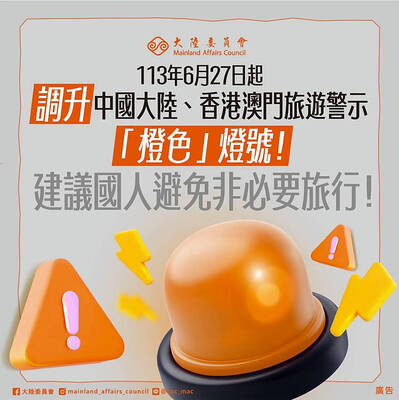
More than 6,000 Taiwanese students have participated in exchange programs in China over the past two years, despite the Mainland Affairs Council’s (MAC) “orange light” travel advisory, government records showed. The MAC’s publicly available registry showed that Taiwanese college and university students who went on exchange programs across the Strait numbered 3,592 and 2,966 people respectively. The National Immigration Agency data revealed that 2,296 and 2,551 Chinese students visited Taiwan for study in the same two years. A review of the Web sites of publicly-run universities and colleges showed that Taiwanese higher education institutions continued to recruit students for Chinese educational programs without


 RSS
RSS