


Taiwan will not recognize medical credentials from China or Chinese credentials obtained through distance learning programs, Minister of Education Cheng Jei-cheng (鄭瑞城) said yesterday.
Under the Ministry of Education’s (MOE) plan, the government would not recognize credentials obtained through correspondence teaching, distance learning, home schooling or in-service education; credentials obtained during China’s Cultural Revolution; and medical credentials, Cheng told reporters.
REVISIONS
Cheng added that the MOE also planned to only recognize diplomas obtained after the revision of relevant regulations.
However, the ministry has not decided whether it would allow Taiwanese students or Chinese spouses who had obtained their credentials before the amendment to complete a credential screening process or take part in qualification examinations, he said.
A committee composed of 23 to 29 officials from the ministry, the Mainland Affairs Council and the National Security Council, representatives from universities in Taiwan and academics will take charge of the screening, Cheng said.
SCREENING
During the screening, credential holders will be required to present their graduation certificates or diplomas, he said.
The recognition of credentials from China has been the subject of debate in the legislature.
Democratic Progressive Party (DPP) legislators have expressed concern about its impact on Taiwanese students, schools and the general public.
Although the Chinese Nationalist Party (KMT) had scheduled a review of the bills on Monday, the meetings at the legislature’s Education and Culture Committee and the Internal Administration Committee were blocked by DPP lawmakers, who locked themselves inside the conference rooms until the meetings were adjourned.
A project report by Cheng earlier on Monday morning stated that 14,907 Taiwanese students had enrolled in universities or graduate schools in China between 1985 and 2007.
EMPLOYMENT
Cheng said in the report that recognizing Chinese credentials would solve the employment problems of these students and Chinese spouses in Taiwan.
DPP Legislator Kuan Bi-ling (管碧玲), however, suggested the ministry launch a special project to deal with Chinese credentials instead of amending the law to grant blanket recognition to Chinese credentials.
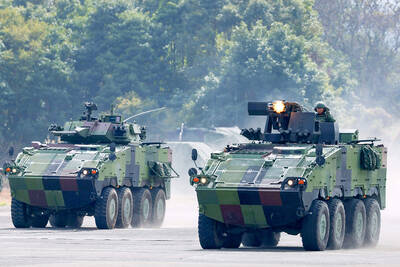
Taiwan must first strengthen its own national defense to deter a potential invasion by China as cross-strait tensions continue to rise, multiple European lawmakers said on Friday. In a media interview in Taipei marking the conclusion of an eight-member European parliamentary delegation’s six-day visit to Taiwan, the lawmakers urged Taipei to remain vigilant and increase defense spending. “All those who claim they want to protect you actually want to conquer you,” Ukrainian lawmaker Serhii Soboliev said when asked what lessons Taiwan could draw from Russia’s invasion of Ukraine. Soboliev described the Kremlin as a “new fascist Nazi regime” that justified
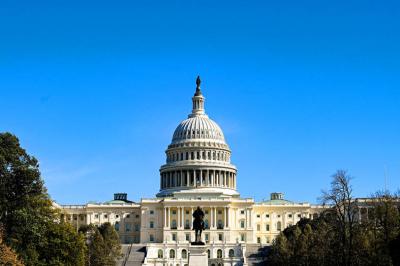
The US House of Representatives yesterday passed the PROTECT Taiwan Act, which stipulates that Washington would exclude China from participating in major global financial organizations if its actions directly threaten Taiwan’s security. The bill, proposed by Republican US Representative Frank Lucas, passed with 395 votes in favor and two against. It stipulates that if China’s actions pose any threat to Taiwan’s security, economic or social systems, the US would, “to the maximum extent practicable,” exclude China from international financial institutions, including the G20, the Bank for International Settlements and the Financial Stability Board. The bill makes it clear that China

‘T-DOME’: IBCS would increase Taiwan’s defense capabilities, enabling air defense units to use data from any sensor system and cut reaction time, a defense official said A defense official yesterday said that a purported new arms sale the US is assembling for Taiwan likely includes Integrated Battle Command Systems (IBCS). The anonymous official’s comments came hours after the Financial Times (FT) reported that Washington is preparing a US$20 billion arms sale encompassing “Patriot missiles and other weapons,” citing eight sources. The Taiwanese official said the IBCS is an advanced command and control system that would play a key role in President William Lai’s (賴清德) flagship defense program, the “T-Dome,” an integrated air defense network to counter ballistic missiles and other threats. The IBCS would increase Taiwan’s

NOMINAL NEWLYWEDS: A man’s family and his wife — his long-term caregiver — are engaged in a legal dogfight over the propriety and validity of the recent union A centenarian’s marriage to his caregiver unbeknownst to his children has prompted legal action, as the caregiver accuses the man’s children of violating her personal liberty and damaging her reputation, while the children have sought a legal option to have the marriage annulled. According to sources, the 102-year-old man surnamed Wang (王) lives in Taipei’s Zhongshan District (中山) and previously worked as a land registration agent. Wang reportedly owns multiple properties and parcels of land worth several hundred million New Taiwan dollars and has ten children. His caregiver, a 69-year-old surnamed Lai (賴), has been caring for him since about 1999,


 RSS
RSS