


A local research team has successfully extracted a brain-boosting nutrient from squid skin, a fisheries official said on Thursday.
Researchers at the Council of Agriculture’s Fisheries Research Institute have extracted PL-DHA (phospholipid docosahexaenoic acid) — a substance that can improve memory and enhance learning ability — from the skin of squid, the official said.
The official said PL-DHA was better than TG-DHA — another form of docosahexaenoic acid that is commonly found in deep-sea fish oil — in inhibiting degradation of the intellect because it can cross the blood brain barrier and be absorbed directly into the brain.
The researchers have also discovered that the PL-DHA extract is effective in reviving neural cells and enhancing the content of three oxidation-resistant enzymes — GSH, CAT and SOD — as well as moderating free radical-induced oxidative damage to neural cells, thus slowing down the accumulation of plaque and tangles in brain cells.DEMENTIA
Quoting medical reports, the official said Alzheimer’s and other forms of senile dementia were associated with the accumulation of plaque and tangles in the brain.
The official said at present more than 24 million people around the world suffered from senile dementia, with the rate of new cases growing by 4.6 million every year.
“This means that one person in the world falls victim to Alzheimer’s every six minutes,” the official said.
Taiwan boasts abundant squid catches, with annual output between 150,000 tonnes and 200,000 tonnes, the official said, adding that by-products from squid processing accounted for 35 percent of the total catch, with squid skins making up about 15 percent of by-products.
UNPALATABLE
As squid skins are tough and unpalatable, they are usually processed into powder that is used as an additive in animal and livestock feed.
Following the discovery of PL-DHA in squid skins, the official said the Fisheries Research Institute would step up the development of squid skin-based health products.

EXCUSES: Beijing is using government and research vessels as a pretext to harass the nation and enter its EEZ, and engage in ‘hegemonic expansion,’ the coast guard said The Coast Guard Administration yesterday said it drove away Chinese oceanographic research vessel Xiang Yang Hong 22 (向陽紅33) from restricted waters after warning it that it was in Taiwan’s exclusive economic zone (EEZ). The Chinese vessel entered restricted waters off the coast of Yilan County’s Suao (蘇澳) at 11:35pm on Thursday, the coast guard said, adding that it dispatched the Lanyu patrol vessel and the boat PP-10077 to shadow the Chinese ship and issue radio warnings ordering it to leave. China has no sovereignty over waters off Taiwan’s east coast, Lanyu’s crew told Xiang Yang Hong 22 over the radio, and demanded
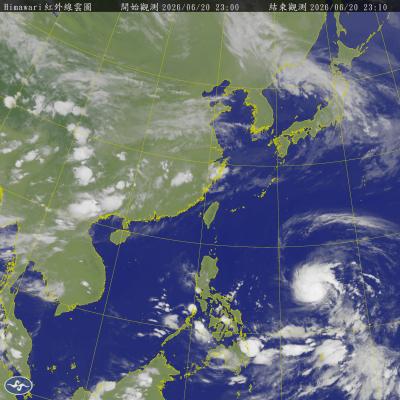
Tropical Storm Mekkhala is forecast to strengthen into a typhoon tomorrow and could come close enough to Taiwan later in the week to prompt a sea warning, the Central Weather Administration (CWA) said yesterday. As of 2 pm, the storm was located 1,870 kilometers southeast of Taiwan's southern tip and moving west- northwest at 23 km per hour. CWA forecaster Cheng Chieh-jen (鄭傑仁) said Mekkhala is expected to continue moving west-northwest through Tuesday under the influence of the Pacific high- pressure system before gradually turning north toward waters east of Taiwan or south of the Ryukyu Islands. The timing and angle of the

Four Taiwanese universities have been ranked among the world's top 200 institutions in the Quacquarelli Symonds (QS) World University Rankings for next year, the highest Taiwan has ever placed in the category, with National Taiwan University (NTU) achieving its best performance at 54th globally and 17th in Asia. The four Taiwanese institutions in the global top 200 are NTU (54th), National Tsing Hua University (142nd), National Yang Ming Chiao Tung University (177th) and National Cheng Kung University (191st), the rankings showed. All four universities achieved their highest-ever global rankings this year, QS data showed. National Cheng Kung University entered the top 200 for

RISING POPULARITY: Enhanced flight connectivity and a visa waiver trial program are among the motivations that have boosted travel to Taiwan by Filipinos, the agency said The Tourism Administration said yesterday that it is stepping up efforts to attract tourists from the Philippines following strong growth during the first quarter. The agency’s data showed the nation welcomed 210,000 Filipino visitors from January to March, marking a 43 percent increase compared with the same period last year. The Philippines is Taiwan’s top source of inbound tourists among the Southeast Asian nations, data showed. With a population of 116 million and national median age of 26, the Philippines boasts a young demographic with strong travel potential, the Tourism Administration said. Outbound travel demand in the Philippines continues to rise amid robust


 RSS
RSS