


Keep the pressure down” was the main theme of this year’s World Kidney Day earlier this month, as the Department of Health’s Bureau of Health Promotion encouraged those over the age of 54 to have their blood pressure checked regularly.
Kidney failure is a major killer in Taiwan, but few people are aware of the relationship between kidney failure and high blood pressure.
“If a high blood pressure sufferer does not take their medicine, sooner or later they will end up with kidney problems and may end up on dialysis,” said Huang Chi-hung (黃啟宏), a physician at Cathay General Hospital’s Department of Cardiac Internal Medicine.
Huang said that most medicines prescribed for high blood pressure patients also help protect a patient’s kidneys. But if the patient neglects to take their medicine, it is possible they will end up with both heart and kidney failure because high blood pressure is one of the main causes of kidney failure, while kidney failure is one of the main causes of high blood pressure.
In a table of the 10 most prescribed drugs last year recently released by the Bureau of National Health Insurance, amlodipine, a drug commonly prescribed for high blood pressure, was at the top of the list.
A total of NT$4.4 billion (US$133 million) of amlodipine was prescribed last year.
Huang said that high blood pressure decreases the effectiveness of kidney function and results in a build up of waste that kidneys normally dispose of. This can lead to kidney failure, he said.
“These two chronic diseases are like twin brothers. That means sufferers of high blood pressure should take notice of their kidneys, while a patient with kidney problems should be aware of their blood pressure,” Huang said.
James Chuang (莊易儐), a 63-year-old businessman, has suffered from high blood pressure for a many years. He did not realize that he was also suffering from polycystic kidney disease until his regular health check in 2002.
“I was totally overwhelmed and stunned,” Chuang said.
Chuang said that he has been suffering from hematuria since 1978, which was also when he was diagnosed with high blood pressure. Since doctors could not find the cause, Chuang never really paid attention to his hematuria.
Then, during one of his regular blood pressure checks at Cathay General Hospital, a young physician was surprised to learn that Chuang had never seen a kidney specialist, even though he had been on high blood pressure medication since 1978. The doctor transferred Chuang to a kidney doctor for further examination.
A few weeks later, chief physician Feng Hsiang-hua (馮祥華) from Cathay’s Renal Department, told Chuang that there was one major and several minor tumors inside his kidneys, but the MRI scan results showed that the tumors were not harmful.
He also told Chuang that he had polycystic kidney disease, a hereditary problem. The prescriptions for Chuang’s high blood pressure contained a diuretic, which had increased the workload on Chuang’s kidneys, a problem that was exacerbated because he did not drink enough water.
“I never realized that high blood pressure and kidney problems were so related,” Chuang said.
Shin Kong Wu Ho-shu Memorial Hospital’s Renal Department director Lin Bing-hsi (林秉熙) said that a healthy lifestyle, avoiding smoking, drinking alcohol in moderation and getting enough sleep and exercise were key to avoiding kidney problems.
“In addition to a healthy life style, what you eat also plays an important role in terms of protecting your kidneys,” he said.
Feng encouraged people, especially those with high blood pressure, to drink as much water as possible. He also said that healthy kidneys help adjust normal blood pressure as well.
“Drinking enough water will help your kidneys function better and helps your kidneys get rid of as much waste as possible,” he said.
Veterans General Hospital’s Renal Department director Yang Wu-chang (楊五常) said that kidney problems could be easily “observed” in daily urine.
“If there are lots of bubbles in your urine and they never go away, I suggest you see a doctor,” Yang said.
Yang said that the bubbles come from protein that the body absorbs from food. If there are too many bubbles, it will eventually become albuminuria and they will show that there is something wrong with the kidneys.
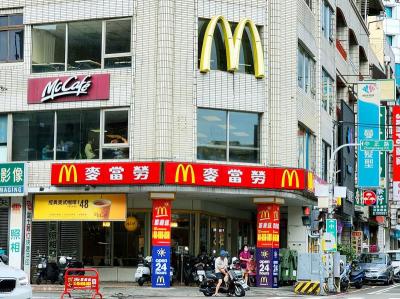
Fast food chain McDonald's is to raise prices by up to NT$5 on some products at its restaurants across Taiwan, starting on Wednesday next week, the company announced today. The prices of all extra value meals and sharing boxes are to increase by NT$5, while breakfast combos and creamy corn soup would go up by NT$3, the company said in a statement. The price of the main items of those meals, if ordered individually, would remain the same. Meanwhile, the price of a medium-sized lemon iced tea and hot cappuccino would rise by NT$3, extra dipping sauces for chicken nuggets would go up

Yangmingshan National Park’s Qingtiangang (擎天崗) nature area has gone viral after a park livestream camera observed a couple in the throes of intimate congress, which was broadcast live on YouTube, drawing large late-night crowds and sparking a backlash over noise, bright lights and disruption to wildlife habitat. The area’s livestream footage appeared to show a couple engaging in sexual activity on a picnic table in the park on Friday last week, with the uncensored footage streamed publicly online. The footage quickly spread across social media, prompting a tide of visitors to travel to the site to “check in” and recreate the
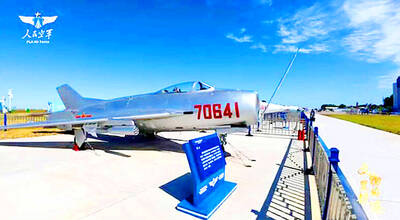
GROUNDED: A KMT lawmaker proposed eliminating drone development programs and freezing funding for counterdrone systems, despite China’s adoption of the technology China has deployed attack drones at air bases near the Taiwan Strait in a strategy aimed at overwhelming Taiwan’s air defense systems through saturation attacks, the Mainland Affairs Council (MAC) said. The council’s latest quarterly report on China said that satellite imagery and open-source intelligence indicate that the Chinese People’s Liberation Army (PLA) had converted retired J-6 fighter jets into J-6W drones, which the PLA has stationed at six air bases near Taiwan, five in China’s Fujian Province and one in Guangdong Province. The report cited J. Michael Dahm, a senior fellow at the US-based Mitchell Institute, as saying that China has

Carrefour Taiwan is to begin using a new name from the start of July, but it cannot divulge the name until then, the chairman of the supermarket chain's parent company said today. President Chain Store Co chairman Lo Chih-hsien (羅智先) was asked by reporters after a shareholders' meeting to confirm whether the company has settled on a new name for the supermarket brand. In March, the government-registered name of two Carrefour Taiwan branches was quietly changed to "Le Chia Kang" (樂家康) in Chinese, raising speculation that has been selected as the name. Lo said that because of local regulations and contractual obligations, the


 RSS
RSS