


Former US ambassador Harvey Feldman, a giant within Washington’s tight community of China watchers and a good friend of Taiwan, died on Tuesday following emergency heart surgery.
“The people of Taiwan owe him a lot,” said Christopher Nelson, editor of the Nelson Report.
“Without Harvey there would have been no Taiwan Relations Act [TRA],” he said.
“Harvey was able to span the gulf between Congress and the administration, and to this day the TRA has played a central role in keeping peace in the region and safeguarding the rights of more than 20 million people on Taiwan,” he said.
Derek Scissors, a research fellow in the Asian Studies Center at the Heritage Foundation, where Feldman served as a distinguished fellow in China Policy, recalled his intellectual generosity.
At a recent roundtable debate on Asian policies, the two clashed over economic matters. At the height of the dispute, Feldman shared an insight that supported Scissors’ argument and made it more persuasive, even though it undercut his own point of view.
Feldman was known for his sharp sense of humor, sense of fun and enthusiasm.
Longtime colleague Jim Wolf said: “Harvey was a lofty spirit who took an almost impish delight in deflating those who thought they were high and mighty.”
Walter Lohman, director of the Asian Studies Center at Heritage said: “I’ll miss his advice and his passion for all things Taiwan. But most of all, I’ll just miss him — his wisecracking, tell-it-like-it-is, endearing self.”
Feldman worked for the American Foreign Service for more than 30 years, most of them as an East Asian specialist.
He served in Hong Kong for eight years, Taiwan for six and Japan for four.
As a member of the State Department’s Policy Planning Council, he helped plan late US president Richard Nixon’s first visit to China in 1972.
Later, he became director of the Office of the Republic of China Affairs and created the American Institute in Taiwan, which replaced the US embassy after relations were shifted to Beijing.
After serving as ambassador to Papua New Guinea and the Solomon Islands, Feldman was appointed an alternative US representative to the UN.
On retiring from the Foreign Service, Feldman spent a year as vice president of the Institute for East-West Security Studies, taught graduate seminars at New York University and became a partner in Global Business Access Ltd, a consulting firm formed by retired senior diplomats.
He joined the Heritage Foundation in 1996.
Feldman spoke Mandarin, Japanese and Bulgarian. He was the editor of two books, Taiwan in a Time of Transition and Constitutional Reform and the Future of China.
In a tribute delivered at Feldman’s funeral, Nelson — speaking for himself and professor Jim Przystup of the National Defense University — said: “In 1978, Harvey was the Republic of China desk officer at State, which meant that he was in charge of managing and safeguarding the official diplomatic relations between the United States and Taiwan.”
“His immediate boss was Dick Holbrooke, who was characteristically hell-bent on accomplishing his assigned task of ‘de-recognizing’ Taiwan,” he said.
“It was Harvey who helped conceive of the compromise which was hammered out between Congress and [former US president Jimmy Carter’s] administration, a piece of legislation called the Taiwan Relations Act,” he said. “If we were asked how to characterize Harvey’s role, we’d immediately say, without question there would have been no Taiwan Relations Act without him.”
“Carter and State would have just let the place go and certainly would never have agreed to a continued arms sales requirement,” Nelson said.
Feldman is survived by his wife, Laura Sherman, and three sons, Christopher, Peter and Alex.

Taiwan must first strengthen its own national defense to deter a potential invasion by China as cross-strait tensions continue to rise, multiple European lawmakers said on Friday. In a media interview in Taipei marking the conclusion of an eight-member European parliamentary delegation’s six-day visit to Taiwan, the lawmakers urged Taipei to remain vigilant and increase defense spending. “All those who claim they want to protect you actually want to conquer you,” Ukrainian lawmaker Serhii Soboliev said when asked what lessons Taiwan could draw from Russia’s invasion of Ukraine. Soboliev described the Kremlin as a “new fascist Nazi regime” that justified
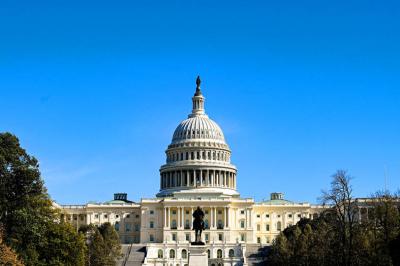
The US House of Representatives yesterday passed the PROTECT Taiwan Act, which stipulates that Washington would exclude China from participating in major global financial organizations if its actions directly threaten Taiwan’s security. The bill, proposed by Republican US Representative Frank Lucas, passed with 395 votes in favor and two against. It stipulates that if China’s actions pose any threat to Taiwan’s security, economic or social systems, the US would, “to the maximum extent practicable,” exclude China from international financial institutions, including the G20, the Bank for International Settlements and the Financial Stability Board. The bill makes it clear that China

‘T-DOME’: IBCS would increase Taiwan’s defense capabilities, enabling air defense units to use data from any sensor system and cut reaction time, a defense official said A defense official yesterday said that a purported new arms sale the US is assembling for Taiwan likely includes Integrated Battle Command Systems (IBCS). The anonymous official’s comments came hours after the Financial Times (FT) reported that Washington is preparing a US$20 billion arms sale encompassing “Patriot missiles and other weapons,” citing eight sources. The Taiwanese official said the IBCS is an advanced command and control system that would play a key role in President William Lai’s (賴清德) flagship defense program, the “T-Dome,” an integrated air defense network to counter ballistic missiles and other threats. The IBCS would increase Taiwan’s

NOMINAL NEWLYWEDS: A man’s family and his wife — his long-term caregiver — are engaged in a legal dogfight over the propriety and validity of the recent union A centenarian’s marriage to his caregiver unbeknownst to his children has prompted legal action, as the caregiver accuses the man’s children of violating her personal liberty and damaging her reputation, while the children have sought a legal option to have the marriage annulled. According to sources, the 102-year-old man surnamed Wang (王) lives in Taipei’s Zhongshan District (中山) and previously worked as a land registration agent. Wang reportedly owns multiple properties and parcels of land worth several hundred million New Taiwan dollars and has ten children. His caregiver, a 69-year-old surnamed Lai (賴), has been caring for him since about 1999,


 RSS
RSS