

The Ministry of Transportation and Communications (MOTC) on Friday approved an application by Star Cruises to operate direct cruises to China without having to stop in a third territory, marking the first time that Taiwan has given the green light to a direct cross-Taiwan Strait cruises.
The MOTC said in a press statement that the one-year license for Star Cruises was issued on a case-by-case basis under regulations governing direct cross-strait shipping links.
A schedule listed in the Star Cruises application said the largest cruise line in the Asia-Pacific would launch direct cruise services between Keelung Harbor and Xiamen, Fujian Province, in the first half of this year.
Despite the nod from Taiwan, MOTC officials said Star Cruises would still have to obtain China’s consent before the proposed Keelung-Xiamen service can begin.
Star Cruises filed the application with the Keelung Harbor Bureau in December, but the screening process turned out to be a frustrating experience for the company, as government officials and the cruise line’s executives disagree over the nature of the service.
MOTC officials said then that that regular cruises between Keelung and Xiamen would constitute marine passenger services, which only Taiwanese vessels or vessels owned by Taiwanese-Chinese joint ventures are allowed to operate under local regulations.
The Hong Kong-based Star Cruises contended, however, that ordinary people are unlikely to use expensive cruises as “passenger services.”
At one point, the company said it might consider withdrawing from the Taiwanese market if the authorities rejected its application to operate the direct Keelung-Xiamen cruise services.
Star Cruises entered Taiwan’s maritime tourism market in 1997, sailing primarily between Keelung and Okinawa. The cruise line stopped sailing this route in October 2005, but resumed the service in June 2007.
The company has been the major player in Taiwan’s cruise market, taking local tourists on cruises to the Japanese islands of Okinawa, Ishigaki and Yonaguri, Taiwan’s Penghu islands and Hong Kong. When the weather turns cold, its ships leave Taiwan to serve Star Cruises’ other Asian routes.
When Star Cruises resumed homeporting in Keelung, Star Cruises’ Taiwan manager Andy Lew openly stated that Star Cruises wanted to launch services from Taiwan to Shanghai and Xiamen — two of China’s port cities.
Taiwan and China reached agreements in November to lift a six-decade ban on direct sea and postal links and to expand air links.
Foreign cruise ships visiting Taiwan now no longer need to sail to a third territory, usually Hong Kong, before they can visit a Chinese port, or vice versa.
Star Cruises contributes at least NT$7 million (US$207,715) in harbor fees a year to the Keelung Harbor Bureau from its homeporting on 80 cruises between March and September.

A Hualien pomelo farmer refused to sell to China after the country announced it would permit more Taiwanese pomelo imports, prompting widespread support from Taiwanese consumers, who rallied to buy his fruit. China’s Taiwan Affairs Office last month said that China’s General Administration of Customs registered an additional 79 Taiwanese pomelo orchards and packing facilities in Hualien County, allowing more Taiwanese producers to export pomelos to China. “I am a Hualien fruit farmer and I refuse to sell to China,” Liu Tzu-hao (劉子豪) from Ruisui Township (瑞穗) said in an online post. Liu is a well-known farmer in the community and has served
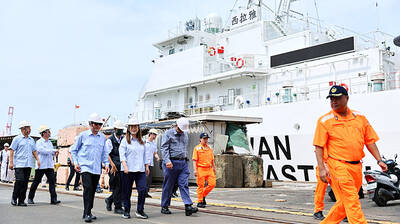
Ocean Affairs Council (OAC) Minister Kuan Bi-ling (管碧玲) on Wednesday said decommissioned coast guard vessels were given to the Philippines to enhance regional rescue capacity and would not affect Taiwanese fishers’ rights and benefits. Kuan made the remarks after confirmation on Tuesday that a 500-tonne Coast Guard Administration (CGA) patrol and rescue vessel would be given to the Philippine Coast Guard. The donation ceremony was reportedly done in Manila, but whether the vessel — previously numbered “CG123” and named Kinmen (金門) — has been handed over has yet to be confirmed. China’s Taiwan Affairs Office (TAO) on Wednesday criticized the donation for “taking
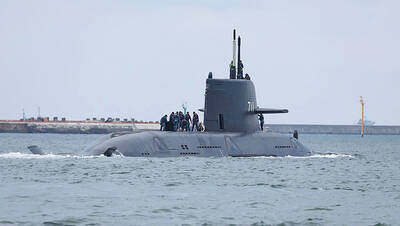
UPDATE: The submarine would need to undergo combined systems testing and crew training for navy personnel before it is ready for mission, an expert said Taiwan’s first domestically built submarine, the Hai Kun (Narwhal, 海鯤), could be delivered to the navy as early as next month, military expert and Taiwan Association for Security and Development chairman Chi Tung-yun (紀東昀) said yesterday. The submarine was yesterday morning observed departing for its 21st sea trial and its 15th submerged test. The vessel missed the initial delivery deadline of November last year due to “testing delays,” its primary contractor, shipbuilder CSBC Corp, Taiwan, said in June. The contractor also cited “political pressure from China” in procuring critical equipment. All testing operations are in the final stages, with the
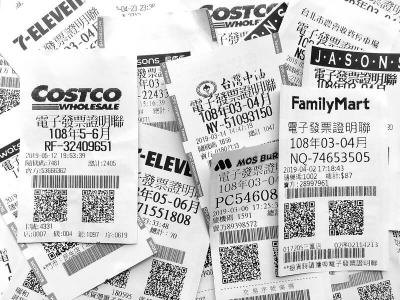
Six NT$10 million (US$315,527) special prizes and seven NT$2 million grand prizes in Taiwan's May-June uniform invoice lottery remained unclaimed as of today, including one NT$10 million winner who spent only NT$10 on an Uber Eats delivery order, the Ministry of Finance said. The ministry said the 13 winners need to claim their prizes by Nov. 5. The eight-digit serial number that won the NT$10 million special prize for May-June was 38548029, with 18 winning receipts in total. The NT$2 million grand prize number was 10138845, of which there were 22 winning receipts, the ministry said. In addition to the receipt issued for an


 RSS
RSS