

The Modern Women’s Foundation (MWF) yesterday urged the government to establish rules regarding intimate examinations in hospitals after a survey suggested that nearly 60 percent of respondents said they would worry about the possibility of sexual harassment during such procedures.
“The MWF has been asking the Department of Health [DOH] to come up with a set of guidelines for intimate examinations for 17 years, after a case in which doctors were accused of sexually harassing patients during physical examinations,” the foundation’s executive director Yao Shu-wen (姚淑文) told a news conference in Taipei. “However, no progress has been made during the past 17 years.”
A survey of 500 patients by the foundation found that 35 percent of the respondents had experienced sexual harassment by doctors, while more than 40 percent had heard stories of harassment from their relatives and friends.
Nearly 60 percent said that they would worry about the possibility of such behavior in the event of them needing to have an intimate examination.
HELP
Seventy percent of the respondents said that they would not know where to find help in the event of being sexually harassed in a hospital and 97 percent supported a set of clear guidelines regarding doctors’ conduct during intimate examinations.
“Some people may think that compared to a doctor’s medical knowledge, the [sexual harassment] issue is not important, many may even think it’s only the subjective opinion of the 35 percent,” said Liu Shu-chiung (劉淑瓊), deputy executive director of the Taiwan Health Care Reform Foundation (THRF). “But of course it’s a big deal when 35 percent of the people subjectively think that they’ve been harassed by doctors.”
Liu said that while most doctors are professional when dealing with patients’ illnesses, some are not as professional in terms of communicating with patients.
CONSENT
Some examples of unprofessional behavior, Liu said, include asking patients private questions too directly, having medical students perform examinations or treatment on patients without obtaining the patients’ consent, and discussing patients’ conditions in public.
“Some medical procedures can be embarrassing and this is why doctors should be more sensitive with patients,” Liu said. “Doctors should fully respect patients’ privacy, explain things to patients using language that they can understand, and always get patients’ consent before making any decision.”
Attorney Song Chung-ho (宋重和), a former prosecutor who has handled dispute cases between doctors and patients, said that having a set of clear guidelines would not only help patients, but would also protect doctors.
“Based on my own experiences [as a prosecutor], I’d say that the judiciary would tend to believe the victim in a sexual harassment case, especially when they are able to present solid testimony,” Song said.
While a doctor charged with sexually harassing a patient may be jailed for up to three years and have their reputation ruined, “having clear guidelines on conduct could really protect the rights of both the patient and the doctor,” Song said.

The donation of offshore patrol vessel Kinmen to the Philippines includes provisions that protect Taiwanese fishers and facilitate security cooperation across the First Island Chain, officials said yesterday. The comment was made during the Cabinet’s comprehensive administrative report at the legislature after Chinese Nationalist Party (KMT) Legislator Hsu Yu-chen (許宇甄) expressed concerns about the decision to give a ship to a country whose coast guard had in 2013 fired on a Taiwanese trawler and killed its captain without provocation. The Cabinet should lay out the safeguards that have been established to prevent the Philippine government from using the Kinmen to harass, expel

GROWING TIES: The CGA is planning a goodwill mission to the Philippines, in what would be the first time since 1975 a Taiwanese paramilitary vessel has visited the country The Coast Guard Administration (CGA) plans to significantly expand its participation in international security cooperative frameworks and its operational capabilities, a budget proposal for next year showed. The budget indicates a transformation of the CGA from a maritime law enforcement arm into a national defense and intelligence gathering entity capable of tackling larger regional security matters. The proposal showed that personnel from the coast guard’s Intelligence Division and Special Action Support Center are to participate in high-level national security talks with the US. As the CGA has dealt with China’s rising “gray zone” threats around Taiwan, it has become a valuable asset to
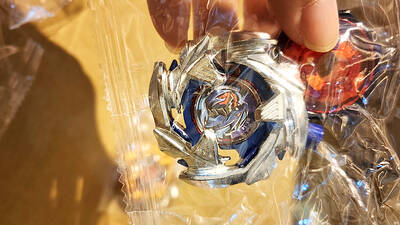
The National Police Agency’s Third Special Police Corps yesterday said that from May to July, it intercepted five smuggling operations from China, seizing more than 70,000 counterfeit Beyblades with an estimated infringement value of NT$34.45 million (US$1.08 million). It added that any bootleg unit that reached the local market could present hidden health hazards to players. Beyblades, a line of spinning toy tops used in competitive gaming and developed in Japan by toy company Takara Tomy, have become popular in Taiwan, making them a target for fraudsters. The Third Special Police Corps, dedicated to safeguarding maritime borders and trade lines,
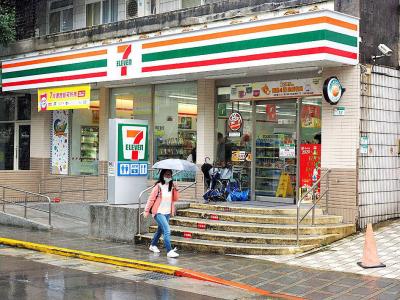
Five customers who made purchases at 7-Eleven stores across Taiwan won the top NT$10 million (US$313,716) special prize in the July-August uniform invoice lottery, including one who spent just NT$27 on photocopying, the convenience store chain said today. The five special prize winners made their purchases at stores in Taoyuan, Taipei, Taichung and Kaohsiung, 7-Eleven operator President Chain Store Corp said. The five winning purchases included NT$29 spent on snacks at a store in Taoyuan's Zhongli District (中壢), NT$27 on photocopying at a store in Taipei's Zhongzheng District (中正), NT$139 on City Cafe coffee and daily necessities at a store in Taipei's


 RSS
RSS