

Accompanied by hundreds of supporters, three women who have filed lawsuits against the police for allegedly beating them during anti-China protests last month, marched to the Taipei District Court for their first court hearing yesterday.
“Our judicial system is not perfect, but we still have some expectations of it. That's why we're trying to seek justice through the judiciary against police abuses,” Judicial Reform Foundation executive director Lin Feng-cheng (林峰正) told a crowd gathered at Liberty Square in support of the complainants before marching to the courthouse a few blocks away.
“We hope the judge will be fair and give us justice,” he said.
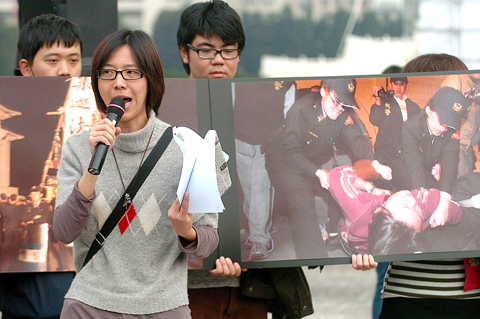
PHOTO: CHIEN JUNG-FONG, TAIPEI TIMES
The three complainants, Huang Yi-ling (黃怡翎), Tseng Hung-wen (曾虹文) and Lin Yun-tzu (林芸姿) — who did not know each other at the time — were talking to friends in front of a store across the street from the Formosa Regent Taipei on the night of Nov. 5, they told the crowd.
At the time, China's Association for Relations Across the Taiwan Strait Chairman Chen Yunlin (陳雲林) was at a dinner banquet hosted by Chinese Nationalist Party (KMT) Chairman Wu Poh-hsiung (吳伯雄) inside the hotel.
As anti-China demonstrators surrounded the hotel and blocked Chen from leaving the venue, the police began to disperse the demonstrators around 10pm.
Before realizing what was going on, the three were pushed by the police against a wall and beaten.
“I was shocked and frightened,” Huang said. “Until today, I still feel fear whenever I see police officers.”
As the three could not identify the police officers who allegedly beat them, they decided to file a lawsuit against Taipei City's Xinyi Precinct police chief Huang Chia-lu (黃嘉祿) — who was the Songshan Precinct chief and on-site police commander at the time.
After explaining their case and showing a video they shot while being dispersed, the three walked to the courthouse accompanied by hundreds of supporters holding a sign that read: “I condemn state violence.”
As it was the first court hearing, the judge only heard their cases and reviewed the evidence.

A Hualien pomelo farmer refused to sell to China after the country announced it would permit more Taiwanese pomelo imports, prompting widespread support from Taiwanese consumers, who rallied to buy his fruit. China’s Taiwan Affairs Office last month said that China’s General Administration of Customs registered an additional 79 Taiwanese pomelo orchards and packing facilities in Hualien County, allowing more Taiwanese producers to export pomelos to China. “I am a Hualien fruit farmer and I refuse to sell to China,” Liu Tzu-hao (劉子豪) from Ruisui Township (瑞穗) said in an online post. Liu is a well-known farmer in the community and has served
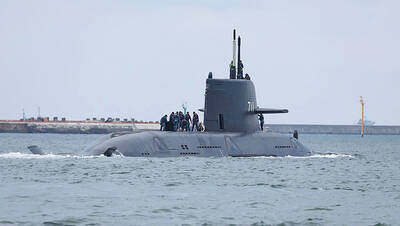
UPDATE: The submarine would need to undergo combined systems testing and crew training for navy personnel before it is ready for mission, an expert said Taiwan’s first domestically built submarine, the Hai Kun (Narwhal, 海鯤), could be delivered to the navy as early as next month, military expert and Taiwan Association for Security and Development chairman Chi Tung-yun (紀東昀) said yesterday. The submarine was yesterday morning observed departing for its 21st sea trial and its 15th submerged test. The vessel missed the initial delivery deadline of November last year due to “testing delays,” its primary contractor, shipbuilder CSBC Corp, Taiwan, said in June. The contractor also cited “political pressure from China” in procuring critical equipment. All testing operations are in the final stages, with the

OCT. 31: The antiviral drugs Tamiflu and Eraflu have been distributed to about 4,000 medical facilities nationwide for people in seven groups who develop flu-like symptoms As the domestic influenza epidemic enters its peak season and continues to escalate, the Centers for Disease Control (CDC) yesterday announced that publicly funded influenza antiviral drugs for seven eligible groups have been extended to Oct. 31, allowing those who develop flu-like symptoms to receive the medication without undergoing a rapid influenza test. The CDC has extended the expanded use of flu antiviral drugs to seven groups: healthcare and influenza-prevention personnel; residents and staff at nursing homes, long-term care facilities and similar institutions; kindergarten and daycare workers and home-based caregivers; students from kindergarten through high school, vocational high school and the
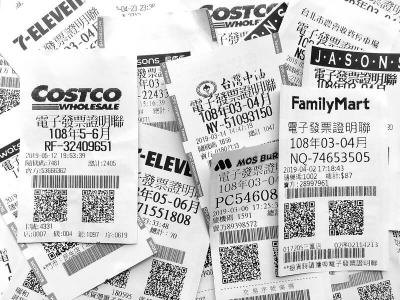
Six NT$10 million (US$315,527) special prizes and seven NT$2 million grand prizes in Taiwan's May-June uniform invoice lottery remained unclaimed as of today, including one NT$10 million winner who spent only NT$10 on an Uber Eats delivery order, the Ministry of Finance said. The ministry said the 13 winners need to claim their prizes by Nov. 5. The eight-digit serial number that won the NT$10 million special prize for May-June was 38548029, with 18 winning receipts in total. The NT$2 million grand prize number was 10138845, of which there were 22 winning receipts, the ministry said. In addition to the receipt issued for an


 RSS
RSS