

Taiwan is seeking to expand the scope of the aid it sends to its allies in the Asia-Pacific, from medical and agricultural assistance to environmental matters such as garbage disposal, Environmental Protection Administration (EPA) officials said.
Following a ministerial forum between Taiwan and its six Asia-Pacific allies in July last year, the administration assigned several teams of experts to make on-site assessments of the environmental situation in the island countries before drafting assistance plans.
Wu Yi-lin (吳奕霖), a senior environmental specialist at the EPA’s Greenhouse Gas Office, said that for the people of the Pacific islands, garbage disposal appears to be a more pressing problem than rising sea levels.
“The world is focused on the problem of rising sea levels, as it is an index of global climate change, but they [the people living on the Pacific islands] think that waste disposal is a more urgent matter,” Wu said.
Most of the Pacific island countries are atolls and have little land for waste dumps, he said.
“They fear that they might be submerged — not by the sea, but by trash,” he said.
Liang Yeon-fong (梁永芳), director of the EPA International Affairs Office and one of the experts who conducted on-site assessments in the Solomon Islands, Marshall Islands, Palau and Nauru, said garbage disposal is a common worry among Taiwan’s allies in the Pacific.
The problem can have a significant impact on the economy of some countries, particularly those that depend on tourism, as tourists are usually repelled by a dirty, disorderly environment, he said.
These countries have only simple, crude waste dumps and sometimes garbage is piled up in the open, Liang said.
To deal with their waste disposal problem, those countries not only need money, but also technical assistance and training, he said.
Liang said the Solomon Islands wanted a waste incinerator, but given the technical expertise needed to maintain and operate such a facility, the administration believed this would not be a practical solution for that country.
The teams said the Solomon Islands once obtained an incinerator for medical waste, but that within three months the equipment had broken down because it was not used properly and has not been used since because of lack of funds and expertise to repair it.
Noting that most of the waste in the Pacific island countries is biodegradable material such as fruit skin and pits, Liang said collection was the main problem, as there were insufficient garbage trucks and public trash cans in those countries.
He said degradable garbage could be used as organic fertilizer, a practice that is already being used at some Taiwanese missions there.
In a report presented to the Ministry of Foreign Affairs, which oversees the foreign aid budget, the EPA recommended donating garbage trucks and helping with the creation of recycling systems.
The EPA has no budget for foreign aid, but can provide technical assistance and manpower to the nation’s allies. Liang called on the ministry to integrate environmental protection in its assistance program, which so far has focused on medical services and agricultural aid.
“Taiwan has expertise in waste reduction and recycling,” he said.
EPA statistics show that Taiwan’s recycling rate was 38.7 percent last year, which compares well with other developed countries.
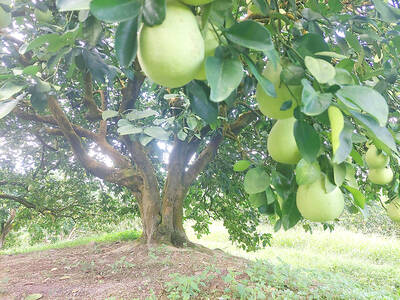
A Hualien pomelo farmer refused to sell to China after the country announced it would permit more Taiwanese pomelo imports, prompting widespread support from Taiwanese consumers, who rallied to buy his fruit. China’s Taiwan Affairs Office last month said that China’s General Administration of Customs registered an additional 79 Taiwanese pomelo orchards and packing facilities in Hualien County, allowing more Taiwanese producers to export pomelos to China. “I am a Hualien fruit farmer and I refuse to sell to China,” Liu Tzu-hao (劉子豪) from Ruisui Township (瑞穗) said in an online post. Liu is a well-known farmer in the community and has served
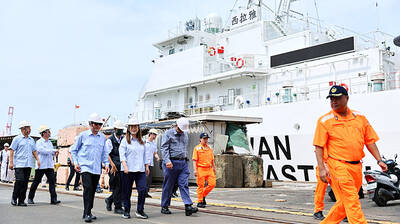
Ocean Affairs Council (OAC) Minister Kuan Bi-ling (管碧玲) on Wednesday said decommissioned coast guard vessels were given to the Philippines to enhance regional rescue capacity and would not affect Taiwanese fishers’ rights and benefits. Kuan made the remarks after confirmation on Tuesday that a 500-tonne Coast Guard Administration (CGA) patrol and rescue vessel would be given to the Philippine Coast Guard. The donation ceremony was reportedly done in Manila, but whether the vessel — previously numbered “CG123” and named Kinmen (金門) — has been handed over has yet to be confirmed. China’s Taiwan Affairs Office (TAO) on Wednesday criticized the donation for “taking
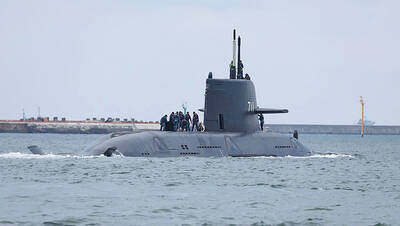
UPDATE: The submarine would need to undergo combined systems testing and crew training for navy personnel before it is ready for mission, an expert said Taiwan’s first domestically built submarine, the Hai Kun (Narwhal, 海鯤), could be delivered to the navy as early as next month, military expert and Taiwan Association for Security and Development chairman Chi Tung-yun (紀東昀) said yesterday. The submarine was yesterday morning observed departing for its 21st sea trial and its 15th submerged test. The vessel missed the initial delivery deadline of November last year due to “testing delays,” its primary contractor, shipbuilder CSBC Corp, Taiwan, said in June. The contractor also cited “political pressure from China” in procuring critical equipment. All testing operations are in the final stages, with the
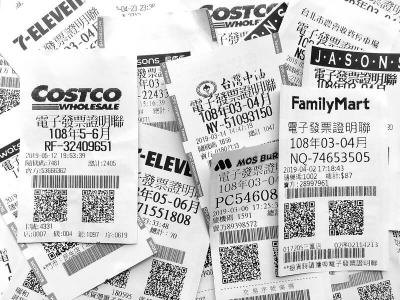
Six NT$10 million (US$315,527) special prizes and seven NT$2 million grand prizes in Taiwan's May-June uniform invoice lottery remained unclaimed as of today, including one NT$10 million winner who spent only NT$10 on an Uber Eats delivery order, the Ministry of Finance said. The ministry said the 13 winners need to claim their prizes by Nov. 5. The eight-digit serial number that won the NT$10 million special prize for May-June was 38548029, with 18 winning receipts in total. The NT$2 million grand prize number was 10138845, of which there were 22 winning receipts, the ministry said. In addition to the receipt issued for an


 RSS
RSS