

A group of Chinese academics, including Zhang Mingqing (張銘清), vice chairman of China’s intermediary body, the Association for Relations Across the Taiwan Strait (ARATS), arrived in Taiwan yesterday. They are scheduled to take part in an academic symposium in Tainan County today.
Zhang, formerly a spokesman for the Taiwan Affairs Office under China’s State Council before becoming the deputy head of ARATS in 2006, is leading a 21-member Chinese academic group to attend the 2008 Cross-Strait Academic Symposium on Mass Communications and Image Arts to be held at Tainan National University of the Arts (TNUA) located in Guantian Township (官田), Tainan County.
DEAN
Zhang is taking part in the academic symposium in his capacity as dean of Xiamen University’s School of Journalism and Communication.
“The symposium, which is titled Globalization and Reflection on Values, is aimed at examining the cultural assets and unique values in Taiwan and China, respectively, in the face of increasing globalization and the development of homogeneity in modern societies,” said Chen Ling-hui (陳齡慧), director of the TNUA College of Sound and Image Arts, one of the sponsors of the symposium.
Zhang and other Chinese academics will deliver speeches and share their research papers with their Taiwanese counterparts during the one-day symposium, which is the seventh of its kind, Chen said.
FIELD TRIPS
They are also scheduled to make field trips to other universities in southern Taiwan tomorrow to “hear in person more local voices from Taiwan,” Chen said.
On reports that some Democratic Progressive Party supporters will protest against Zhang at TNUA, Chen Ling-hui said Zhang’s visit is for purely academic purposes and has nothing to do with politics.
“TNUA respects the freedom of speech of all members of Taiwanese society, but the school hopes that the protesters will look rationally at the reality and not interrupt the symposium,” the director said.

Starbucks Taiwan’s decision to charge for drink customization, which had been free, has sparked consumer backlash, highlighting the challenge of raising prices without making customers feel they are losing value, experts said. Since Oct. 12, customers who order drinks with less or no ice and ask to have the volume topped up with milk or other liquid have been charged an additional NT$15. Topping off drinks without ice was previously free, and disgruntled customers posted photos on social media showing that iced drinks ordered without ice were only half full if the extra NT$15 was not paid. The posts drew tens of thousands

EXPLANATION: Tsai said he attended events featuring various interviewees to observe them firsthand as part of his interview research Television host Kevin Tsai (蔡康永) last night broke his silence over a controversy surrounding his appearance at a campaign event for Democratic Progressive Party Taipei mayoral candidate Puma Shen (沈伯洋), saying he had never supported Taiwan independence. “I have always hoped for friendly cross-strait relations. I have never supported Taiwan independence,” Tsai wrote in a post on the Chinese social media platform Sina Weibo. Tsai, who has hosted television shows in China, attended the opening of Shen’s campaign headquarters on Oct. 4, drawing criticism from Chinese social media users and prompting some Chinese companies to distance themselves from him. China’s Taiwan Affairs Office

Major department stores across Taiwan, including Taipei 101, Shin Kong Mitsukoshi, Far Eastern SOGO, Breeze and Honhui Plaza, are closed today due to Typhoon Champi, while major supermarkets remain open. Taipei 101 said its shopping mall, observatory and restaurants on higher floors are closed for the day, with future hours to be adjusted based on the storm's status. Shin Kong Mitsukoshi has closed all 16 of its branches nationwide, as well as its Taipei Railway Station mall and SKM Park Outlets in Kaohsiung. Far Eastern SOGO said it has closed all of its branches nationwide, including Garden City in Taipei, citing the safety
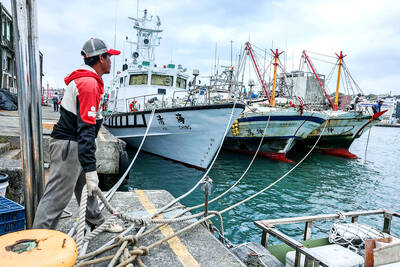
DOUBLE-CHECK: Mandarin Airlines said that it would adjust its schedule according to weather conditions, while high-speed rail services are to remain undisrupted Airlines, ferry services, railways and national parks announced cancelations and closures yesterday, as Typhoon Champi bore down on Taiwan. The Central Weather Administration yesterday issued land warnings for most of Taiwan proper, as Champi is forecast to come closest to the nation today. Taiwan Railway Corp (TRC) has canceled all express trains on its western and eastern trunk lines today, while the high-speed rail system would continue to operate normally. For non-reserved TRC services, trains on the Coast Line, Chengzhui Line, Yilan Line and North Link Line are fully suspended. Services between Hualien and Taitung counties, as well as other unsuspended routes, would operate


 RSS
RSS