


Cheng Wen-tsang (鄭文燦), the director of the Democratic Progressive Party’s (DPP) Department of Culture and Information, told a press conference yesterday that President Ma Ying-jeou (馬英九) and Premier Liu Chao-shiuan (劉兆玄) should apologize and take responsibility for allowing toxic milk power to enter Taiwan.
He said Ma has not denounced China for the poisoned milk power incident. In contrast, US imports of Chinese toys containing lead had been an issue during the US presidential campaign and the Japanese prime minister had demanded China shoulder responsibility for selling frozen dumplings contaminated with pesticide.
Cheng said that the former DPP Cabinet formed a task force to address the safety of imported products and set up a Web site allowing the public to report concerns on the safety of such products.
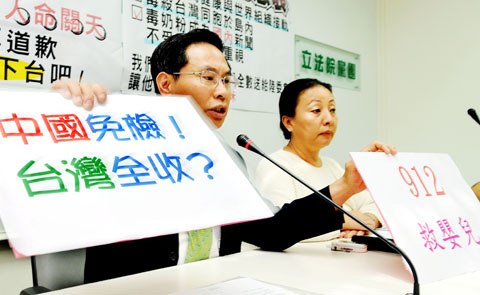
PHOTO: LIN CHENG-KUNG, TAIPEI TIMES
Ma’s administration had not established such a task force nor had it updated the Web site, he said.
DPP legislative whip Chang Hwa-kuan (張花冠) told a separate meeting that the toxic milk power incident was a result of Ma’s diplomatic truce.
She said that because China had barred Taiwan from joining the World Heath Organization (WHO) and Ma’s China-leaning policies led the government to abandon a WHO bid, the international community likely treated the entry of toxic milk power to Taiwan as a “domestic” issue, not an international one.
The Executive Yuan’s Consumer Protection Commission yesterday said that residents who feel their health may have been harmed by consuming products containing milk powder imported from China could apply for compensation.
The announcement came following the recent discovery that 25 tonnes of milk powder containing the toxic chemical melamine had been exported to Taiwan by the Sanlu Group, China’s largest milk powder producer.
Melamine is a substance used in the production of plastics and fertilizers.
The commission said that according to Taiwan’s consumer protection laws, the Taiwanese importer is legally responsible for the tainted milk powder that it imported into the country.
It said that anyone whose health has been affected by the products can contact the Department of Health or the commission by calling the hotline 1950 to seek compensation.
All applications will be examined and processed in accordance with the law, the commission said.
The Executive Yuan announced over the weekend that the premier has ordered a ban on imports of all Sanlu products from China.
As of Sunday afternoon, the Department of Health (DOH) had tracked down about 70 percent of the 25 tonnes of tainted milk powder, with some of it having already been used in processed coffee and drinks as well as in bread and biscuit production.
“We estimate that at least 50 packs [of milk powder] have already been consumed,” said Hsiao Tung-ming (蕭東銘), acting director of the Bureau of Food Safety.
This number was estimated by determining the time at which the contaminated end products were sold at the local retailers, such as supermarkets, bakeries and local diners.
The majority of the estimated 50 packs were consumed in Hualien, Hsiao said.
Of the 25 tonnes of toxic milk powder from China, packaged into 1,000 packs, 564 have been sealed, two have been used for sampling purposes and 434 have been sold to distributors and manufacturers of semi-finished and finished products such as bread, mooncakes and coffee beverages, Hsiao said.
The bureau emphasized that the contaminated products are to be destroyed and will not be found on the market.
The powder has also been used as an ingredient in Blue Mountain Coffee canned beverages manufactured by Chun Chiao (春喬食品興業公司), 665 cases of which were shipped to Hong Kong in mid-July.
“We have already notified authorities in Hong Kong [of this matter],” Hsiao said.
The bureau also called on Fonterra, the company that imported and sold the powder to distributors nationwide, to take full responsibility for the financial losses and damage to the reputation of distributors and manufacturers.
Consumers who bought products made with the contaminated milk powder can receive refunds from retailers with proof of purchase. Fonterra must then compensate the retailers for their losses.
Information regarding the brands and manufacturers of the contaminated products can found at the DOH official Web site www.doh.gov.tw.
The Mainland Affairs Council (MAC) yesterday urged both sides of the Taiwan Strait to craft an institutionalized mechanism for real time reporting on food safety issues in order to better protect public health.
MAC Vice Chairman Fu Dong-cheng (傅棟成) said his council has asked the quasi-official Straits Exchange Foundation (SEF) to contact its Chinese counterpart, the Association for Relations Across the Taiwan Strait (ARATS), to check on details about the milk powder contamination case to facilitate handling of follow-up issues in Taiwan and to prevent similar cases.
SEF Secretary-General Kao Kong-lian (高孔廉) yesterday said that Ma telephoned him early yesterday morning to enquire about the matter.
Kao said he hoped Bejing would find out what went wrong and mete out punishments to those responsible. He also asked Beijing to help victims in Taiwan seek compensation.
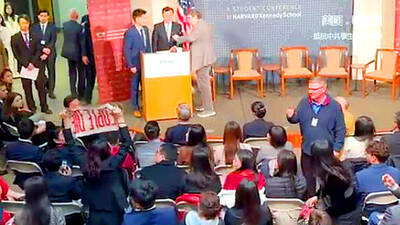
A group of Taiwanese-American and Tibetan-American students at Harvard University on Saturday disrupted Chinese Ambassador to the US Xie Feng’s (謝鋒) speech at the school, accusing him of being responsible for numerous human rights violations. Four students — two Taiwanese Americans and two from Tibet — held up banners inside a conference hall where Xie was delivering a speech at the opening ceremony of the Harvard Kennedy School China Conference 2024. In a video clip provided by the Coalition of Students Resisting the CCP (Chinese Communist Party), Taiwanese-American Cosette Wu (吳亭樺) and Tibetan-American Tsering Yangchen are seen holding banners that together read:

UNAWARE: Many people sit for long hours every day and eat unhealthy foods, putting them at greater risk of developing one of the ‘three highs,’ an expert said More than 30 percent of adults aged 40 or older who underwent a government-funded health exam were unaware they had at least one of the “three highs” — high blood pressure, high blood lipids or high blood sugar, the Health Promotion Administration (HPA) said yesterday. Among adults aged 40 or older who said they did not have any of the “three highs” before taking the health exam, more than 30 percent were found to have at least one of them, Adult Preventive Health Examination Service data from 2022 showed. People with long-term medical conditions such as hypertension or diabetes usually do not
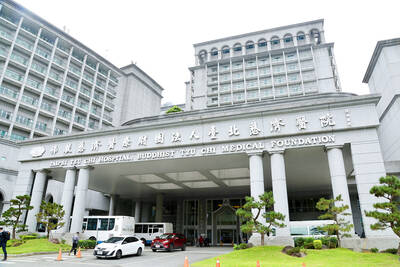
POLICE INVESTIGATING: A man said he quit his job as a nurse at Taipei Tzu Chi Hospital as he had been ‘disgusted’ by the behavior of his colleagues A man yesterday morning wrote online that he had witnessed nurses taking photographs and touching anesthetized patients inappropriately in Taipei Tzu Chi Hospital’s operating theaters. The man surnamed Huang (黃) wrote on the Professional Technology Temple bulletin board that during his six-month stint as a nurse at the hospital, he had seen nurses taking pictures of patients, including of their private parts, after they were anesthetized. Some nurses had also touched patients inappropriately and children were among those photographed, he said. Huang said this “disgusted” him “so much” that “he felt the need to reveal these unethical acts in the operating theater
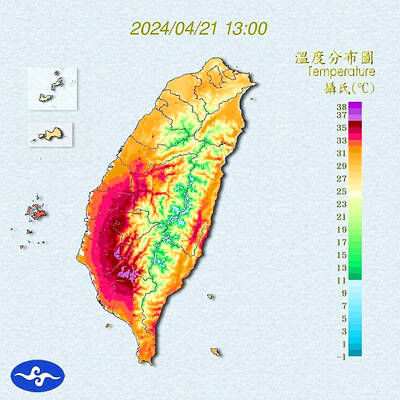
Heat advisories were in effect for nine administrative regions yesterday afternoon as warm southwesterly winds pushed temperatures above 38°C in parts of southern Taiwan, the Central Weather Administration (CWA) said. As of 3:30pm yesterday, Tainan’s Yujing District (玉井) had recorded the day’s highest temperature of 39.7°C, though the measurement will not be included in Taiwan’s official heat records since Yujing is an automatic rather than manually operated weather station, the CWA said. Highs recorded in other areas were 38.7°C in Kaohsiung’s Neimen District (內門), 38.2°C in Chiayi City and 38.1°C in Pingtung’s Sandimen Township (三地門), CWA data showed. The spell of scorching


 RSS
RSS