


ANALYSIS: President Ma Ying-jeou (馬英九) went too far by trying to economize on his upcoming trip to Latin America, with the use of commercial flights highlighting his fundamental misunderstanding of his position as president and lack of foreign affairs strategy, analysts said yesterday.
Ma’s decision to travel on a passenger airliner for his first state visit next month has taken a battering from the opposition. The Presidential Office argued that the use of commercial flights was an attempt to save money and to avoid the impression that Taiwan “likes to flaunt its wealth.”
The Democratic Progressive Party (DPP), however, criticized the Presidential Office for “saving a little money, but losing out on upholding Taiwan’s dignity” by not taking charter flights.
It also contended that using a commercial airliner and traveling with other passengers could increase security risks.
Lai I-chung (賴怡忠), former deputy director of the DPP's Department of International Affairs and an executive member of the Taiwan Thinktank, said that the matter emphasized Ma’s misunderstanding of his position as president.
“The presidency is an institution, not a personal possession,” he said. “It seems he thinks the position is like a piece of clothing that he owns and he can put on or take off at any time.”
Lai said Ma did not seem to understand that once elected president, he is president 24 hours a day, 365 days a year.
Dismissing the rationale given by the Presidential Office as “utterly unconvincing,” Lai said other countries’ impression of Taiwan had nothing to do with the plane Ma took.
“The truth of the matter is the plane the president takes is a presidential flight, no matter whether it is ‘Air Force One’ or a commercial jetliner,” he said.
The use of commercial flights was just a technical problem in the Ma administration’s “doubtful” foreign policy, Lai said, adding that the “crisis of confidence” he has caused the US and Japan was a more serious problem for Ma to worry about.
Lai said the basic skepticism Washington held for Taipei was because the Ma administration has attached more importance to cross-strait relations than to bilateral ties.
Although Washington was happy to see improvements in Taiwan-China relations, Lai said US Secretary of State Condoleezza Rice also said that the US has a strong relationship with Taiwan and would like to see “Taiwan have real space in the international community.”
Less than two weeks after Rice made those remarks, however, speculation was rife that the Ma administration had asked Washington to suspend arms sales to Taipei before the quasi-official agencies in China and Taiwan resumed talks, Lai said.
It sent out a message that the Ma administration saw the security cooperation between Taipei and Washington as unhealthy to both sides, while the former Chen Shui-bian (陳水扁) administration saw Taiwan-US cooperation as a bargaining chip at the negotiation table with Beijing and contended that the closer the Taiwan-US relations, the more conducive it was to handling cross-strait ties, Lai said.
Tokyo also had “significant doubts,” Lai said, adding that Ma had too many “surprises” for Tokyo, which lowered trust to a “very low level.”
Tung Li-wen (董立文), a public security professor at the Central Police University, said that the problem with Ma’s trip was not whether commercial jets would save money or stop countries from seeing Taiwan as a country that “likes to flaunt its wealth.”
“The problem lies in whether Ma actually has a concrete foreign policy,” Tung said.
Former presidents Chen and Lee Teng-hui (李登輝), Tung said, had a specific strategy for each overseas visit and even the KMT had precise goals when it conducted talks with its Chinese counterpart.
However, it seems Ma only pays attention to such technical trivia as whether to take a charter flight or a passenger airliner and whether to allow the press corps to cover his activities in the US, Tung said.
Liu Bih-rong (劉必榮), a professor of foreign affairs at Soochow University, said that Ma had gone too far by trying to economize on his upcoming trip.
“He could save money elsewhere,” Liu said. “Besides, whether other countries will see Taiwan as a country that likes to flaunt its wealth has more to do with the country’s policy and concrete measures than what kind of plane the president takes.”
Liu, however, complimented Ma for attaching more importance to the diplomatic allies he would visit than the transit stops in the US, saying it showed respect to the countries he was to visit.
“During Chen’s presidency, his overemphasis on US transfer stops led the allies he visited to think that they were just a sideshow and nothing but a pawn for Chen to play with,” he said.
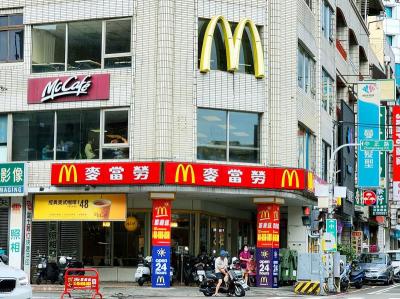
Fast food chain McDonald's is to raise prices by up to NT$5 on some products at its restaurants across Taiwan, starting on Wednesday next week, the company announced today. The prices of all extra value meals and sharing boxes are to increase by NT$5, while breakfast combos and creamy corn soup would go up by NT$3, the company said in a statement. The price of the main items of those meals, if ordered individually, would remain the same. Meanwhile, the price of a medium-sized lemon iced tea and hot cappuccino would rise by NT$3, extra dipping sauces for chicken nuggets would go up

Yangmingshan National Park’s Qingtiangang (擎天崗) nature area has gone viral after a park livestream camera observed a couple in the throes of intimate congress, which was broadcast live on YouTube, drawing large late-night crowds and sparking a backlash over noise, bright lights and disruption to wildlife habitat. The area’s livestream footage appeared to show a couple engaging in sexual activity on a picnic table in the park on Friday last week, with the uncensored footage streamed publicly online. The footage quickly spread across social media, prompting a tide of visitors to travel to the site to “check in” and recreate the

Minister of Digital Affairs Lin Yi-ching (林宜敬) yesterday cited regulatory issues and national security concerns as an expert said that Taiwan is among the few Asian regions without Starlink. Lin made the remarks on Facebook after funP Innovation Group chief executive officer Nathan Chiu (邱繼弘) on Friday said Taiwan and four other countries in Asia — China, North Korea, Afghanistan and Syria — have no access to Starlink. Starlink has become available in 166 countries worldwide, including Ukraine, Malaysia, the Philippines and Vietnam, in the six years since it became commercial, he said. While China and North Korea block Starlink, Syria is not
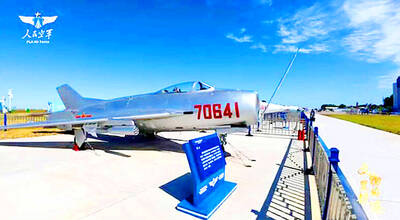
GROUNDED: A KMT lawmaker proposed eliminating drone development programs and freezing funding for counterdrone systems, despite China’s adoption of the technology China has deployed attack drones at air bases near the Taiwan Strait in a strategy aimed at overwhelming Taiwan’s air defense systems through saturation attacks, the Mainland Affairs Council (MAC) said. The council’s latest quarterly report on China said that satellite imagery and open-source intelligence indicate that the Chinese People’s Liberation Army (PLA) had converted retired J-6 fighter jets into J-6W drones, which the PLA has stationed at six air bases near Taiwan, five in China’s Fujian Province and one in Guangdong Province. The report cited J. Michael Dahm, a senior fellow at the US-based Mitchell Institute, as saying that China has


 RSS
RSS