


US trade officials are near the end of a review evaluating Taiwan’s prolonged crackdown on intellectual property piracy that could lead to Taiwan’s removal from a list of countries the US considers serious violators of copyrights and other intellectual property rights (IPR), senior US Trade Representative (USTR) officials said.
The review is called an out-of-cycle (OCR) review, and began earlier this year shortly after the USTR office released its latest annual report on “Special 301” issues, named for the section of US trade law that deals with IPR issues.
USTR officials have been in touch with Taiwan representatives throughout the process and sent a staff delegation to Taipei last month to discuss the OCR and the outstanding IPR issues.
While the officials could not venture a prediction on whether the current review would convince them to drop Taiwan from the so-called IPR “watch list,” they did offer some positive comments in an exclusive interview with the Taipei Times this week.
“In part, the announcement of the OCR is reflective of our recognition that there was swift progress being made in Taiwan on some of those issues, and a desire on our part to consider that progress earlier than next year,” when the next Special 301 report comes out, said one senior USTR official, who was not permitted to be identified by name.
Taiwan has been on the watch list, and the more severe priority watch list, since August 1998.
In 2001, it was elevated to the priority list, and was placed back on the watch list in 2004.
It remained on the list in this year’s Special 301 report.
In that and earlier reports, the USTR office praised Taiwan for making progress in its fight against piracy, but that progress was never enough to lead the US to remove Taiwan from the watch list.
The OCR is interpreted by some as a tacit admission that the agency may have been too harsh.
The specific problems identified by the USTR in its latest and other recent reports, have focused on Internet piracy such as peer-to-peer file sharing, on-campus piracy, and the Ministry of Education’s Taiwan Academic Network (TANet).
It has also called for legislation to impose liability on Internet service providers for enabling piracy. While the officials declined to comment on any of those issues individually, they did praise Taiwan for creating a special IPR Court, which was inaugurated earlier this month.
“We welcome the news that the IPR Court has become operational,” one official said. “In the Special 301 Report, we urged Taiwan to make the IPR Court operational as soon as possible, and we appreciate hearing reports that that has now taken place.”
Overall, “it is clear that Taiwan has made progress,” although outstanding issues remain, the official said.
“Weighing the significance of the progress against the significance of the outstanding issues is exactly the kind of discussion that takes place with the councils of the US government in the interagency groups charged with making that decision,” he said.
“So what I can say is that every consideration will be given to the progress that has been made as well as to the challenges that lie ahead,” he said.
The officials said they expected to announce the results of their review “in the near future.”
That would come in the form of a notice in the Federal Register, an official compendium of government regulations and actions, which would give the public 30 or 60 days to comment on the recommendations.
Then, an interagency committee, made up of representatives of the USTR, the departments of State, Commerce and Justice and other agencies, will discuss the comments and the USTR’s decisions. After the agencies sign onto the decision, it would become final.

A group of Taiwanese-American and Tibetan-American students at Harvard University on Saturday disrupted Chinese Ambassador to the US Xie Feng’s (謝鋒) speech at the school, accusing him of being responsible for numerous human rights violations. Four students — two Taiwanese Americans and two from Tibet — held up banners inside a conference hall where Xie was delivering a speech at the opening ceremony of the Harvard Kennedy School China Conference 2024. In a video clip provided by the Coalition of Students Resisting the CCP (Chinese Communist Party), Taiwanese-American Cosette Wu (吳亭樺) and Tibetan-American Tsering Yangchen are seen holding banners that together read:

UNAWARE: Many people sit for long hours every day and eat unhealthy foods, putting them at greater risk of developing one of the ‘three highs,’ an expert said More than 30 percent of adults aged 40 or older who underwent a government-funded health exam were unaware they had at least one of the “three highs” — high blood pressure, high blood lipids or high blood sugar, the Health Promotion Administration (HPA) said yesterday. Among adults aged 40 or older who said they did not have any of the “three highs” before taking the health exam, more than 30 percent were found to have at least one of them, Adult Preventive Health Examination Service data from 2022 showed. People with long-term medical conditions such as hypertension or diabetes usually do not
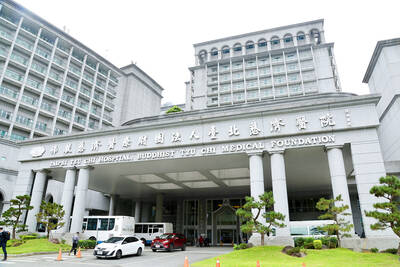
POLICE INVESTIGATING: A man said he quit his job as a nurse at Taipei Tzu Chi Hospital as he had been ‘disgusted’ by the behavior of his colleagues A man yesterday morning wrote online that he had witnessed nurses taking photographs and touching anesthetized patients inappropriately in Taipei Tzu Chi Hospital’s operating theaters. The man surnamed Huang (黃) wrote on the Professional Technology Temple bulletin board that during his six-month stint as a nurse at the hospital, he had seen nurses taking pictures of patients, including of their private parts, after they were anesthetized. Some nurses had also touched patients inappropriately and children were among those photographed, he said. Huang said this “disgusted” him “so much” that “he felt the need to reveal these unethical acts in the operating theater
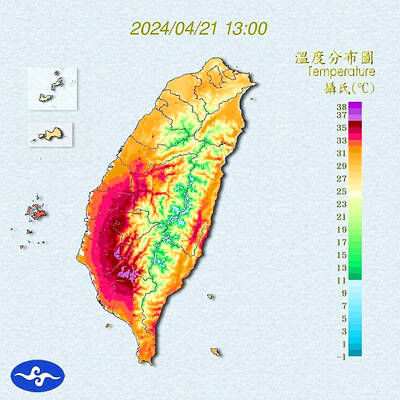
Heat advisories were in effect for nine administrative regions yesterday afternoon as warm southwesterly winds pushed temperatures above 38°C in parts of southern Taiwan, the Central Weather Administration (CWA) said. As of 3:30pm yesterday, Tainan’s Yujing District (玉井) had recorded the day’s highest temperature of 39.7°C, though the measurement will not be included in Taiwan’s official heat records since Yujing is an automatic rather than manually operated weather station, the CWA said. Highs recorded in other areas were 38.7°C in Kaohsiung’s Neimen District (內門), 38.2°C in Chiayi City and 38.1°C in Pingtung’s Sandimen Township (三地門), CWA data showed. The spell of scorching


 RSS
RSS