


A comprehensive anti-human trafficking law must include a clear definition of the issue as well as a mechanism that provides victims with care and protection in a dignified manner, a group of activists said yesterday at a public hearing on the draft of a statute on combating human trafficking.
According to the draft proposed by an alliance of non-governmental organizations combating human trafficking, the definition of human trafficking is any performance of labor that is derived from coercion, exploitation, unlawful imprisonment, illegal debt bondage, drugs, hypnosis, fraud, surveillance, detainment of important documents and threats.
Illegal extraction of human organs and the forced sex trade are also included under the umbrella of human trafficking, the draft states.
Shen Mei-chen (沈美真), a lawyer and president of the Women’s Rescue Foundation, said the law had to assert that the victims of trafficking should be treated in a dignified and humane manner if they are apprehended by the authorities.
They should also be allowed to work if they are asked to stay in Taiwan while awaiting trial, Shen said.
“The law must provide these people with enough incentives to stay in Taiwan to testify against their abusers. They need to know they would not encounter any risk by taking their aggressors to court,” Shen said, stressing that Taiwanese authorities, especially the judiciary, had to be educated on how to handle human trafficking cases in a professional and sensitive manner.
Reverend Peter O’Neill from Hsinchu Catholic Diocese’s Migrant and New Immigrants Service Center also urged the government to punish Taiwanese abusers and brokers, and not just the illegal foreign workers.
O’Neill said that some people are being detained in Taiwan against their will to testify in court even though they wanted to go home.
“The forced detention completely violates UN human rights protocols,” he said.
“We also need to determine the reason why some workers are here illegally,” said Wang Chuan-ping (王娟萍), executive director of the Labor Rights Association.
“Some people came to Taiwan with legal documents, but later became illegal foreigners because of their Taiwanese employers or brokers. We cannot stereotype all illegal workers as criminals without getting to the root of the issue,” Wang said.
The Collective of Sex Workers and Supporters advocated including sex workers in the laborer category, but many of the activists disagreed with the suggestion because the global trend is to treat the two subjects as separate.
Taiwan has for the past two years been placed on the “Tier 2” list in the US’ annual Trafficking in Persons Report for failing to comply with the “minimum standards to eliminate trafficking.”
The report recommended that Taiwan pass and implement a comprehensive anti-trafficking law prohibiting and punishing all severe forms of trafficking and extend the full protection of the Labor Standards Law to all categories of foreign labor, including domestic helpers and caregivers.
Yesterday’s public hearing was the first of a series, Chinese Nationalist Party (KMT) Legislator Wu Yu-sheng (吳育昇) said, promising that the draft would receive bipartisan support in the legislature.

A group of Taiwanese-American and Tibetan-American students at Harvard University on Saturday disrupted Chinese Ambassador to the US Xie Feng’s (謝鋒) speech at the school, accusing him of being responsible for numerous human rights violations. Four students — two Taiwanese Americans and two from Tibet — held up banners inside a conference hall where Xie was delivering a speech at the opening ceremony of the Harvard Kennedy School China Conference 2024. In a video clip provided by the Coalition of Students Resisting the CCP (Chinese Communist Party), Taiwanese-American Cosette Wu (吳亭樺) and Tibetan-American Tsering Yangchen are seen holding banners that together read:

UNAWARE: Many people sit for long hours every day and eat unhealthy foods, putting them at greater risk of developing one of the ‘three highs,’ an expert said More than 30 percent of adults aged 40 or older who underwent a government-funded health exam were unaware they had at least one of the “three highs” — high blood pressure, high blood lipids or high blood sugar, the Health Promotion Administration (HPA) said yesterday. Among adults aged 40 or older who said they did not have any of the “three highs” before taking the health exam, more than 30 percent were found to have at least one of them, Adult Preventive Health Examination Service data from 2022 showed. People with long-term medical conditions such as hypertension or diabetes usually do not
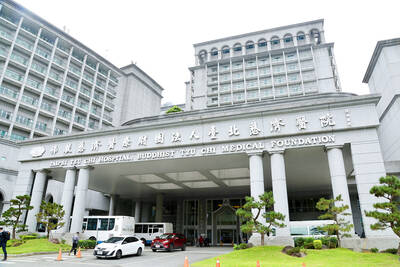
POLICE INVESTIGATING: A man said he quit his job as a nurse at Taipei Tzu Chi Hospital as he had been ‘disgusted’ by the behavior of his colleagues A man yesterday morning wrote online that he had witnessed nurses taking photographs and touching anesthetized patients inappropriately in Taipei Tzu Chi Hospital’s operating theaters. The man surnamed Huang (黃) wrote on the Professional Technology Temple bulletin board that during his six-month stint as a nurse at the hospital, he had seen nurses taking pictures of patients, including of their private parts, after they were anesthetized. Some nurses had also touched patients inappropriately and children were among those photographed, he said. Huang said this “disgusted” him “so much” that “he felt the need to reveal these unethical acts in the operating theater
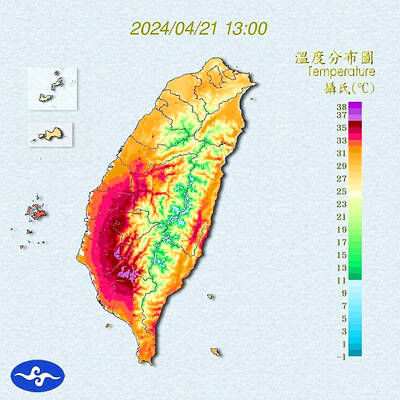
Heat advisories were in effect for nine administrative regions yesterday afternoon as warm southwesterly winds pushed temperatures above 38°C in parts of southern Taiwan, the Central Weather Administration (CWA) said. As of 3:30pm yesterday, Tainan’s Yujing District (玉井) had recorded the day’s highest temperature of 39.7°C, though the measurement will not be included in Taiwan’s official heat records since Yujing is an automatic rather than manually operated weather station, the CWA said. Highs recorded in other areas were 38.7°C in Kaohsiung’s Neimen District (內門), 38.2°C in Chiayi City and 38.1°C in Pingtung’s Sandimen Township (三地門), CWA data showed. The spell of scorching


 RSS
RSS