


Taiwan is well known as a manufacturer of high-tech goods, and Taipei 101 has become an internationally recognized symbol of the nation’s economic achievements. But Taiwan has also achieved a benchmark of social progress that is lesser known, but equally impressive: It has the highest recycling rate in the world.
The fact that Taiwan recycles an average of 32.22 percent of all waste may seem unimpressive, but according to Lin Chien-huei (林建輝), the director of the Environmental Protection Administration’s Recycling Fund Management Board, the figure is remarkable when compared with other countries.
“According to the latest research in the field, only about 40 percent of all waste is recyclable, so Taiwan is actually recycling more than 80 percent of all recyclable waste,” Lin told the Taipei Times on Thursday.
Since 1998, the management board has masterminded Taiwan’s recycling strategy, Lin said, adding that in the past few years, because the price of raw materials has been on the rise, recycled materials have also increased in demand and price.
“There is virtually nothing in the world that cannot be recycled. The question is whether the materials are worth reusing, in terms of cost-effectiveness,” he said.
The board identifies some 30 types of waste as recyclable, including various metals, glass, some types of plastic, paper, and some home appliances and electronics, Lin said. He added that with regard to recycling these materials, Taiwan has achieved some notable levels.
“For example,” said Lin, “While the EU has set a goal of recycling 25 percent of all discarded batteries by 2015, we have averaged more than 30 percent in the past few years. Last year, we even broke the 40 percent mark.”
In addition to batteries, the nation’s recycling rates for containers are quite high — such as the rate for PEP plastic drink bottles, which he said is 100 percent.
Several reasons contribute to Taiwan’s success in recycling: a solid policy platform, a transparent price schedule for reusable materials and a convenient recycling process, Lin said.
The board runs the recycling process quite well now, he said, but “the mechanism was the result of a few years of trial and error.”
In 1997, when the government announced that a recycling fee would be collected from all manufacturers, businesses formed private unions to manage the collection of these fees, Lin said.
“But because Taiwan’s economic structure is one with many small and medium-sized enterprises, the scale of management needed soon snowballed, and it became difficult for unions to handle. It became clear that the government needed to step in and form an agency that was solely dedicated to that purpose,” he said.
Because the board was a government agency, it was able to provide a fair trade mechanism that was tailored to Taiwan’s needs, he added.
Lin said that the next step, after having a central organization intact, was a guided transaction process between manufacturers of waste and recyclers.
“Taiwan employs a ‘cradle to grave’ policy in terms of designating responsibility ownership for recycling work — meaning that manufacturers of, say, soft drinks are responsible for the fees incurred for collecting and recycling their products’ empty cans,” he said.
When the government announced the recycling fee, it also established a fee schedule for all manufacturers with products that generate waste, based on the amount of waste their products create, Lin said.
The schedule is calculated base on the type and amount of materials contained in the waste, and the difficulty of collecting and recycling that waste.
“What the board does is connect the two ends of the recycling process — we collect the fees from manufacturers, and then reimburse the money to recycling companies, who collect the waste and turn it into reusable raw materials,” Lin said.
The third contributing factor to Taiwan’s recycling success is a transparent pricing schedule, which serves as an incentive for recyclers to turn in materials, Lin said.
“This is possibly the main reason why, say, our PEP plastic bottle recycling rate is 100 percent — both the public and recycling companies know how much they are worth, so nothing goes into the incinerator,” he said.
The final factor contributing to Taiwan’s success in recycling, Lin said, was the effort the board took to make the recycling process easy and convenient for people, Lin said.
“Although in the past few years societal values have been changing, consumers often place convenience over environmental protection. So it is imperative that we make recycling convenient,” he said.
Garbage trucks began to collect sorted recyclable wastes separately, making rounds into each and every community in the nation, Lin said, adding that certain specific types of waste, such as batteries, are also collected in convenience stores, which permeate the nation.
However, the actual results of the nation’s recycling policy are dependent on the public’s reaction.
“In the end, all recycled materials can be made into new products. But their market value depends on consumer acceptability,” he said.
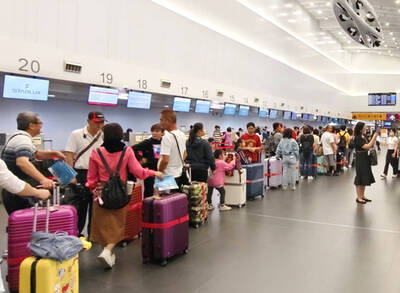
Three Taiwanese airlines have prohibited passengers from packing Bluetooth earbuds and their charger cases in checked luggage. EVA Air and Uni Air said that Bluetooth earbuds and charger cases are categorized as portable electronic devices, which should be switched off if they are placed in checked luggage based on international aviation safety regulations. They must not be in standby or sleep mode. However, as charging would continue when earbuds are placed in the charger cases, which would contravene international aviation regulations, their cases must be carried as hand luggage, they said. Tigerair Taiwan said that earbud charger cases are equipped

Foreign travelers entering Taiwan on a short layover via Taiwan Taoyuan International Airport are receiving NT$600 gift vouchers from yesterday, the Tourism Administration said, adding that it hopes the incentive would boost tourism consumption at the airport. The program, which allows travelers holding non-Taiwan passports who enter the country during a layover of up to 24 hours to claim a voucher, aims to promote attractions at the airport, the agency said in a statement on Friday. To participate, travelers must sign up on the campaign Web site, the agency said. They can then present their passport and boarding pass for their connecting international
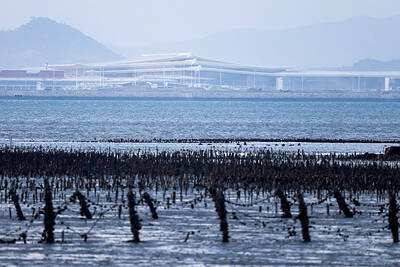
UNILATERAL MOVES: Officials have raised concerns that Beijing could try to exert economic control over Kinmen in a key development plan next year The Civil Aviation Administration (CAA) yesterday said that China has so far failed to provide any information about a new airport expected to open next year that is less than 10km from a Taiwanese airport, raising flight safety concerns. Xiamen Xiangan International Airport is only about 3km at its closest point from the islands in Kinmen County — the scene of on-off fighting during the Cold War — and construction work can be seen and heard clearly from the Taiwan side. In a written statement sent to Reuters, the CAA said that airports close to each other need detailed advanced
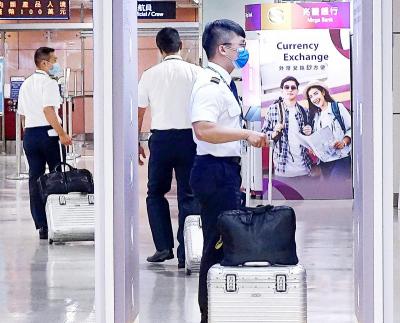
The age requirement for commercial pilots and airline transport pilots is to be lowered by two years, to 18 and 21 years respectively, to expand the pool of pilots in accordance with international standards, the Ministry of Transportation and Communications announced today. The changes are part of amendments to articles 93, 119 and 121 of the Regulations Governing Licenses and Ratings for Airmen (航空人員檢定給證管理規則). The amendments take into account age requirements for aviation personnel certification in the Convention on International Civil Aviation and EU’s aviation safety regulations, as well as the practical needs of managing aviation personnel licensing, the ministry said. The ministry


 RSS
RSS