


The world's climate equilibrium has been severely disturbed in the past 100 years by human industrialization. To understand the seriousness of the situation, a group of international scientists and some leading airliners are going to great heights — all the way up to 9,000m above sea level — to study just how serious climate change really is, and possibly how the situation can be turned around.
“Before the Industrial Revolution, the Earth’s carbon dioxide concentration averaged 280 parts per million [ppm] for more than 650,000 years — however, in a short 250 years, humans have managed to increase that figure to the current 380ppm,” Toshinobu Machida, chief of Japan’s National Institute for Environmental Studies Office for Atmospheric and Oceanic Monitoring, told the Taipei Times during his visit to Taipei on Tuesday.
Since 1993, Machida and his team have worked on CONTRAIL (Comprehensive Observatory Network for Trace gases by Airliners), a project that monitors greenhouse gas concentrations in the atmosphere by installing observation equipment on Japan Airlines charter flights.
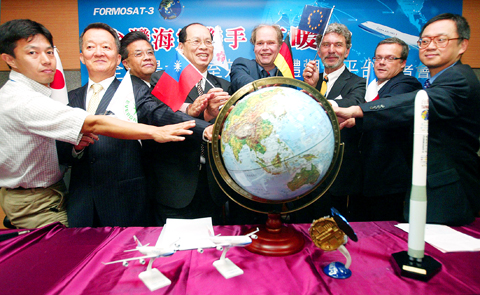
PHOTO: CNA
“From our observations over the past decade, we have found the carbon concentration in the upper troposphere, which is 10km to 12km above sea levels, has increased at about 1.9ppm per year,” Machida said.
The phenomenon has been observed on flights that travel from the northern to the southern hemisphere [Japan to Australia], he said, adding that “since the global air current naturally goes east to west and rarely north to south, our observations indicate that the carbon increase is a global problem.”
Almost simultaneously, a group of scientists sponsored by the European Commission launched a similar project in 1993 across the Atlantic Ocean called MOZAIC (Measurement of Ozone and water vapor by Airbus In-service airCraft), which installs equipment onto Airbus aircrafts from various airlines to measure atmospheric composition.
MOZAIC was transformed in 2005 into the Integration of Routine Aircraft Measurements into a Global Observing System (IAGOS), featuring a smaller machine with better functions.
Since 1993 the two programs have contributed to a number of important findings, leading to the publication of over 180 international papers, and driving the modification of climate models, IAGOS director Andreas Volz-Thomas said.
“For example, water vapor in the upper troposphere over the Northern Atlantic was found to be much higher than previous climate models suggested — over 100 percent saturation — data that changed our understanding of cirrus clouds and persistent contrails, and how much they impacted the climate,” Volz-Thomas said.
IAGOS lent invaluable information on how quickly carbon mixes in turbulence, he added.
“While carbon in the troposphere can be mixed thoroughly by turbulence in a matter of days, it may take over a year for the gas to reach the stratosphere [10km to 50 km above ground],” he said. “Most of the carbon up there was emitted by human sources all over the world, possibly decades ago.”
Since carbon that reaches the stratosphere stays there for more than 10 years before dispersing, it can similarly seriously affect the world’s climate, Volz-Thomas said.
“And by climate, we are not just talking about temperature,” Machida said. “Climate change affects weather patterns, precipitation areas and amount, and in turn crop growth, landscape changes and human survival.”
Though both MOZAIC/IAGOS and CONTRAIL have been very successful, a large piece of the puzzle was missing — data over the Pacific Ocean, which pertains to emission behavior in China and other Southeast Asian countries.
To the scientists’ excitement, starting next year, the gap will be filled by Pacific Greenhouse Gases Measurement (PGGM), a Taiwan project sponsored both by the government and two businesses — China Airlines (CAL) and Evergreen Marine Corp.
“Our motivation is simple — by collecting important data, [policymakers] will eventually recognize our work and start using our data [to stop global warming,]” said the man behind the project-union operation, PGGM project leader Wang Kuo-ying (王國英), a professor at National Central University.
“MOZAIC/IAGOS lack data from the Pacific Ocean because its aircrafts do not fly to Asia. With Taiwan’s prime geographic location, CAL and Evergreen can offer them just what they need,” he said.
The structure of PGGM is both vertically and horizontally sound, Wang said.
“On the satellite level, Taiwan’s FORMOSAT-3 [a climate satellite] data will be cross-examined with the US’ OCO satellite [to be launched this year] and Japan’s GOSAT satellite; in addition, we will observe the upper and lower atmosphere with CAL flights and Evergreen cargo ships,” he said.
Data obtained by airplanes can also offer valuable information on climate satellite accuracy, since satellite technologies are relatively new, he said.
The data, together with IAGOS in other parts of the planet, cross-referenced with CONTRAIL statistics, will piece together a picture for long-term global pollutant transport, and may change the world’s perception of the environment, Wang said.
“PGGM will be one of the best presents Taiwan can give to the world — though we are not bounded by the Kyoto protocol, we are still making efforts to combat global warming,” he said.
Asked whether the international community was dealing with climate change with enough urgency, both Machida and Volz-Thomas replied with a firm “no.”
“The question is not ‘how much time do we have until we must take action’ — global warming has already started,” Machida said.
“What scientists can do is to increase the public’s awareness of the problem and prompt politicians to form laws accordingly, however, there is a long way between good data and policy reform,” Volz-Thomas said.
However, some changes in this country may already be on the horizon, as the PGGM marks the first time Taiwanese businesses have participated in a not-for-profit effort to fight climate change on an international scale.
“Though few [in the airliner industry] are touching the issue, global warming is a problem that will confront us head-on soon enough — short of making carbon-free planes [which is the industry’s aspiration in 50 years], by taking action now, CAL can be the leader in aviation in fighting climate change,” CAL corporate safety division vice president David Tai (戴旭東) said.

A group of Taiwanese-American and Tibetan-American students at Harvard University on Saturday disrupted Chinese Ambassador to the US Xie Feng’s (謝鋒) speech at the school, accusing him of being responsible for numerous human rights violations. Four students — two Taiwanese Americans and two from Tibet — held up banners inside a conference hall where Xie was delivering a speech at the opening ceremony of the Harvard Kennedy School China Conference 2024. In a video clip provided by the Coalition of Students Resisting the CCP (Chinese Communist Party), Taiwanese-American Cosette Wu (吳亭樺) and Tibetan-American Tsering Yangchen are seen holding banners that together read:

UNAWARE: Many people sit for long hours every day and eat unhealthy foods, putting them at greater risk of developing one of the ‘three highs,’ an expert said More than 30 percent of adults aged 40 or older who underwent a government-funded health exam were unaware they had at least one of the “three highs” — high blood pressure, high blood lipids or high blood sugar, the Health Promotion Administration (HPA) said yesterday. Among adults aged 40 or older who said they did not have any of the “three highs” before taking the health exam, more than 30 percent were found to have at least one of them, Adult Preventive Health Examination Service data from 2022 showed. People with long-term medical conditions such as hypertension or diabetes usually do not
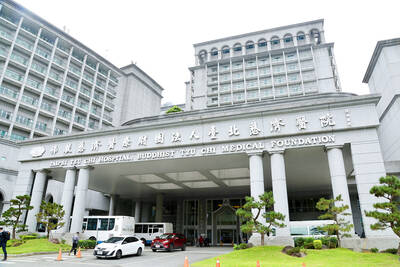
POLICE INVESTIGATING: A man said he quit his job as a nurse at Taipei Tzu Chi Hospital as he had been ‘disgusted’ by the behavior of his colleagues A man yesterday morning wrote online that he had witnessed nurses taking photographs and touching anesthetized patients inappropriately in Taipei Tzu Chi Hospital’s operating theaters. The man surnamed Huang (黃) wrote on the Professional Technology Temple bulletin board that during his six-month stint as a nurse at the hospital, he had seen nurses taking pictures of patients, including of their private parts, after they were anesthetized. Some nurses had also touched patients inappropriately and children were among those photographed, he said. Huang said this “disgusted” him “so much” that “he felt the need to reveal these unethical acts in the operating theater
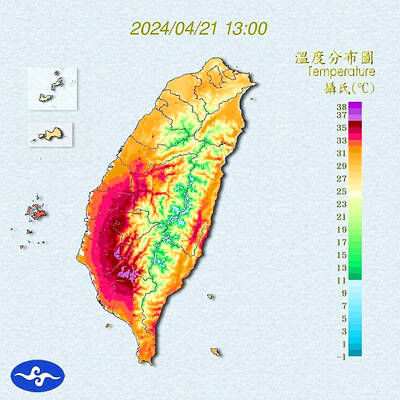
Heat advisories were in effect for nine administrative regions yesterday afternoon as warm southwesterly winds pushed temperatures above 38°C in parts of southern Taiwan, the Central Weather Administration (CWA) said. As of 3:30pm yesterday, Tainan’s Yujing District (玉井) had recorded the day’s highest temperature of 39.7°C, though the measurement will not be included in Taiwan’s official heat records since Yujing is an automatic rather than manually operated weather station, the CWA said. Highs recorded in other areas were 38.7°C in Kaohsiung’s Neimen District (內門), 38.2°C in Chiayi City and 38.1°C in Pingtung’s Sandimen Township (三地門), CWA data showed. The spell of scorching


 RSS
RSS