


When Yang Chi-hua (
Yet today throngs of locals and foreign tourists alike queue outside Din Tai Fung's (
The restaurant has also attracted foreign dignitaries and celebrities and last month the Ministry of Foreign Affairs enlisted Din Tai Fung in a gourmet food tour for tourists from France and the UK to help promote the nation's image.
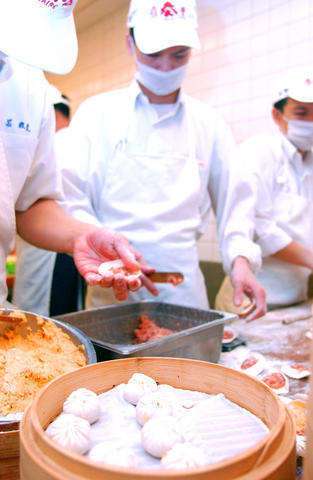
PHOTO: AFP
Yang, 52, said the success of Din Tai Fung lies in "committing ourselves to doing everything well, from preparing the food to serving the customers and maintaining the hygiene of the restaurant."
In an interview, he said: "It is an enormous pressure to live up to the expectations. We are constantly striving to make the restaurant better and not to let our patrons down."
Yang inherited the business from his father Yang Bing-yi (
In Taiwan, the restaurant rolls out some 15 million steamed dumplings annually and last year reported revenue of NT$700 million (US$21.63 million).
Din Tai Fung opened its first restaurant abroad in 1996 in Tokyo and in 2001 expanded to Shanghai and later to other Chinese cities including Beijing, Shenzhen and Dongguan.
It has 38 franchised restaurants overseas and is planning to open in Australia, Hong Kong and Thailand this year.
The first thing customers to the Taipei flagship store see when they enter is a framed plaque reading "Din Tai Fung Oil Shop" -- a relic of its humble start when the elder Yang opened his first small eatery three decades ago out of dire financial necessity.
Yang had moved to Taiwan from China's Shanxi Province in 1948, a year before the Chinese Nationalist Party (KMT) lost the civil war to the Chinese Communists and fled to Taiwan.
He found his first job in Taiwan as a delivery man for a cooking oil shop, and within a decade, in 1958, had opened his own store, called Din Tai Fung, selling peanut oil.
Business turned sour in the early 1970s because of the mass production of soybean cooking oil and so, following the advice of friends, Yang decided to convert half the store into a restaurant.
As the elder Yang did not know how to make steamed dumplings, he hired a cook -- who later passed on the craft to his son, the current Yang -- and the small family business gradually took off. It now employs more than 500 staff.
The younger Yang helped out at the family store for two years, until at age 17 his culinary passion was kindled when he beat out an experienced cook to get his first paid job as a steamed bun maker for another restaurant.
"My father didn't want me to follow in his footsteps because of the hardship involved in running a restaurant," he said. "Today he is still telling me to slow down a little and try not to be a perfectionist."
Yang Chi-hua's cooking skills earned him an appearance in Ang Lee's (
For an acclaimed restaurant, Ding Tai Fung's menu is simple with steamed dumplings, sweet buns, chicken soup, chicken marinated in Chinese wine, fried rice and vegetables.
A standard portion of 10 steamed dumplings costs NT$180 (US$5.60).
"The taste is basically the same as the early days, only slightly lighter to meet customers' needs," said Yang Chi-hua.
He has introduced a computer to ensure the dumplings are steamed to perfection, and to minimize serving errors, he said.
But one thing remains unchanged -- Din Tai Fung never advertises.
"We have relied on word of mouth to bring in customers and we plan to stick to that," Yang said.
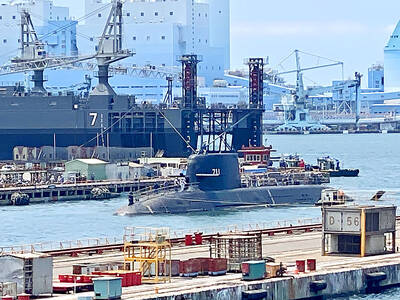
AGING: While Japan has 22 submarines, Taiwan only operates four, two of which were commissioned by the US in 1945 and 1946, and transferred to Taiwan in 1973 Taiwan would need at least 12 submarines to reach modern fleet capabilities, CSBC Corp, Taiwan chairman Chen Cheng-hung (陳政宏) said in an interview broadcast on Friday, citing a US assessment. CSBC is testing the nation’s first indigenous defense submarine, the Hai Kun (海鯤, Narwhal), which is scheduled to be delivered to the navy next month or in July. The Hai Kun has completed torpedo-firing tests and is scheduled to undergo overnight sea trials, Chen said on an SET TV military affairs program. Taiwan would require at least 12 submarines to establish a modern submarine force after assessing the nation’s operational environment and defense

A white king snake that frightened passengers and caused a stir on a Taipei MRT train on Friday evening has been claimed by its owner, who would be fined, Taipei Rapid Transit Corp (TRTC) said yesterday. A person on Threads posted that he thought he was lucky to find an empty row of seats on Friday after boarding a train on the Bannan (Blue) Line, only to spot a white snake with black stripes after sitting down. Startled, he jumped up, he wrote, describing the encounter as “terrifying.” “Taipei’s rat control plan: Release snakes on the metro,” one person wrote in reply, referring
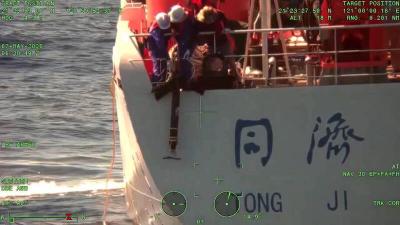
The coast guard today said that it had disrupted "illegal" operations by a Chinese research ship in waters close to the nation and driven it away, part of what Taipei sees a provocative pattern of China's stepped up maritime activities. The coast guard said that it on Thursday last week detected the Chinese ship Tongji (同濟號), which was commissioned only last year, 29 nautical miles (54km) southeast of the southern tip of Taiwan, although just outside restricted waters. The ship was observed lowering ropes into the water, suspected to be the deployment of scientific instruments for "illegal" survey operations, and the coast
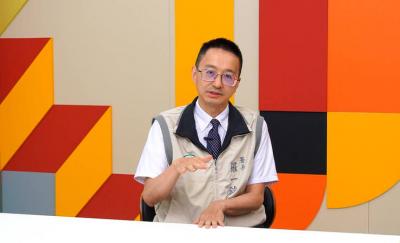
Taiwan’s two cases of hantavirus so far this year are on par with previous years’ case numbers, and the government is coordinating rat extermination work, so there should not be any outbreaks, Centers for Disease Control (CDC) Director-General Philip Lo (羅一鈞) said today in an interview with the Liberty Times (the Taipei Times’ sister newspaper). An increase in rat sightings in Taipei and New Taipei City has raised concerns about the spread of hantavirus, as rats can carry the disease. In January, a man in his 70s who lived in Taipei’s Daan District (大安) tested positive posthumously for hantavirus, Taiwan’s


 RSS
RSS