


A thick layer of smog blanketed Taipei yesterday as the capital suffered its worst air quality since the beginning of the year, the Environmental Protection Administration (EPA) said.
EPA experts attributed the poor air quality in the greater Taipei area mainly to rising temperatures, Taipei's topography and high ozone concentrations.
Chang Shun-chin (張順欽), an EPA inspector in charge of air quality protection, said air quality worsened at around noon yesterday when the temperature climbed to 26oC and culminated at around 2pm. Taipei is situated in a basin where dirty air accumulates and lingers unless there are strong winds, Chang said.
When the temperature rose, the ozone density in the area increased to an "unhealthy" level and the average hourly density of particulate matter (PM) suspended in the air over the greater Taipei area also shot up, Chang said.
Chang said that PM readings in Taipei City's Zhongshan (
Air quality in the greater Taipei area will remain poor when the temperature drops because the wind will subside too, Chang said.
High PM density and high ozone concentrations can cause respiratory distress in humans. Chang advised the elderly, young children and people with allergies or respiratory problems to refrain from going outside or to wear masks if they do.
The haze is expected to clear by tomorrow, Chang said.
Northern and western Taiwan usually experience worsening air quality between January and March each year when pollutants originating from China are brought in by cold fronts.

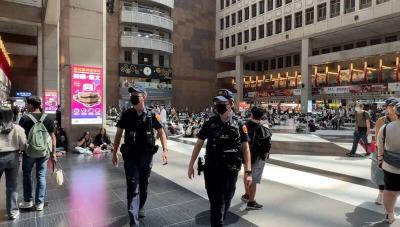
A drunk woman was sexually assaulted inside a crowded concourse of Taipei Railway Station on Thursday last week before a foreign tourist notified police, leading to calls for better education on bystander intervention and review of security infrastructure. The man, surnamed Chiu (邱), was taken into custody on charges of sexual assault, taking advantage of the woman’s condition and public indecency. Police discovered that Chiu was a fugitive with prior convictions for vehicle theft. He has been taken into custody and is to complete his unserved six-month sentence, police said. On Thursday last week, Chiu was seen wearing a white
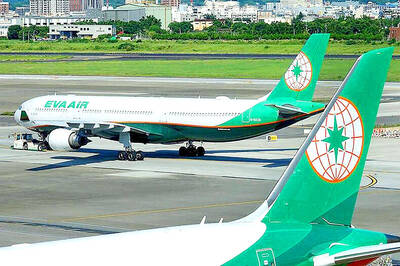
EVA Airways, one of the leading international carriers in Taiwan, yesterday said that it was investigating reports that a cabin crew manager had ignored the condition of a sick flight attendant, who died on Saturday. The airline made the statement in response to a post circulating on social media that said that the flight attendant on an outbound flight was feeling sick and notified the cabin crew manager. Although the flight attendant grew increasingly ill on the return flight, the manager did not contact Medlink — a system that connects the aircraft to doctors on the ground for treatment advice during medical
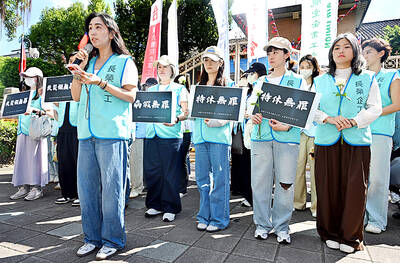
The Taoyuan Flight Attendants’ Union yesterday vowed to protest at the EVA Air Marathon on Sunday next week should EVA Airway Corp’s management continue to ignore the union’s petition to change rules on employees’ leave of absence system, after a flight attendant reportedly died after working on a long-haul flight while ill. The case has generated public discussion over whether taking personal or sick leave should affect a worker’s performance review. Several union members yesterday protested at the Legislative Yuan, holding white flowers and placards, while shouting: “Life is priceless; requesting leave is not a crime.” “The union is scheduled to meet with
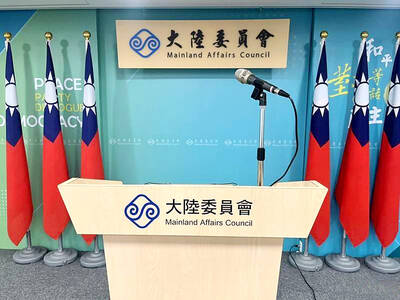
‘UNITED FRONT’ RHETORIC: China’s TAO also plans to hold weekly, instead of biweekly, news conferences because it wants to control the cross-strait discourse, an expert said China’s plan to expand its single-entry visa-on-arrival service to Taiwanese would be of limited interest to Taiwanese and is a feeble attempt by Chinese administrators to demonstrate that they are doing something, the Mainland Affairs Council said yesterday. China’s Taiwan Affairs Office (TAO) spokesman Chen Binhua (陳斌華) said the program aims to facilitate travel to China for Taiwanese compatriots, regardless of whether they are arriving via direct flights or are entering mainland China through Hong Kong, Macau or other countries, and they would be able to apply for a single-entry visa-on-arrival at all eligible entry points in China. The policy aims


 RSS
RSS