


To receive the 2007 Asia Democracy and Human Rights Award honoring her long-term commitment to human rights in Myanmar, Cynthia Maung came to Taiwan last week on a temporary travel visa granted by both the Thai government and Taiwan's representative office in Thailand.
Just like hundreds of thousands of refugees fleeing to the Thai-Burma border after the 1988 crackdown on the pro-democracy uprising, the physician, who still calls her country "Burma," has been stateless since the military government changed the nation's identity cards.
Maung, a member of the ethnic Karen minority, fled to Thailand that year and has not returned to Burma since, having lost contact with her family there.
In an interview with the Taipei Times last Friday, Maung compared statelessness among the Burmese in Thailand to Taiwanese striving for statehood, saying that "the main problem in Burma is the military dictatorship ruling the country."
"One interesting thing I saw in Taiwan is that Taiwan also faces the same challenge. Until now Taiwan is not recognized by the United Nations [UN] as one nation ... But because of freedom and democracy, Taiwan has made lots of improvement," she said.
"The difference between Burma and Taiwan is that you are on your own land and you have a democratic leadership ... But for the Burmese, they have to live in other countries as illegal and stateless people, and there are always constant threats of arrest and deportation," she added.
Statelessness is not the only thing the Burmese in exile lack, as they, just like "internally displaced people" inside Burma, are also short of food, healthcare and education, she said.
Maung said she joined the pro-democracy movement on the border during the 1988 uprising after seeing "more and more oppression and tension inside Burma under the military dictatorship and no opportunities for young people to study and for communities to access health care."
"I believed that on the border, there were opportunities to strengthen the network of international organizations to provide healthcare. That's why I came out from Burma and we set up an emergency medical center for the displaced population," she said.
The Mae Tao Clinic, in Mae Sot, Thailand, close to the Thai-Burma border, was established in December 1989 as a makeshift clinic in a dilapidated barn with few supplies and even less money.
Maung and her companions treated the increasing number of patients coming to the clinic with malaria, respiratory disease, diarrhea, gunshot wounds and landmine injuries, with malaria being one of the most common diseases treated by the clinic.
The 19-year-old clinic has grown to a 120-bed hospital with several departments, where five physicians, 140 health workers and 100 support staff provide comprehensive healthcare to some 200 patients a day.
It provides inpatient and outpatient medicine, basic surgical services, childcare, voluntary counseling and testing services integrated into the blood donation service, HIV/AIDS and STD (sexually transmitted disease) testing and treatment, as well as eye care and laboratory services, all free of charge.
With the number of people crossing the border rising significantly every year, the number of patients being treated increases 20 percent to 30 percent every year, Maung said.
"We haven't matched the need in improving the facilities. We need to increase the staff and add medical equipment, so every year this is a challenge for us," she said.
Maung said that currently the clinic provides health services for about 150,000 migrant workers in Thailand and approximately 50,000 refugees on the border, as well as an outreach program of 36 health centers and 76 teams of backpacker medics covering areas inside Burma.
The 36 health centers, called "satellite clinics," are set up in remote areas where international NGOs are prohibited by the military government from providing medical services, with each targeting about 4,000 to 8,000 displaced population who do not have access to healthcare anywhere else.
Known as Dr. Cynthia to her patients, Maung provides not only medical care but also training for new health workers, child protection and education, and community-building activities.
The Mae Tao Clinic selects healthcare workers from local communities.
"If you don't select them from local communities, they won't go back to the area for a long time because this is a war zone, a conflict area," Maung said.
"And the people working with healthcare workers are really suffering from the atrocity of the civil war, so healthcare workers need to understand the problems and the psychology of the people," she added. "Only people from local communities know the language and the culture."
Based on the firm belief that "education is a crucial part of the development of Burma," Maung said the clinic supports more than 80 schools, or altogether 8,000 children on the border, which is far lower than 30,000 school age children living and working in Thailand without their parents.
"Some of [the 30,000 school age children] are working in factories, some are working on farms, and very few have access to education," she said.
The clinic initially provided only medical services, but now Maung wants to improve Burmese people's quality of life.
"We have collaborated with international and local organizations to highlight the problems of displaced children, to better protect them," she said.
She said that the international community should support and work more closely with democratic forces.
"It needs to empower local community organizations so that the support can be sustainable, allowing more participation from the local community."
The Mae Tao Clinic is supported by some 20 international organizations in terms of the provision of food supplies, medical supplies and logistical support, and 60 percent of its budget is donated by long-term supporters on three to five multi-year contracts.
But the clinic is still in the red.
Last year, it received 52 million baht (US$1.6 million) in donations, but spent 54 million baht.
"The number of patients at the Mae Tao Clinic continues to rise every year. People continue coming out of Burma, children are still dropping out of school ... But the long-term supporters could not increase their budget, and we need to find one-time donors to provide 40 percent," she said.
Despite financial problems, Maung said she would never consider closing down the clinic.
"Since the beginning we put up with very limited resources. We only had six staff members. We didn't have regular donors. And we just got donations like rice and some medicine from local NGOs. We never gave up on trying to improve access to healthcare," she said.
"If we close down the clinic, the people will suffer. Health care is the most basic need of a community," she said.
"Besides healthcare, one of our missions is to provide an opportunity for young people to learn about community health and medicine, so that one day they can go back and serve the community," she said.

Yangmingshan National Park authorities yesterday urged visitors to respect public spaces and obey the law after a couple was caught on a camera livestream having sex at the park’s Qingtiangang (擎天崗) earlier in the day. The Shilin Police Precinct in Taipei said it has identified a suspect and his vehicle registration number, and would summon him for questioning. The case would be handled in accordance with public indecency charges, it added. The couple entered the park at about 11pm on Thursday and began fooling around by 1am yesterday, the police said, adding that the two were unaware of the park’s all-day live

A former soldier and an active-duty army officer were yesterday indicted for allegedly selling classified military training materials to a Chinese intelligence operative for a total of NT$79,440. The Taipei District Prosecutors’ Office indicted Chen Tai-yin (陳泰尹) and Lee Chun-ta (李俊達) for contravening the National Security Act (國家安全法) and the Anti-Corruption Act (貪污治罪條例). Chen left the military in September 2013 after serving alongside then-staff sergeant Lee, now an army lieutenant, at the 21st Artillery Command of the army’s Sixth Corps from 2011 to 2013, according to the indictment. Chen met a Chinese intelligence operative identified as “Wang” (王) through a friend in November

Minister of Digital Affairs Lin Yi-ching (林宜敬) yesterday cited regulatory issues and national security concerns as an expert said that Taiwan is among the few Asian regions without Starlink. Lin made the remarks on Facebook after funP Innovation Group chief executive officer Nathan Chiu (邱繼弘) on Friday said Taiwan and four other countries in Asia — China, North Korea, Afghanistan and Syria — have no access to Starlink. Starlink has become available in 166 countries worldwide, including Ukraine, Malaysia, the Philippines and Vietnam, in the six years since it became commercial, he said. While China and North Korea block Starlink, Syria is not
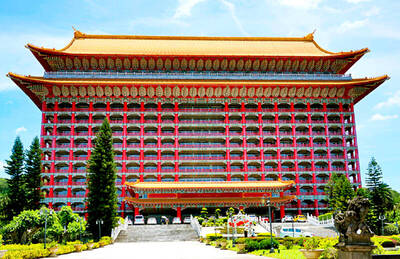
The Grand Hotel Taipei has rejected media reports claiming that the hotel had prevented CBS from broadcasting coverage of the Beijing summit between U.S. President Donald Trump and Chinese President Xi Jinping (習近平) on its premises. Media reports alleging that the hotel owner, dissatisfied with CBS’s coverage, prohibited the network from broadcasting political content on the hotel premises, are not true, the hotel said in a statement issued last night. The reports were “inconsistent with how the hotel actually handled the matter,” it said. The hotel said it received a refund request from a


 RSS
RSS