


The Central Election Commission (CEC) yesterday promised to release a set of protocols before next month's elections to specify the conditions under which the commission would be allowed to declare "force majeure" and postpone the elections.
The promise came after a group of pan-blue lawmakers questioned CEC Secretary-General Teng Tien-yu (
Chinese Nationalist Party (KMT) Legislator Pan Wei-kang (潘維剛) asked Teng to explain the purpose of the regulations.
"Cabinet Spokesman Shieh Jhy-wey (謝志偉) said the election will either be halted or postponed if any county insists on using the two-step voting system. Will this be part of the CEC's definition of force majeure?" she asked.
KMT lawmaker Hsieh Kuo-dong (
Force majeure literally means "greater force" in French. It is a legal term that excuses a party from liability if some unforeseen event beyond the control of that party prevents it from performing its obligations under a contract. Typically, force majeure clauses cover natural disasters, war, or the failure of third parties -- such as suppliers and subcontractors -- to perform their obligations to the contracting party.
The opposition KMT and the ruling Democratic Progressive Party (DPP) have been arguing about the voting system to be used in next month's election. The KMT wants the referendums and the legislative ballots to be handed out separately, while the DPP wants all of the ballots to be given to voters in tandem.
Last month, the CEC agreed to adopt the one-step voting system, despite vehement protests from 18 pan-blue voting districts.
Teng said the draft regulation was based on Section 4, Article 66 of the Election and Recall Law of Civil Servants (公務人員選舉罷免法).
The CEC has established a five-person special task force to discuss the implementation of the regulation, but not to determine the response when an emergency situation breaks prior to, or on the day of, the election, he said.
Teng said force majeure is a legal term with certain limitations and boundaries. The CEC, therefore, could not arbitrarily define the term as it pleases.
Teng said that it was up to the local election commission heads or polling station supervisors to report to the CEC any unusual or emergency circumstances.
Minister of Justice Morley Shih (
Shih said the force majeure clause could only be declared under extreme circumstances beyond the control of the parties involved.
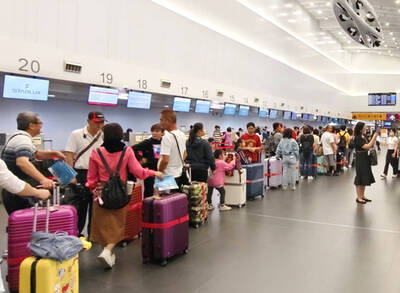
Three Taiwanese airlines have prohibited passengers from packing Bluetooth earbuds and their charger cases in checked luggage. EVA Air and Uni Air said that Bluetooth earbuds and charger cases are categorized as portable electronic devices, which should be switched off if they are placed in checked luggage based on international aviation safety regulations. They must not be in standby or sleep mode. However, as charging would continue when earbuds are placed in the charger cases, which would contravene international aviation regulations, their cases must be carried as hand luggage, they said. Tigerair Taiwan said that earbud charger cases are equipped
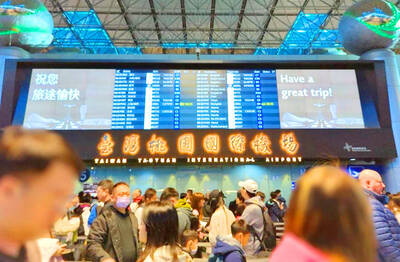
Foreign travelers entering Taiwan on a short layover via Taiwan Taoyuan International Airport are receiving NT$600 gift vouchers from yesterday, the Tourism Administration said, adding that it hopes the incentive would boost tourism consumption at the airport. The program, which allows travelers holding non-Taiwan passports who enter the country during a layover of up to 24 hours to claim a voucher, aims to promote attractions at the airport, the agency said in a statement on Friday. To participate, travelers must sign up on the campaign Web site, the agency said. They can then present their passport and boarding pass for their connecting international
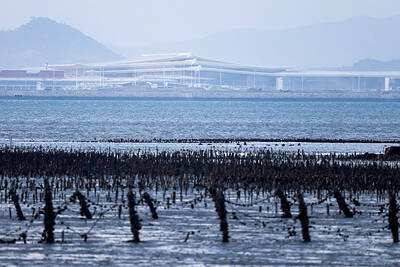
UNILATERAL MOVES: Officials have raised concerns that Beijing could try to exert economic control over Kinmen in a key development plan next year The Civil Aviation Administration (CAA) yesterday said that China has so far failed to provide any information about a new airport expected to open next year that is less than 10km from a Taiwanese airport, raising flight safety concerns. Xiamen Xiangan International Airport is only about 3km at its closest point from the islands in Kinmen County — the scene of on-off fighting during the Cold War — and construction work can be seen and heard clearly from the Taiwan side. In a written statement sent to Reuters, the CAA said that airports close to each other need detailed advanced
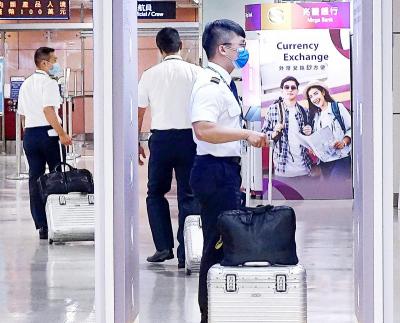
The age requirement for commercial pilots and airline transport pilots is to be lowered by two years, to 18 and 21 years respectively, to expand the pool of pilots in accordance with international standards, the Ministry of Transportation and Communications announced today. The changes are part of amendments to articles 93, 119 and 121 of the Regulations Governing Licenses and Ratings for Airmen (航空人員檢定給證管理規則). The amendments take into account age requirements for aviation personnel certification in the Convention on International Civil Aviation and EU’s aviation safety regulations, as well as the practical needs of managing aviation personnel licensing, the ministry said. The ministry


 RSS
RSS