


Taiwan is independent, but its title is changeable, President Chen Shui-bian (
Addressing the subject during a two-hour interview with cable TV channel SET, Chen said Taiwan is an independent sovereign state, regardless of the name used to refer to it.
"This is a fact. But the official name Republic of China [ROC] is changeable," Chen said.
The president was responding to remarks by Dennis Wilder, senior director for East Asian affairs at the National Security Council, that Washington does not support Taiwan's UN membership because "Taiwan, or the Republic of China, is not at this point a state in the international community."
Wilder said the position of the US government is that the status of the ROC "is an undecided issue."
In his interview, Chen said Wilder's remarks showed that the Chinese Nationalist Party's (KMT) plan to push for the country's return to the UN under the name ROC would also fail to win US support.
Saying that China's representation at the UN switched to the People's Republic of China (PRC) in 1971, Chen added that if the country were to try to use the name ROC to rejoin the UN, it would be competing with Beijing for the right to represent China -- which would have no chance of success.
By using the name Taiwan to apply to join the UN, the country is seeking membership under a new name, which has nothing to do with changing the country's official designation, Chen said.
Chen said that what he was truly concerned about was that Taiwan might be overtaken by China, or forced into annexation, if the nation failed to protect its sovereignty.
Urging the US government not to adopt a "double standard," Chen said it was injurious of the US, which supported Chiang Kai-shek's (蔣介石) dictatorship, to refuse to support a popularly elected government.
In the process of Taiwan's transition from authoritarianism to democracy, the country is trying to realize the universal values of democracy, freedom, human rights, peace and justice, and it is "totally unreasonable" that Taiwan be subjected to various restrictions in its effort to achieve its goals, Chen said.
Chen said he attached great importance to US concerns about Taiwan's plan to hold a referendum on its bid to join the UN under the name Taiwan.
But Taiwan, he said, has its own set of national interests and values that it cannot compromise on.
It would be an irony if Taiwan were compelled to forsake its pursuit of democratic values, he said.
In an interview with the Hong Kong-based Phoenix Star TV on Monday, US Deputy Secretary of State John Negroponte said the US government opposes Taiwan's plan for a UN membership referendum because Washington views such activity as a move toward a declaration of independence for Taiwan.
Stressing that Taiwan is already an independent sovereign state, Chen said Taiwan need not declare independence.
As referendum is a basic human right, Chen argued that Taiwan should not be required to give up its referendum plan.
"Taiwan's democratic development should not be subject to any unreasonable restrictions. We certainly do not want a caged democracy. With more than 70 percent of Taiwanese backing the quest for a UN seat under the name `Taiwan,' I am not in a position to block a referendum that would allow the voice and aspiration of Taiwanese to be heard by the international community," Chen said.
Responding to criticism by opposition parties regarding his recent three-nation Central American tour to Honduras, El Salvador and Nicaragua, Chen said that if Taiwan were to abandon all its diplomatic allies for the sake of saving money, it could become another Hong Kong and be annexed by China.
During his tour, Chen promised development aid to the three allies, drawing accusations from the opposition that he was engaging in checkbook diplomacy. Some critics have suggested that Taiwan should abandon its allies to save money.
Describing that suggestion as "narrow-minded," Chen said that Taiwan itself once was a recipient of international aid.
"Since the nartion emerged as an economic powerhouse, we should be more magnanimous and forward-looking in extending a helping hand to other countries in need," he said.

Trips for more than 100,000 international and domestic air travelers could be disrupted as China launches a military exercise around Taiwan today, Taiwan’s Civil Aviation Administration (CAA) said yesterday. The exercise could affect nearly 900 flights scheduled to enter the Taipei Flight Information Region (FIR) during the exercise window, it added. A notice issued by the Chinese Civil Aviation Administration showed there would be seven temporary zones around the Taiwan Strait which would be used for live-fire exercises, lasting from 8am to 6pm today. All aircraft are prohibited from entering during exercise, it says. Taipei FIR has 14 international air routes and
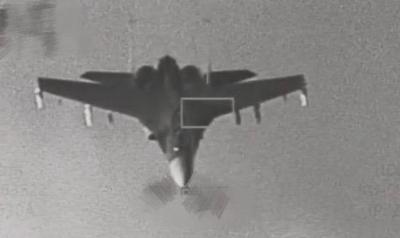
The Ministry of National Defense (MND) today released images of the military tracking China’s People's Liberation Army (PLA) movements during the latest round of Chinese drills around Taiwan. The PLA began "Justice Mission 2025" drills today, carrying out live-fire drills, simulated strikes on land and maritime targets, and exercises to blockade the nation's main ports. The exercises are to continue tomorrow, with the PLA announcing sea and air space restrictions for five zones around Taiwan for 10 hours starting from 8:30am. The ministry today released images showing a Chinese J-16 fighter jet tracked by a F-16V Block 20 jet and the

Snow fell on Yushan (Jade Mountain, 玉山) yesterday morning as a continental cold air mass sent temperatures below freezing on Taiwan’s tallest peak, the Central Weather Administration (CWA) said. Snowflakes were seen on Yushan’s north peak from 6:28am to 6:38am, but they did not fully cover the ground and no accumulation was recorded, the CWA said. As of 7:42am, the lowest temperature recorded across Taiwan was minus-5.5°C at Yushan’s Fengkou observatory and minus-4.7°C at the Yushan observatory, CWA data showed. On Hehuanshan (合歡山) in Nantou County, a low of 1.3°C was recorded at 6:39pm, when ice pellets fell at Songsyue Lodge (松雪樓), a
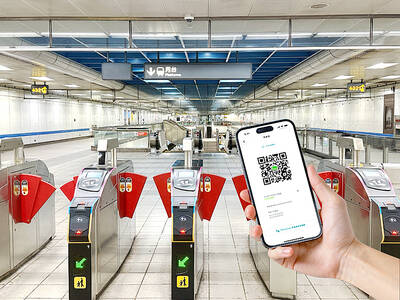
City buses in Taipei and New Taipei City, as well as the Taipei MRT, would on Saturday begin accepting QR code payments from five electronic payment providers, the Taipei Department of Transportation said yesterday. The new option would allow passengers to use the “transportation QR code” feature from EasyWallet, iPass Money, iCash Pay, Jkopay or PXPay Plus. Passengers should open their preferred electronic payment app, select the “transportation code” — not the regular payment code — unlock it, and scan the code at ticket readers or gates, General Planning Division Director-General Liu Kuo-chu (劉國著) said. People should move through the


 RSS
RSS