


Chinese Nationalist Party (KMT) presidential candidate Ma Ying-jeou (
"[The DPP] is a governing party that fails to make progress. It is just exploiting a historical scar and doesn't dare face up to the corruption of its administration over the past seven years," Ma said in Lishan (
Ma was responding to criticism the DPP leveled at the KMT on Saturday at a Taipei event to commemorate the 20th anniversary of the lifting of martial law.
At the event, DPP presidential candidate Frank Hsieh (謝長廷) compared the KMT to a "caretaker who harmed our people, raped our daughters and stole our property," adding that the public must not allow the "caretaker" to administer the country again.
Ma slammed Hsieh for his remarks, saying he "was surprised to hear Hsieh speak ill of others, because Hsieh is religious."
Ma also challenged Hsieh's idea of "reconciliation and coexistence," calling it "hollow words."
"The DPP is the governing party now. If it wants to attack the opposition, it should prove that the DPP can do better than the opposition instead of exploiting history," Ma said.
"The fact that the KMT was bad in the past doesn't prove the DPP is good now," Ma said.
"The KMT has stepped down [following the 2000 presidential election] and has reflected on its conduct during the martial law period," he said.
In response, Hsieh said yesterday while visiting Sanchong (
While speaking with 15 victims of political persecution during the martial law era, Hsieh showed them statistics over political persecution cases from the period.
The entire families of those individuals targeted for persecution also suffered, Hsieh said.
Hsieh said the victims should forgive their persectors but never forget.
"Those who forget history will be forgotten by history. Those who abandon history will be abandoned by history," Hsieh said.
"Those who have harmed others are in no position to ask their victims to forget."

The military has spotted two Chinese warships operating in waters near Penghu County in the Taiwan Strait and sent its own naval and air forces to monitor the vessels, the Ministry of National Defense (MND) said. Beijing sends warships and warplanes into the waters and skies around Taiwan on an almost daily basis, drawing condemnation from Taipei. While the ministry offers daily updates on the locations of Chinese military aircraft, it only rarely gives details of where Chinese warships are operating, generally only when it detects aircraft carriers, as happened last week. A Chinese destroyer and a frigate entered waters to the southwest

A magnitude 6.1 earthquake struck off the coast of Yilan County at 8:39pm tonight, the Central Weather Administration (CWA) said, with no immediate reports of damage or injuries. The epicenter was 38.7km east-northeast of Yilan County Hall at a focal depth of 98.3km, the CWA’s Seismological Center said. The quake’s maximum intensity, which gauges the actual physical effect of a seismic event, was a level 4 on Taiwan’s 7-tier intensity scale, the center said. That intensity level was recorded in Yilan County’s Nanao Township (南澳), Hsinchu County’s Guansi Township (關西), Nantou County’s Hehuanshan (合歡山) and Hualien County’s Yanliao (鹽寮). An intensity of 3 was

Japanese Prime Minister Sanae Takaichi’s comment last year on Tokyo’s potential reaction to a Taiwan-China conflict has forced Beijing to rewrite its invasion plans, a retired Japanese general said. Takaichi told the Diet on Nov. 7 last year that a Chinese naval blockade or military attack on Taiwan could constitute a “survival-threatening situation” for Japan, potentially allowing Tokyo to exercise its right to collective self-defense. Former Japan Ground Self-Defense Force general Kiyofumi Ogawa said in a recent speech that the remark has been interpreted as meaning Japan could intervene in the early stages of a Taiwan Strait conflict, undermining China’s previous assumptions
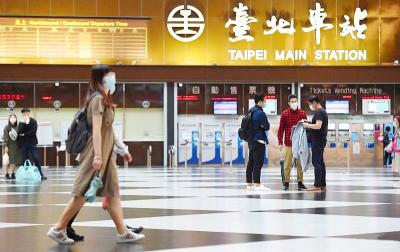
Taiwan Railways Corp (TRC) today announced that Shin Kong Mitsukoshi has been selected as the preferred bidder to operate the Taipei Railway Station shopping mall, replacing the current operator, Breeze Development Co Ltd. Among eight qualified firms that delivered presentations and were evaluated by a review committee, Shin Kong Mitsukoshi was ranked first, while Breeze was named the runner-up, the rail company said in a statement. Contract negotiations are to proceed in accordance with regulations, it said, adding that if negotiations with the top bidder fail, it could invite the second-ranked applicant to enter talks. Breeze in a statement today expressed doubts over


 RSS
RSS