


A recent report has added to the body of evidence that air pollution damages health. The report suggests that ozone and sulfates in the air can cause an increase in heart rate and blood pressure, or cardiovascular inflammation.
Such pollution has already become the new silent threat to people's cardiovascular health, playing the role of an "invisible killer" that people in polluted cities are subjected to day after day, the report said.
The report, titled Urban Air Pollution on Inflammation, Oxidative Stress, Coagulation and Autonomic Dysfunction, was prepared by a medical research team at the Graduate Institute of Occupational Medicine and Industrial Hygiene at National Taiwan University.
The report will soon be published in the authoritative American Journal of Respiratory and Critical Care Medicine.
Chan Chang-chuan (詹長權), a professor at the institute and the leader of the research team, said the purpose of the research was to "investigate whether biological mechanisms linking air pollution to cardiovascular events occurred concurrently in human subjects exposed to urban air pollutants."
The study showed that air pollution is detrimental not only to the lungs but also to the heart and blood vessels.
Since people are all susceptible regardless of their personal health, the results highlight the cost of air pollution.
The team recruited "a panel of 76 young and healthy students from a university in Taipei." Three measurements were made in each participant between April 2004 and June 2005.
Particles and gaseous air pollutants were measured at an air-monitoring station on their campus and at another monitoring station 1km from the campus.
The measurements were complemented by pollutant meters worn by the students.
The study found that oxidative stress, coagulation indices and the coagulation factor all increased in direct proportion to the density of sulfates in the air. When the average density of ozone increases, coagulation indices also go up.
The study also found that heart rate variability decreased as sulfates and ozone increased.
Team member Su Ta-chen (
Many factors can damage one's cardiovascular system, including high blood pressure, diabetes, and smoking.
The report serves as strong evidence that air pollution can also damage one's cardiovascular system.

A group of Taiwanese-American and Tibetan-American students at Harvard University on Saturday disrupted Chinese Ambassador to the US Xie Feng’s (謝鋒) speech at the school, accusing him of being responsible for numerous human rights violations. Four students — two Taiwanese Americans and two from Tibet — held up banners inside a conference hall where Xie was delivering a speech at the opening ceremony of the Harvard Kennedy School China Conference 2024. In a video clip provided by the Coalition of Students Resisting the CCP (Chinese Communist Party), Taiwanese-American Cosette Wu (吳亭樺) and Tibetan-American Tsering Yangchen are seen holding banners that together read:

UNAWARE: Many people sit for long hours every day and eat unhealthy foods, putting them at greater risk of developing one of the ‘three highs,’ an expert said More than 30 percent of adults aged 40 or older who underwent a government-funded health exam were unaware they had at least one of the “three highs” — high blood pressure, high blood lipids or high blood sugar, the Health Promotion Administration (HPA) said yesterday. Among adults aged 40 or older who said they did not have any of the “three highs” before taking the health exam, more than 30 percent were found to have at least one of them, Adult Preventive Health Examination Service data from 2022 showed. People with long-term medical conditions such as hypertension or diabetes usually do not
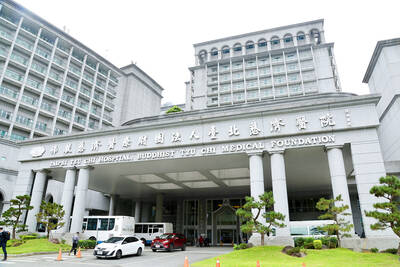
POLICE INVESTIGATING: A man said he quit his job as a nurse at Taipei Tzu Chi Hospital as he had been ‘disgusted’ by the behavior of his colleagues A man yesterday morning wrote online that he had witnessed nurses taking photographs and touching anesthetized patients inappropriately in Taipei Tzu Chi Hospital’s operating theaters. The man surnamed Huang (黃) wrote on the Professional Technology Temple bulletin board that during his six-month stint as a nurse at the hospital, he had seen nurses taking pictures of patients, including of their private parts, after they were anesthetized. Some nurses had also touched patients inappropriately and children were among those photographed, he said. Huang said this “disgusted” him “so much” that “he felt the need to reveal these unethical acts in the operating theater
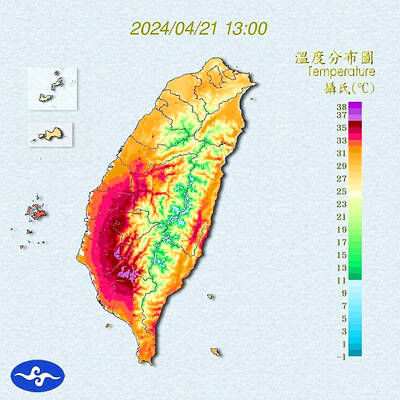
Heat advisories were in effect for nine administrative regions yesterday afternoon as warm southwesterly winds pushed temperatures above 38°C in parts of southern Taiwan, the Central Weather Administration (CWA) said. As of 3:30pm yesterday, Tainan’s Yujing District (玉井) had recorded the day’s highest temperature of 39.7°C, though the measurement will not be included in Taiwan’s official heat records since Yujing is an automatic rather than manually operated weather station, the CWA said. Highs recorded in other areas were 38.7°C in Kaohsiung’s Neimen District (內門), 38.2°C in Chiayi City and 38.1°C in Pingtung’s Sandimen Township (三地門), CWA data showed. The spell of scorching


 RSS
RSS