


Chang Kow-lung (
In a 20-minute address to his staff at a farewell party yesterday morning, Chang talked about his vision for the future of the EPA and the nation as a whole. He said he hoped the nation would produce more Nobel Prize winners and encouraged EPA officials to be more creative in coming up with solutions that use minimal resources to generate maximum utility.
But the pithiest part of his speech came when he explained his resignation.

PHOTO: WANG MIN-WEI, TAIPEI TIMES
"I am not suited to being a member of the new [EPA] team. In addition to handling environmental protection affairs, the new team will also have to boost the prospects of the ruling party in next year's presidential election by creating the impression that the government's performance has been blemish-free," he said.
Chang's wife Hsieh Bai-he (
"President Chen [Shui-bian (
"Chang is a man of action and does not covet high office. He will not sacrifice his beliefs for the sake of economic development," she said.
A caricature displayed at the farewell party captured Chang's character. Fittingly, the former EPA chief was depicted as a gallant knight.
During his tenure, Chang was entrusted with resolving conflicts surrounding several projects, including a Formosa Group steel plant, a CPC Corp petrochemical plant and the Suhua Freeway.
Hsieh said that now Chang has resigned, these projects would likely proceed unchecked.
Nevertheless, Chang said it was "necessary and normal" that he step down.
"I came [into the job] to generate some ideas. The administration needs to bring in people with better ideas," he said.
Chang earned his doctorate degree in physics from Yale University in 1968.
Before he was recruited by former premier Frank Hsieh (謝長廷), Chang was a professor at National Taiwan University and was involved in environmental campaigns launched by non-governmental groups in the 1980s.
Well known for his opposition to the construction of the Forth Nuclear Power Plant, in 1986 Chang founded New Environment magazine.
Two years later, he formed the Taiwan Environmental Protection Union, one of the active environmental groups in the country.
Chang presided over several initiatives during his term as EPA minister, including suspending the use of disposable utensils in government and school cafeterias and securing initial legislative approval for the greenhouse gas emissions reduction bill this year.
"Environmental protection is his faith and he [Chang Kow-lung] practiced it with the passion of a religious follower," EPA Deputy Minister Chang Tzi-chin (
"He has to work extremely hard to work under this administrative framework, but he had fought the good fight," Chang Tzi-chin said.
When asked what her husband would do in his retirement, Hsieh said the couple planned to travel around the world and to teach physics in developing countries as a volunteer.
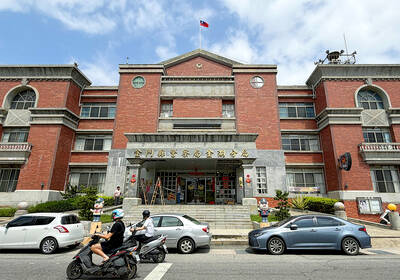
NATIONAL SECURITY: Authorities are working to confirm the identities of the military personnel involved and investigating possible illegal conduct and regulatory violations Authorities are probing possible national security implications after Kinmen police and immigration officers on Sunday found a Chinese woman allegedly posing as a tourist while engaging in prostitution involving more than 10 military personnel. The woman, surnamed Chen (陳), has since been deported, authorities said, adding that investigators are still working to confirm the identities of those implicated, as the records only listed code names and aliases. The case stemmed from a report received by the Kinmen District Prosecutors’ Office on Friday last week from the Jinhu Precinct of the Kinmen County Police Bureau. On Sunday, police, along with the National Immigration

GLOBALGIVING: ‘ Caving to external pressure is not acceptable for an organization that has cultivated justice reform and human rights for 30 years,’ one NGO said A slew of non-government organizations (NGOs) have withdrawn from the GlobalGiving fundraising platform after it announced it would use “Chinese Taipei” instead of “Taiwan” from next month. The Taiwan Good Rice Association wrote on Facebook on Friday that it was informed on April 28 via a teleconference call of the change, which was made because the platform wanted to operate in China. Taiwan Good Rice is to terminate all cooperative relationships with GlobalGiving in response to the platform’s “unilateral and non-negotiable” decision to remove references to Taiwan, the NGO said. “Taiwan is in the official name of Taiwan Good Rice Association and the

HEAVY WEATHER: Typhoon Jangmi is due to crash straight into the Ryukyus as airlines look to shift flights to larger aircraft or cancel flights to Okinawa entirely Taiwan’s international air carriers announced flight adjustments over the weekend as Typhoon Jangmi is forecast to hit the Ryukyu Islands today and tomorrow. The Central Weather Administration (CWA) upgraded Jangmi from a tropical storm to a typhoon at 8am yesterday, with the eye located 580km south of Naha city. It was moving north at 19kph. Today, China Airlines’ CI-120, CI-121, CI-122 and CI-123 flights between Taoyuan and Naha, Okinawa, have been canceled as well as CI-132 and CI-133 between Kaohsiung and Naha. EVA Air’s BR-112, BR-113, BR-186 and BR-185 flights between Taoyuan and Naha are also canceled. Low-cost carrier Tigerair Taiwan canceled IT-230,
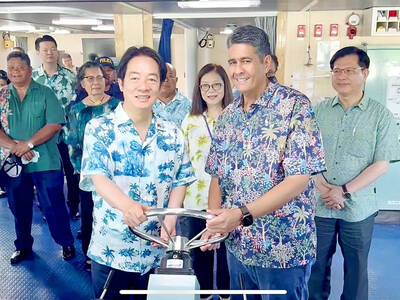
MULTIPRONGED APPROACH: China has sought to pressure Palau across a number of fronts, but the island nation has staunchly resisted overtures to ditch Taiwan Palau has been firm in backing Taiwan despite Chinese pressure that uses tourism economics, cyberattacks and criminal infiltration as tools to threaten the Pacific ally into renouncing its recognition of Taiwan as a sovereign state. The Presidential Office yesterday announced that Vice President Hsiao Bi-khim (蕭美琴) would visit Palau from Saturday to Wednesday next week at the invitation of Palauan President Surangel Whipps Jr. Whipps in April said in an interview that China had outspokenly asked Palau to “denounce Taiwan.” “And we have said: ‘We have no enemies, but nobody tells us who our friends are,’” he said. Whipps has told reporters multiple times


 RSS
RSS