


Former cable TV station TVBS general manager Lee Tao (李濤) will likely become the station's next vice chairman or retire on a golden parachute after stepping down as general manager on Monday over the recent gangster video flap, while the two reporters who produced the footage -- now unemployed -- will deal with the legal fallout on their own, media representatives said.
The critics made the remarks at a press conference yesterday hosted by the Association of Taiwan Journalists, a non-governmental organization (NGO) dedicated to protecting the labor rights of its members.
TVBS touched off a media maelstrom last month by broadcasting what it originally said was an anonymous video of a gun-toting Taichung gangster threatening to kill his estranged underworld boss. The station later admitted the footage had been shot by its own reporter, sparking a public outcry against the station's journalistic standards as the National Communications Commission (NCC) slapped a NT$1 million (US$30,200) fine on the station and ordered Lee to resign.
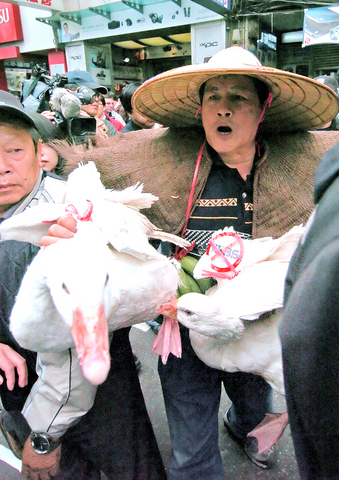
PHOTO: WANG MIN-WEI, TAIPEI TIMES
The station subsequently fired Nantou reporter Shi Chen-kang (史鎮康), who shot the footage, and Shi's superior, Chang Yu-kun (張裕坤), after news surfaced that Shi had filmed the video. TVBS claimed that the reporter had tricked senior management by falsely claiming that the tape had been made by the gangster and sent to him.
Critics, however, said yesterday that the buck stopped with senior officials at TVBS, who they alleged are loath to help Shi and Chang deal with the legal consequences of broadcasting the footage.
"Frontline reporters often lack the time and resources to sift out inappropriate content -- that's what editors are for," said Kuan Chung-hsiang (管中祥), chairman of Media Watch, an NGO promoting media ethics.
"Lee Tao claimed he didn't know where the footage came from after the flap started," he said.
"Which is worse: his knowing or not knowing of the video's origins before it hit the airwaves? Doesn't that comment, in itself, show how irresponsible senior management at TVBS is?" he asked.
Conference panelists -- including several journalism professors and reporters -- mostly expressed support for Shi and Chang, saying that enormous pressure from editors on frontline reporters to get "the scoop" was to blame for the flap.
When media scandals sometimes emerge, they added, low-level reporters are usually the ones who have to bear the brunt of public blame for their bosses' poor editorial judgment. Media heavyweights like Lee, on the other hand, are both legally and financially shielded from the consequences of their own incompetence or neglect.
"Basically, we're there to help our bosses wipe their asses when things get shitty," said Lin Chao-yi (林朝億), a journalist at Radio Taiwan International.
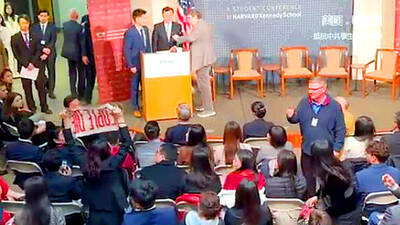
A group of Taiwanese-American and Tibetan-American students at Harvard University on Saturday disrupted Chinese Ambassador to the US Xie Feng’s (謝鋒) speech at the school, accusing him of being responsible for numerous human rights violations. Four students — two Taiwanese Americans and two from Tibet — held up banners inside a conference hall where Xie was delivering a speech at the opening ceremony of the Harvard Kennedy School China Conference 2024. In a video clip provided by the Coalition of Students Resisting the CCP (Chinese Communist Party), Taiwanese-American Cosette Wu (吳亭樺) and Tibetan-American Tsering Yangchen are seen holding banners that together read:

UNAWARE: Many people sit for long hours every day and eat unhealthy foods, putting them at greater risk of developing one of the ‘three highs,’ an expert said More than 30 percent of adults aged 40 or older who underwent a government-funded health exam were unaware they had at least one of the “three highs” — high blood pressure, high blood lipids or high blood sugar, the Health Promotion Administration (HPA) said yesterday. Among adults aged 40 or older who said they did not have any of the “three highs” before taking the health exam, more than 30 percent were found to have at least one of them, Adult Preventive Health Examination Service data from 2022 showed. People with long-term medical conditions such as hypertension or diabetes usually do not
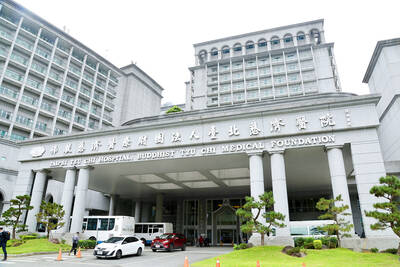
POLICE INVESTIGATING: A man said he quit his job as a nurse at Taipei Tzu Chi Hospital as he had been ‘disgusted’ by the behavior of his colleagues A man yesterday morning wrote online that he had witnessed nurses taking photographs and touching anesthetized patients inappropriately in Taipei Tzu Chi Hospital’s operating theaters. The man surnamed Huang (黃) wrote on the Professional Technology Temple bulletin board that during his six-month stint as a nurse at the hospital, he had seen nurses taking pictures of patients, including of their private parts, after they were anesthetized. Some nurses had also touched patients inappropriately and children were among those photographed, he said. Huang said this “disgusted” him “so much” that “he felt the need to reveal these unethical acts in the operating theater
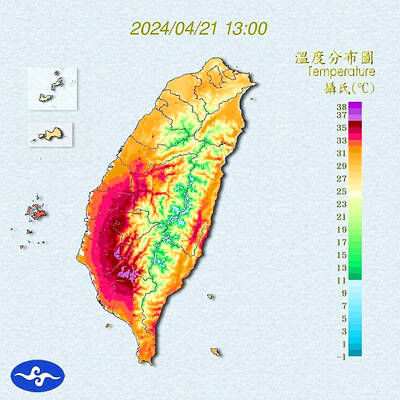
Heat advisories were in effect for nine administrative regions yesterday afternoon as warm southwesterly winds pushed temperatures above 38°C in parts of southern Taiwan, the Central Weather Administration (CWA) said. As of 3:30pm yesterday, Tainan’s Yujing District (玉井) had recorded the day’s highest temperature of 39.7°C, though the measurement will not be included in Taiwan’s official heat records since Yujing is an automatic rather than manually operated weather station, the CWA said. Highs recorded in other areas were 38.7°C in Kaohsiung’s Neimen District (內門), 38.2°C in Chiayi City and 38.1°C in Pingtung’s Sandimen Township (三地門), CWA data showed. The spell of scorching


 RSS
RSS