


A Hong-Kong curio collector and seller surnamed Chen (
Chen is a member of a gourmet group led by the Hong Kong food critic Chua Lam (
"I've traveled with Mr. Chua about 10 times," Chen said in an interview with a local TV station. "The food we tasted was first-class and it was all delicious."
Chua's gourmet group spent three days in Taiwan, during which media closely followed the group wherever they went for top-notch Taiwanese food -- from Shin Yeh Restaurant (欣葉) and Dingtaifung (鼎泰豐) to Really Good (真的好) Seafood Restaurant.
Toward the end of their trip, Chua led the group to a local market, where most members purchased boxes of bell fruits.
Certainly Chua's fame has helped attract many fans for this special tour.
Each paid NT$45,000 for the trip, with the bulk of the money going toward food.
Chua's gourmet group is a prime example of a growing segment of Taiwan's tourism industry -- niche tours, where visitors are interested in exploring one particular aspect of the country at a time.
Last September, the Japanese cosmetic firm ASSURAN treated 700 of its top salespersons to a one-week trip to Taiwan.
During the group's stay, local TV networks broadcasted ASSURAN employees engaged in an eye-popping and seemingly guilt-free shopping spree of jewelry stores and porcelain shops.
Knowing that the group's visit could generate more than NT$10 million (US$303,000) in revenue, Tourism Bureau officials were on hand to personally welcome the tour group.
Shops even closed for a few hours for the Japanese tourists so they could comfortably demonstrate their spending power.
But many tourists do come to Taiwan for more than just shopping and eating.
Cheng Ming-chang (
"These people [Japanese railway fans] have been researching the railway systems of different countries," he said. "They don't want to see temples, nor are they interested in checking out the night markets. They just want to see trains."
Cheng said that the "must see" places for most Japanese train fans, besides the recently launched high speed rail and Taiwan Railway Administration (TRA) trains, are the old steam trains on Alishan (阿里山), the fan-shaped garage in Changhwa County and the railways built for the sugar plant in Huwei (虎尾), Yunlin County.
The two locomotives now in Taipei's 228 Memorial Peace Park, which date from the Qing Dynasty, could also become a potential tourist site, Cheng said.
Since the Alishan Forest Railway formed a partnership with Japan's Oigawa Railway, the Japanese company frequently arranges package tours to Taiwan, he said.
A four-day railway tour costs about ?180,000 (NT$50,151).
Taiwan's reputation for superb glamour photography at relatively low prices is popular with couples in neighboring countries.
Huang De-jen (黃得真), manager of Photo Max in Taipei, told the Taipei Times that couples from Japan, Vietnam, Cambodia and China would rather spend four days in Taipei having their wedding photographs taken and framed here than having them done in their own countries.
"The deals in Taiwan promise more variety," she said. "For example, brides could have their pictures taken wearing two wedding gowns and three evening gowns; they could also wear qipaos (Mandarin gowns), kimonos, or even traditional Chinese wedding gowns without being charged extra."
Tamsui (
Eyeing the growing overseas market, Huang said her company, along with other local photo studios, have already established outlets in Hong Kong.
Taiwan's wide variety of bird species, meanwhile, has attracted birdwatchers worldwide.
Janice Lai (
Yu Wei-dow (余維道), secretary-general of the Wild Bird Federation Taiwan, said that while some of these overseas birdwatchers are retired seniors, most of them are what they would characterize as "keen birders," mostly middle-aged adults who often have a personal list of bird species they have yet to see.
"To a lot of birdwatchers, Taiwan is a place that guarantees the highest satisfaction," Yu said.
"They will be given a chance to see 16 unique species that can only be found in Taiwan. They could also see some rare birds that arrive in Taiwan for the winter," he said.
Tourism Bureau officials have also recognized the rapid development of the niche tourism market and plan to make the country's other special features -- such as hot springs and farm homestays -- selling points.
"You cannot expect an immediate return on such trips," said Huang Ching-huei (
"Take bird-watching trips, for example. You have to do thorough research in the field and devise long-term marketing strategies that target customers in different countries," Huang said.
Democratic Progressive Party (DPP) Legislator Yeh Yi-ching (
"The high-tech industry could also be a selling point," she said.
"The Tourism Bureau needs to be creative and try to come up with a list of items that can best represent Taiwan," Yeh said.
Others, however, have argued that more needs to be done to secure the long-term development of niche tourism.
Yu said there is an urgent need to train tour guides to lead bird-watching trips.
To offer quality railway tours, Cheng said the government needs to preserve the railway heritage of the Japanese colonial era.
"These places are what we could bring to the table," he said.

A group of Taiwanese-American and Tibetan-American students at Harvard University on Saturday disrupted Chinese Ambassador to the US Xie Feng’s (謝鋒) speech at the school, accusing him of being responsible for numerous human rights violations. Four students — two Taiwanese Americans and two from Tibet — held up banners inside a conference hall where Xie was delivering a speech at the opening ceremony of the Harvard Kennedy School China Conference 2024. In a video clip provided by the Coalition of Students Resisting the CCP (Chinese Communist Party), Taiwanese-American Cosette Wu (吳亭樺) and Tibetan-American Tsering Yangchen are seen holding banners that together read:

UNAWARE: Many people sit for long hours every day and eat unhealthy foods, putting them at greater risk of developing one of the ‘three highs,’ an expert said More than 30 percent of adults aged 40 or older who underwent a government-funded health exam were unaware they had at least one of the “three highs” — high blood pressure, high blood lipids or high blood sugar, the Health Promotion Administration (HPA) said yesterday. Among adults aged 40 or older who said they did not have any of the “three highs” before taking the health exam, more than 30 percent were found to have at least one of them, Adult Preventive Health Examination Service data from 2022 showed. People with long-term medical conditions such as hypertension or diabetes usually do not
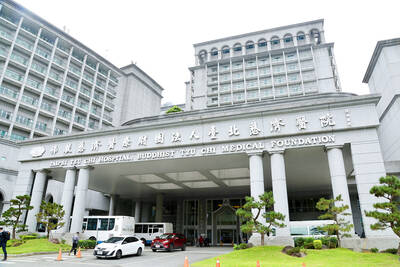
POLICE INVESTIGATING: A man said he quit his job as a nurse at Taipei Tzu Chi Hospital as he had been ‘disgusted’ by the behavior of his colleagues A man yesterday morning wrote online that he had witnessed nurses taking photographs and touching anesthetized patients inappropriately in Taipei Tzu Chi Hospital’s operating theaters. The man surnamed Huang (黃) wrote on the Professional Technology Temple bulletin board that during his six-month stint as a nurse at the hospital, he had seen nurses taking pictures of patients, including of their private parts, after they were anesthetized. Some nurses had also touched patients inappropriately and children were among those photographed, he said. Huang said this “disgusted” him “so much” that “he felt the need to reveal these unethical acts in the operating theater
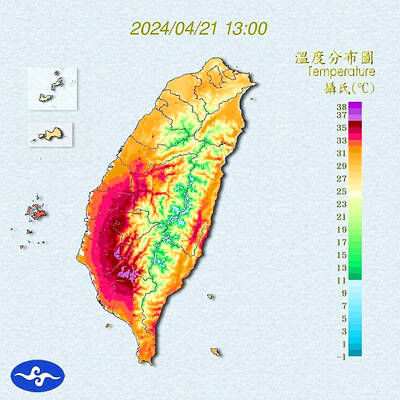
Heat advisories were in effect for nine administrative regions yesterday afternoon as warm southwesterly winds pushed temperatures above 38°C in parts of southern Taiwan, the Central Weather Administration (CWA) said. As of 3:30pm yesterday, Tainan’s Yujing District (玉井) had recorded the day’s highest temperature of 39.7°C, though the measurement will not be included in Taiwan’s official heat records since Yujing is an automatic rather than manually operated weather station, the CWA said. Highs recorded in other areas were 38.7°C in Kaohsiung’s Neimen District (內門), 38.2°C in Chiayi City and 38.1°C in Pingtung’s Sandimen Township (三地門), CWA data showed. The spell of scorching


 RSS
RSS