


The outcome of the investigation into Chinese Nationalist Party (KMT) Chairman Ma Ying-jeou's (
Observers, however, said that the damage caused by the investigation on Ma's reputation has been contained, and Ma would still be the pan-blue alliance's best bet for the presidential election next year even if he were indicted.
"The KMT has turned the scandal from a judicial investigation into a case of political oppression by spreading rumors that Ma might not seek the presidency, thus creating a sense of crisis among his supporters," said Ku Chung-hwa (顧忠華), a political analyst and sociology professor at National Chengchi University.
Although the scandal seemed to have seriously dented Ma's image and popularity at first, rumors that Ma may quit politics if indicted have turned the former mayor into a victim of political oppression by the Democratic Progressive Party (DPP) in the eyes of his supporters, Ku said.
This succeeded in consolidating grassroots support for Ma from pan-blue loyalists who were afraid that Ma's exit could diminish the KMT's chances of regaining power next year, Ku said.
The investigation into Ma's alleged misuse of his allowance began when DPP Legislator Hsieh Hsin-ni (謝欣霓) filed a lawsuit with the Black Gold Investigation Center last August, accusing Ma of embezzling half of his special monthly mayoral allowance or NT$170,000.
Ma, who was still serving as Taipei mayor then, argued that he had used the fund in accordance with the law, which grants more than 6,500 local government chiefs a discretionary budget, half of which can be reimbursed for public expenditures even without providing supporting receipts.
But as the probe into Ma's use of his special allowance nears completion and expectations mount that he may be indicted before the Lunar New Year holidays, Ma has stepped up his appeals to the public to protest his innocence. He even visited the Black Gold Investigation Center on Wednesday to explain that he had acted within the law when he wired half of his mayoral allowance to his personal bank account.
Ma has also pledged to obey the KMT's black gold exclusion clause and resign as party chairman if indicted.
"Hopefully, the judicial system will prove my innocence. But the KMT's regulations require that I resign if indicted ... Regulations are important," Ma said during a recent meeting with party members in Hsinchu.
Some KMT lawmakers have proposed relaxing party regulations to allow the chairman to run in the election even if he were indicted, but Ma's aides said that no action should be taken until the outcome of the investigation was announced.
The party's original clause called for suspension of party membership if a person was convicted of a crime. But to improve the party's image, the clause was changed under Ma's chairmanship to cover indictments.
As pan-blue supporters continue to view Ma as the best presidential contender and surveys have shown only a slight drop in his support rate since the investigation started, changing the KMT's regulation on membership is merely a technical issue and will not hinder Ma's potential presidential bid, said Shih Cheng-feng (施正鋒), a public administration professor at Tamkang University.
"I don't think Ma will give up pursuing the presidency ... What's lying in the way is not some regulation, but the high standard he has set for himself. It's unnecessary to make a pledge to step down if indicted in the first place," Shih said.
Wang Yeh-lih (王業立), a political scientist at Tunghai University, agreed that the KMT chairman would continue to run in the election even if indicted, and said it might not be a disadvantage for Ma to seek the presidency as an independent candidate.
Another option, proposed by the People First Party (PFP), would be to elect Ma through a KMT-PFP coalition, allowing him to represent the pan-blue camp if he resigned as KMT chairman.
While many pan-blue supporters regard Ma as the best candidate, it is imperative that he work on integrating different factions in the party to avoid a split, Shih said, adding that Legislative Speaker Wang Jin-pyng (
"The KMT could face a split if the party failed to negotiate and elect only one pair of candidates," Shih said.
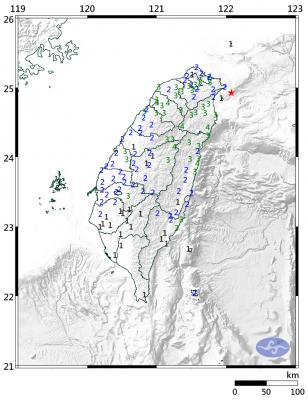
A magnitude 6.1 earthquake struck off the coast of Yilan County at 8:39pm tonight, the Central Weather Administration (CWA) said, with no immediate reports of damage or injuries. The epicenter was 38.7km east-northeast of Yilan County Hall at a focal depth of 98.3km, the CWA’s Seismological Center said. The quake’s maximum intensity, which gauges the actual physical effect of a seismic event, was a level 4 on Taiwan’s 7-tier intensity scale, the center said. That intensity level was recorded in Yilan County’s Nanao Township (南澳), Hsinchu County’s Guansi Township (關西), Nantou County’s Hehuanshan (合歡山) and Hualien County’s Yanliao (鹽寮). An intensity of 3 was
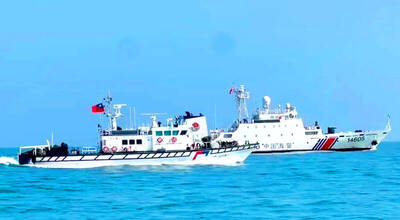
Instead of focusing solely on the threat of a full-scale military invasion, the US and its allies must prepare for a potential Chinese “quarantine” of Taiwan enforced through customs inspections, Stanford University Hoover fellow Eyck Freymann said in a Foreign Affairs article published on Wednesday. China could use various “gray zone” tactics in “reconfiguring the regional and ultimately the global economic order without a war,” said Freymann, who is also a nonresident research fellow at the US Naval War College. China might seize control of Taiwan’s links to the outside world by requiring all flights and ships entering or leaving Taiwan
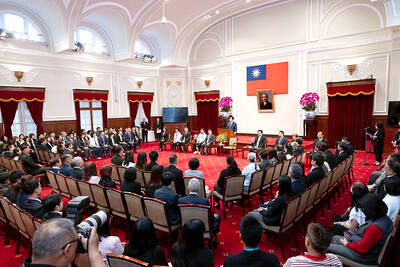
The next minimum wage hike is expected to exceed NT$30,000, President William Lai (賴清德) said yesterday during an award ceremony honoring “model workers,” including migrant workers, at the Presidential Office ahead of Workers’ Day today. Lai said he wished to thank the awardees on behalf of the nation and extend his most sincere respect for their hard work, on which Taiwan’s prosperity has been built. Lai specifically thanked 10 migrant workers selected for the award, saying that although they left their home countries to further their own goals, their efforts have benefited Taiwan as well. The nation’s industrial sector and small businesses lay
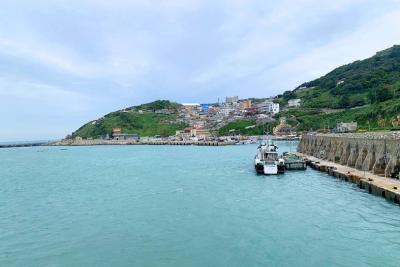
Taiwan has activated backup communications for its northernmost territory, the remote and strategically located island of Dongyin (東引), after poor weather conditions apparently shifted the wreckage of a ship onto an undersea cable causing it to break. The vulnerability of undersea communication cables linking Taiwan with its outlying islands has been a persistent cause of concern for Taipei, whose government has on several occasions blamed Chinese ships for intentionally causing damage. Dongyin, home to about 1,500 people, sits in a strategic position at the top of the Taiwan Strait and the island has a heavy military presence. It does not have an


 RSS
RSS