


Starting with the pledges made by all political parties to establish a clean political climate via legislation, the just-concluded legislative session ended last Friday with none of its aims achieved.
Not only did lawmakers fail to keep their word on passing the so-called "sunshine bills," they also failed to complete a review of this year's budget, even though the statutory four-month session was extended another three weeks from its original end date of Dec. 31.
The fruitless session also marked the first time in the nation's history that the central government budget had failed to pass the legislature before the beginning of the fiscal year.

PHOTO: LO PEI-DER, TAIPEI TIMES
In terms of quantity, the 39 bills passed in the session hit a new low.
Allen Houng (
With the help of the People First Party (PFP), the KMT, the biggest party in the 219-member legislature with 90 seats, dominated the Procedure Committee, where the weekly legislative agenda is discussed and set, he said.
Democratic Progressive Party (DPP) Legislator Cheng Yun-peng (
Among the cases in question was the president's request to review his Control Yuan nominations, the delay of which has left the government watchdog agency idle for two years.
Those bills high on the agenda were bills that the KMT believes will pave the way for its victory in the 2008 presidential election, said Houng.
"Not to mention the fact that the first item on the last day's [last Friday] agenda was an amendment to the Central Election Commission aimed at protecting its party assets," he said. "The second and third items benefiting veterans and civil servants respectively were given precedence because they take care of KMT supporters."
Given that the bills were to be reviewed in accordance with the legislative agenda set by the Procedure Committee, about 40 bills on which lawmakers had reached consensus eventually failed to pass because those three controversial bills were placed at the top of the list.
The bills included the central government's 2007 budget bill, a bill calling for stricter regulations on tobacco, a bill designed to establish an institution to manage labor pension funds and a bill aimed at establishing intellectual property courts.
While the KMT should take partial responsibility for the legislature's poor performance during this session, Houng said that the DPP also deserves its share of the blame.
"DPP lawmakers didn't work hard enough. The dominance of the pan-blue camp in the legislature shouldn't be used as an excuse for `legislative inaction,'" Houng said.
When the legislative session began on Sept. 19, a host of bills related to dealing with corruption involving politicians were given priority by both the pan-blue and the pan-green camps in the wake of graft scandals implicating politicians.
However, none of these so-called "sunshine bills" passed.
"I'm not satisfied," said John Wei (
Wei said the anti-Chen campaign headquarters would establish an anti-corruption association made up of social groups and lawyers to continue lobbying for the passage of the "sunshine bills" in the next legislative session.
Opposition lawmakers launched two recall motions against Chen on Oct 13 and Nov. 20, in addition to the first recall on June 27 during the last legislative session's extraordinary session.
Multiparty negotiations on the "sunshine bills" during that period, however, were held just once.
"The passage of the sunshine bills will surely impose strict discipline on lawmakers, which might explain why they have been slow in enacting this legislation," said Wei. "As an activist group, we need to make the bills an issue and bring pressure to bear on them."

A group of Taiwanese-American and Tibetan-American students at Harvard University on Saturday disrupted Chinese Ambassador to the US Xie Feng’s (謝鋒) speech at the school, accusing him of being responsible for numerous human rights violations. Four students — two Taiwanese Americans and two from Tibet — held up banners inside a conference hall where Xie was delivering a speech at the opening ceremony of the Harvard Kennedy School China Conference 2024. In a video clip provided by the Coalition of Students Resisting the CCP (Chinese Communist Party), Taiwanese-American Cosette Wu (吳亭樺) and Tibetan-American Tsering Yangchen are seen holding banners that together read:

UNAWARE: Many people sit for long hours every day and eat unhealthy foods, putting them at greater risk of developing one of the ‘three highs,’ an expert said More than 30 percent of adults aged 40 or older who underwent a government-funded health exam were unaware they had at least one of the “three highs” — high blood pressure, high blood lipids or high blood sugar, the Health Promotion Administration (HPA) said yesterday. Among adults aged 40 or older who said they did not have any of the “three highs” before taking the health exam, more than 30 percent were found to have at least one of them, Adult Preventive Health Examination Service data from 2022 showed. People with long-term medical conditions such as hypertension or diabetes usually do not
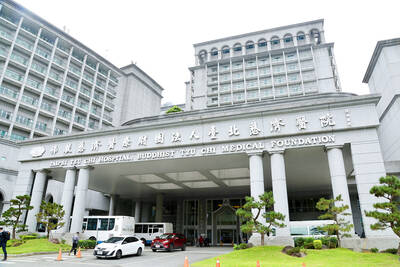
POLICE INVESTIGATING: A man said he quit his job as a nurse at Taipei Tzu Chi Hospital as he had been ‘disgusted’ by the behavior of his colleagues A man yesterday morning wrote online that he had witnessed nurses taking photographs and touching anesthetized patients inappropriately in Taipei Tzu Chi Hospital’s operating theaters. The man surnamed Huang (黃) wrote on the Professional Technology Temple bulletin board that during his six-month stint as a nurse at the hospital, he had seen nurses taking pictures of patients, including of their private parts, after they were anesthetized. Some nurses had also touched patients inappropriately and children were among those photographed, he said. Huang said this “disgusted” him “so much” that “he felt the need to reveal these unethical acts in the operating theater
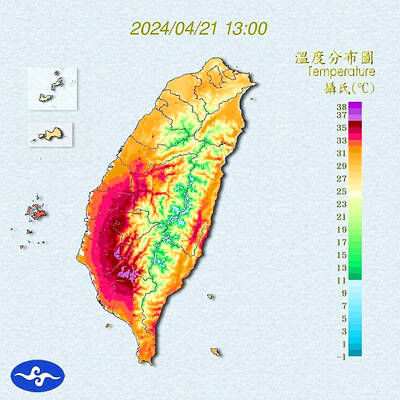
Heat advisories were in effect for nine administrative regions yesterday afternoon as warm southwesterly winds pushed temperatures above 38°C in parts of southern Taiwan, the Central Weather Administration (CWA) said. As of 3:30pm yesterday, Tainan’s Yujing District (玉井) had recorded the day’s highest temperature of 39.7°C, though the measurement will not be included in Taiwan’s official heat records since Yujing is an automatic rather than manually operated weather station, the CWA said. Highs recorded in other areas were 38.7°C in Kaohsiung’s Neimen District (內門), 38.2°C in Chiayi City and 38.1°C in Pingtung’s Sandimen Township (三地門), CWA data showed. The spell of scorching


 RSS
RSS