


News reports of two alleged ethics violations by researchers have thrown the validity of research conducted in Taiwan into question.
In the first case, a young researcher at the National Chung Hsing University whose dissertation was published in the journal Cell was accused of altering the images he used to demonstrate the results of his research.
Another incident occurred at National Taiwan University (NTU) Hospital, when a young physician's research paper was rejected by the review board for the journal Cancer for alleged plagiarism.
Both institutions have embarked on efforts to control the damage done by the incidents.
While Chung Hsing asked the researcher to return the funds that had been allocated for his research, the ethics committee of NTU hospital passed a resolution to suspend promotions for the physician for five years.
Reports of the two incidents in both domestic and international media outlets have forced prominent scientists to speak up.
Wong Chi-huey (
"Manipulating and fabricating research statistics are considered malicious ethical violations," Wong said. "Not only will the researchers lose their credibility, they also risk misleading others."
Wong said that the National Science Council had ordered the Chung Hsing researcher to perform his experiments again.
If the results of the second round of experiments were consistent with what the researcher demonstrated in the allegedly doctored photos, the finding could be academically significant but ethically flawed, he said.
But if the repeated experiments failed to corroborate the findings demonstrated in the photos, then the researcher deserves to be punished for fabricating his research results, he said.
Wong said that while the NTU researcher's plagiarized descriptions of experiments had little effect on his findings, his research should still be considered flawed.
Wong further commented that a fierce scholarly competition among researchers and the lack of proper training in academic ethics are two factors that led to the violations.
Some, on the other hand, have argued that researchers are tempted to tweak their findings for other reasons.
An anatomy professor in one of the nation's most prestigious medical institutions who spoke on the condition of anonymity said in an interview with the Taipei Times that the academic world's "publish or perish" mentality may have forced the researchers to take their chances with manipulating the results of their work.
"Both professors and graduate students are under tremendous pressure to have their research published in scholarly journals on a regular basis," he said.
"Graduate students probably cannot graduate without delivering a significant result; for college professors, it will affect whether they can secure tenure, and worse yet, whether they can hold onto their jobs," he said.
His institution, the anatomy professor said, evaluates a teacher's performance every two years.
Each teacher is judged based on the number of research articles he or she has had published and on whether the research is considered significant, he said.
If a teacher has been rated in the bottom 10 percent for two consecutive years, the review board would not recommend the school hire him for the next school year, he said.
"And even if you finally become a professor and secure tenure, you are still bound by this two-year evaluation," he said.
The competition to secure funding may also cause researchers to fabricate results.
The National Science Council, which is responsible for allocating research funds, has established a formula to decide which research should receive government funding.
The formula takes into account the length of a research article, its relative impact and whether the researcher is the main author or merely a coauthor.
Jessica Cheng (
Most of her time is now spent in teaching classes and preparing for classes, she said, which leaves very little time to perform quality research.
Both Cheng and the anatomy professor said that they were required to take an academic ethics course when they began work on their dissertations in the US.
The nation's universities should establish such courses to prevent future ethics violations, they said.
"The two incidents show that they [the two researchers accused of violations] have not learned the dos and don'ts of research," the anatomy professor said.
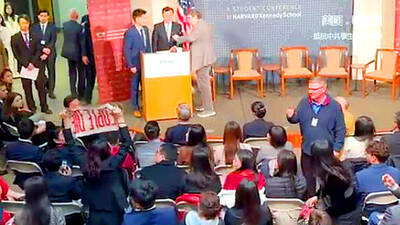
A group of Taiwanese-American and Tibetan-American students at Harvard University on Saturday disrupted Chinese Ambassador to the US Xie Feng’s (謝鋒) speech at the school, accusing him of being responsible for numerous human rights violations. Four students — two Taiwanese Americans and two from Tibet — held up banners inside a conference hall where Xie was delivering a speech at the opening ceremony of the Harvard Kennedy School China Conference 2024. In a video clip provided by the Coalition of Students Resisting the CCP (Chinese Communist Party), Taiwanese-American Cosette Wu (吳亭樺) and Tibetan-American Tsering Yangchen are seen holding banners that together read:

UNAWARE: Many people sit for long hours every day and eat unhealthy foods, putting them at greater risk of developing one of the ‘three highs,’ an expert said More than 30 percent of adults aged 40 or older who underwent a government-funded health exam were unaware they had at least one of the “three highs” — high blood pressure, high blood lipids or high blood sugar, the Health Promotion Administration (HPA) said yesterday. Among adults aged 40 or older who said they did not have any of the “three highs” before taking the health exam, more than 30 percent were found to have at least one of them, Adult Preventive Health Examination Service data from 2022 showed. People with long-term medical conditions such as hypertension or diabetes usually do not
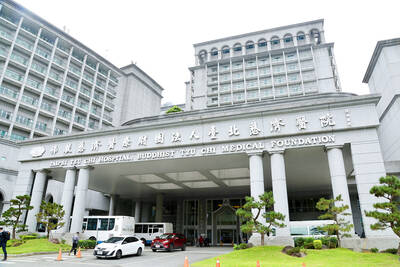
POLICE INVESTIGATING: A man said he quit his job as a nurse at Taipei Tzu Chi Hospital as he had been ‘disgusted’ by the behavior of his colleagues A man yesterday morning wrote online that he had witnessed nurses taking photographs and touching anesthetized patients inappropriately in Taipei Tzu Chi Hospital’s operating theaters. The man surnamed Huang (黃) wrote on the Professional Technology Temple bulletin board that during his six-month stint as a nurse at the hospital, he had seen nurses taking pictures of patients, including of their private parts, after they were anesthetized. Some nurses had also touched patients inappropriately and children were among those photographed, he said. Huang said this “disgusted” him “so much” that “he felt the need to reveal these unethical acts in the operating theater
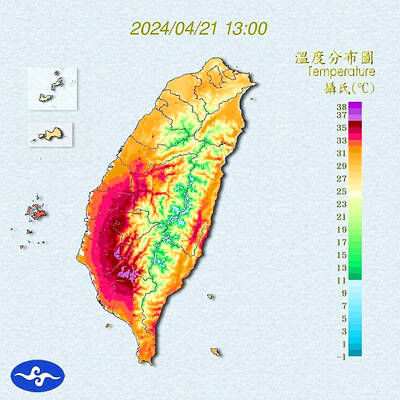
Heat advisories were in effect for nine administrative regions yesterday afternoon as warm southwesterly winds pushed temperatures above 38°C in parts of southern Taiwan, the Central Weather Administration (CWA) said. As of 3:30pm yesterday, Tainan’s Yujing District (玉井) had recorded the day’s highest temperature of 39.7°C, though the measurement will not be included in Taiwan’s official heat records since Yujing is an automatic rather than manually operated weather station, the CWA said. Highs recorded in other areas were 38.7°C in Kaohsiung’s Neimen District (內門), 38.2°C in Chiayi City and 38.1°C in Pingtung’s Sandimen Township (三地門), CWA data showed. The spell of scorching


 RSS
RSS