


The Ministry of Transportation and Communications (MOTC) said yesterday that abnormalities detected in switch trips during inspections of the high speed rail tracks a week ago occurred as a result of human error and faulty equipment.
"And since the incident did not happen on the main railway track, it is not recognized as an accident," said MOTC vice minister Ho Nuan-hsuen (
Ho said the required two-week test runs have been conducted as planned and are scheduled to be completed by Wednesday.
Regarding the 33 major defects brought up by the high speed rail's inspection committee, Ho said 24 of them have been corrected.
Ho said the Taiwan High Speed Rail Corp has yet to submit a report detailing a one-month accident-free record, a report on the stability of the railway tracks and the corporation's ticketing plan.
These reports must be turned in by next week. A meeting will be held on Sunday next week to decide whether or not the high speed rail can be allowed to operate.
While Ho said earlier this month that the ministry will adopt the definitions listed in the Railway Law (
Even though inspectors conditionally approved the launch of the high speed rail last week, the ministry has been holding periodic meetings with the company to make sure it will meet requirements and launch on schedule.
Samuel Lin (林鵬良), deputy chief operations officer of THSRC's Railway Operation Division, also explained to the press yesterday the cause of incident.
He said the incident in Tsoying (
And because the train driver started operating the train without waiting for confirmation from the control center, the first bogie of the train hit and damaged the switching trips.
"The accident shows that crews need to be more familiar with standardized operating procedures," Lin said.
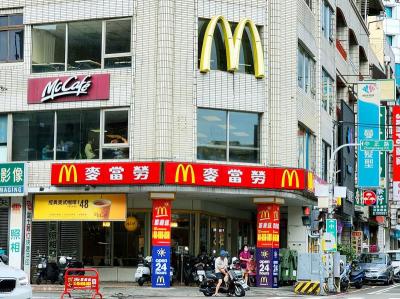
Fast food chain McDonald's is to raise prices by up to NT$5 on some products at its restaurants across Taiwan, starting on Wednesday next week, the company announced today. The prices of all extra value meals and sharing boxes are to increase by NT$5, while breakfast combos and creamy corn soup would go up by NT$3, the company said in a statement. The price of the main items of those meals, if ordered individually, would remain the same. Meanwhile, the price of a medium-sized lemon iced tea and hot cappuccino would rise by NT$3, extra dipping sauces for chicken nuggets would go up

Yangmingshan National Park’s Qingtiangang (擎天崗) nature area has gone viral after a park livestream camera observed a couple in the throes of intimate congress, which was broadcast live on YouTube, drawing large late-night crowds and sparking a backlash over noise, bright lights and disruption to wildlife habitat. The area’s livestream footage appeared to show a couple engaging in sexual activity on a picnic table in the park on Friday last week, with the uncensored footage streamed publicly online. The footage quickly spread across social media, prompting a tide of visitors to travel to the site to “check in” and recreate the
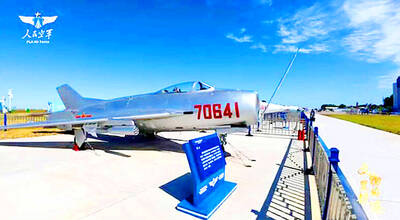
GROUNDED: A KMT lawmaker proposed eliminating drone development programs and freezing funding for counterdrone systems, despite China’s adoption of the technology China has deployed attack drones at air bases near the Taiwan Strait in a strategy aimed at overwhelming Taiwan’s air defense systems through saturation attacks, the Mainland Affairs Council (MAC) said. The council’s latest quarterly report on China said that satellite imagery and open-source intelligence indicate that the Chinese People’s Liberation Army (PLA) had converted retired J-6 fighter jets into J-6W drones, which the PLA has stationed at six air bases near Taiwan, five in China’s Fujian Province and one in Guangdong Province. The report cited J. Michael Dahm, a senior fellow at the US-based Mitchell Institute, as saying that China has

Carrefour Taiwan is to begin using a new name from the start of July, but it cannot divulge the name until then, the chairman of the supermarket chain's parent company said today. President Chain Store Co chairman Lo Chih-hsien (羅智先) was asked by reporters after a shareholders' meeting to confirm whether the company has settled on a new name for the supermarket brand. In March, the government-registered name of two Carrefour Taiwan branches was quietly changed to "Le Chia Kang" (樂家康) in Chinese, raising speculation that has been selected as the name. Lo said that because of local regulations and contractual obligations, the


 RSS
RSS