


The controversy over President Chen Shui-bian's (陳水扁) "state affairs fund" has sparked a heated debate over whether he would do the country a favor by stepping down.
While the Democratic Progressive Party (DPP) has resolved to wait until the judicial inquiry into the matter is complete, several pro-independence heavyweights and DPP members have called for Chen's resignation following the indictment of first lady Wu Shu-jen (吳淑珍).
The former Presidential Office secretary-general, Chen Shih-meng (陳師孟), wrote a letter to the Liberty Times (the Taipei Times' sister newspaper) yesterday urging President Chen to resign temporarily at the beginning of next year so that he could face the judicial inquiry as a civilian. During President Chen's absence, he said that Vice President Annette Lu (呂秀蓮) should take power in accordance with the Constitution and President Chen must resume office if he is proven innocent.
Former Academia Sinica president Lee Yuan-tseh (李遠哲) raised eyebrows on Thursday when he issued an open letter to the president asking him to consider resigning for the sake of the nation's stability.
Former presidential policy adviser Kao Chih-ming (高志明) proposed in this week's Taiwan News magazine that President Chen take the initiative to step down even though he believes that the president and his wife are innocent.
Former premier and the DPP's candidate for Taipei mayor Frank Hsieh (謝長廷) said that "stepping down is not the worst case scenario" and that it might be the best way to minimize the social cost.
DPP Legislator Cheng Yun-peng (鄭運鵬) has said that he believed President Chen should take a leave of absence and focus on preparing for the trial, while DPP Legislator Lin Tai-hua (林岱樺) has proposed that the president's rights as a party member be suspended.
The "Generation Forum," a group of young party members established by former director of the DPP's Information and Culture Department Jou Yi-cheng (周奕成), called on the DPP to allow some of its legislators to support the third recall motion instigated by the pan-blue camp so the people could have an opportunity to vote on the issue.
Former senior adviser to the president, Wu Li-pei (
"The president should be taken down by the exact letter of the law," he said. "If the president steps down because of the call of some people, what about those who do not want to see him step down?"
Wu also lashed out at the "red army" led by former DPP chairman Shih Ming-teh (
"In a democracy, street protests are staged to get a message across," Wu said. "Unless they want to start a revolution, they should let the judicial system take it from here."
Chen Yen-hui (
"He should not resign as he promised even if the first lady is convicted," he said.
Even if Chen stepped down, Chen Yen-hui said that the political situation was bound to be complicated by doubts about Lu's leadership and opposition parties continued bashing of the administration.
While some argued that the president's resignation might stir pan-green supporters' sympathy and help the DPP in upcoming elections, Chen Yen-hui said that it remained to be seen whether the controversy would have affect the elections.
"The thing about elections is that you never know what is going to happen until the last minute," he said.
Commenting on the proposal that President Chen take a leave of absence and stand trial as a civilian, Chen Yen-hui said that the idea was farfetched because according to the Constitution, the president can only leave office when his or her term expires or he or she is incapacitated.
Wang Yeh-li (王業立), a political science professor at Tunghai University disagreed. He said there was a constitutional precedent to follow.
He was referring to former president Chiang Kai-shek (
Wang said that he did not think the political situation would get any worse as opposition parties have said they would respect the Constitution and let Lu take over the presidency.
Although Lu's unpredictability might concern some, Wang said that President Chen's departure could be a window of opportunity for political reconciliation and cooperation between the ruling and opposition parties.
"Politics is an art of possibility," he said. "If the ruling and opposition parties have stability in mind, nothing is impossible."

Taiwanese can file complaints with the Tourism Administration to report travel agencies if their activities caused termination of a person’s citizenship, Mainland Affairs Council Minister Chiu Chui-cheng (邱垂正) said yesterday, after a podcaster highlighted a case in which a person’s citizenship was canceled for receiving a single-use Chinese passport to enter Russia. The council is aware of incidents in which people who signed up through Chinese travel agencies for tours of Russia were told they could obtain Russian visas and fast-track border clearance, Chiu told reporters on the sidelines of an event in Taipei. However, the travel agencies actually applied

New measures aimed at making Taiwan more attractive to foreign professionals came into effect this month, the National Development Council said yesterday. Among the changes, international students at Taiwanese universities would be able to work in Taiwan without a work permit in the two years after they graduate, explainer materials provided by the council said. In addition, foreign nationals who graduated from one of the world’s top 200 universities within the past five years can also apply for a two-year open work permit. Previously, those graduates would have needed to apply for a work permit using point-based criteria or have a Taiwanese company
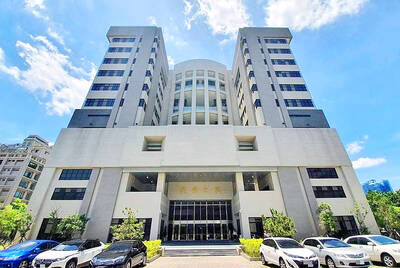
The Shilin District Prosecutors’ Office yesterday indicted two Taiwanese and issued a wanted notice for Pete Liu (劉作虎), founder of Shenzhen-based smartphone manufacturer OnePlus Technology Co (萬普拉斯科技), for allegedly contravening the Act Governing Relations Between the People of the Taiwan Area and the Mainland Area (臺灣地區與大陸地區人民關係條例) by poaching 70 engineers in Taiwan. Liu allegedly traveled to Taiwan at the end of 2014 and met with a Taiwanese man surnamed Lin (林) to discuss establishing a mobile software research and development (R&D) team in Taiwan, prosecutors said. Without approval from the government, Lin, following Liu’s instructions, recruited more than 70 software

Chinese spouse and influencer Guan Guan’s (關關) residency permit has been revoked for repeatedly posting pro-China videos that threaten national security, the National Immigration Agency confirmed today. Guan Guan has said many controversial statements in her videos posted to Douyin (抖音), including “the red flag will soon be painted all over Taiwan” and “Taiwan is an inseparable part of China,” and expressing hope for expedited reunification. The agency last year received multiple reports alleging that Guan Guan had advocated for armed reunification. After verifying the reports, the agency last month issued a notice requiring her to appear and explain her actions. Guan


 RSS
RSS