


Representative to the US David Lee (
However, in his monthly "tea party" press conference with the Taiwanese press corps in Washington, Lee did not say how such a change could occur.
He did say that from Taiwan's point of view, any policy changes should come about through a "consensus-building process between the government and the people."
Lee told the Taipei Times after the press conference that he had not heard from the US government about Chad's decision to recognize Beijing at Taipei's expense, and that he had not contacted US officials about the development.
However, in the past, the US has advised him to beware of China's intent to isolate Taiwan.
"Over the past three years, the US has told me and several of my senior colleagues that we have to be aware of the trends and the policies of the PRC [People's Republic of China] on strangulating Taiwan's international space," Lee said.
"And the US has suggested that we do some thinking about how to cope with this. I think this is a decision that is up to the Taiwan people to decide. It is not something the US can decide for us," he said.
Questioned about Minister of Foreign Affairs James Huang's (黃志芳) handling of the Chad switch, Lee came to Huang's defense, and said he did not want to try to "second-guess" the ministry's actions.
Based on his long diplomatic experience and his stint as deputy foreign minister, in which he handled similar cases, Lee said, "I can hardly imagine that if we put anyone else aside from Minister Huang [in the position], we would have different results."
China will continue to do whatever it can to take advantage of Taiwan, Lee said.
"This cutthroat competition will go on as long as the leaders on both sides of the Taiwan Strait do not change their mindset," Lee said.
"I do not see the possibility that the Beijing leadership will change their mindset on this issue. And with regard to Taipei, since we are a democratic country, if we do decide to change the policies or the mindset, we need a consensus-building process between the government and the people," he said.
Meanwhile, analysts in Taipei said yesterday that China's merciless campaign to reduce Taiwan's diplomatic allies and its gradual increase of missiles targeted at Taiwan were solid proof it was undermining the status quo across the Taiwan Strait.
In a forum held by Taiwan Thinktank on the country's external relations in the wake of Chad's decision to shift diplomatic recognition to China, Lo Chih-cheng (羅致政), a political science professor from Soochow University, said that it was an incremental change in the cross-strait status quo by China.
"What China is doing is to essentialize the `one China' principle -- that is to make Taiwan a non-sovereign country and a part of China," Lo said.
Chad's decision to establish diplomatic relations with Beijing just before Premier Su Tseng-chang (
The timing of the Chad mishap, which came immediately after the Cabinet's economic conference aimed at normalizing cross-strait economic relations, meant that Beijing does not expect Su would be able to improve ties, and doesn't want to give any credit to the Democratic Progressive Party government before the next presidential election in 2008, Lo said.
Lin Cheng-yi (
Taipei had only 22 allies when the Republic of China withdrew from the UN in 1971.
Lin urged the government to thoroughly investigate the reasons for the loss of each ally and take responsibility for any policy errors it might have made as well as avoid similar mistakes.
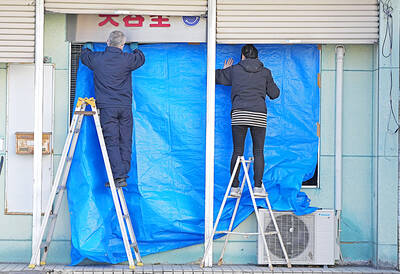
Taiwanese were praised for their composure after a video filmed by Taiwanese tourists capturing the moment a magnitude 7.5 earthquake struck Japan’s Aomori Prefecture went viral on social media. The video shows a hotel room shaking violently amid Monday’s quake, with objects falling to the ground. Two Taiwanese began filming with their mobile phones, while two others held the sides of a TV to prevent it from falling. When the shaking stopped, the pair calmly took down the TV and laid it flat on a tatami mat, the video shows. The video also captured the group talking about the safety of their companions bathing
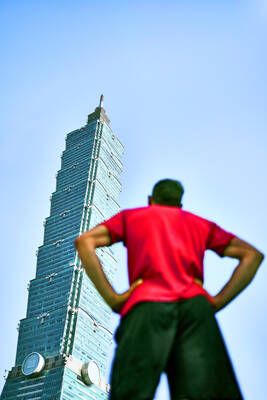
US climber Alex Honnold is to attempt to scale Taipei 101 without a rope and harness in a live Netflix special on Jan. 24, the streaming platform announced on Wednesday. Accounting for the time difference, the two-hour broadcast of Honnold’s climb, called Skyscraper Live, is to air on Jan. 23 in the US, Netflix said in a statement. Honnold, 40, was the first person ever to free solo climb the 900m El Capitan rock formation in Yosemite National Park — a feat that was recorded and later made into the 2018 documentary film Free Solo. Netflix previewed Skyscraper Live in October, after videos

Starting on Jan. 1, YouBike riders must have insurance to use the service, and a six-month trial of NT$5 coupons under certain conditions would be implemented to balance bike shortages, a joint statement from transportation departments across Taipei, New Taipei City and Taoyuan announced yesterday. The rental bike system operator said that coupons would be offered to riders to rent bikes from full stations, for riders who take out an electric-assisted bike from a full station, and for riders who return a bike to an empty station. All riders with YouBike accounts are automatically eligible for the program, and each membership account

A classified Pentagon-produced, multiyear assessment — the Overmatch brief — highlighted unreported Chinese capabilities to destroy US military assets and identified US supply chain choke points, painting a disturbing picture of waning US military might, a New York Times editorial published on Monday said. US Secretary of Defense Pete Hegseth’s comments in November last year that “we lose every time” in Pentagon-conducted war games pitting the US against China further highlighted the uncertainty about the US’ capability to intervene in the event of a Chinese invasion of Taiwan. “It shows the Pentagon’s overreliance on expensive, vulnerable weapons as adversaries field cheap, technologically


 RSS
RSS