


A protection mechanism is in the pipeline to prevent employers from unreasonably laying off foreign workers, the Council of Labor Affairs announced in an official response to Taiwan's relegation to the "Tier 2 Watch List" in the US Department of State's most recent Trafficking in Persons Report.
The report, issued in June, placed Taiwan on the Watch List for its failure to address problems concerning forced labor and sexual servitude among contract workers and brides.
"Taiwan[ese] authorities do not fully comply with the minimum standards for the elimination of trafficking; however, they are making significant efforts to do so. Taiwan is placed on [the] Tier 2 Watch List for its failure to show evidence of increasing efforts over the past year to address trafficking, despite ample resources to do so, particularly to address the serious level of forced labor and sexual servitude among legally migrating Southeast Asian contract workers and brides," the report said.
The Council of Labor Affairs issued a report last week in which it clarified the country's efforts and policies in dealing with these issues.
According to Tsai Meng-liang (
The process will have to be completed three days before the worker leaves the country, or else the employer would be prohibited from hiring new foreign workers, the council said.
The procedure can be conducted mainly through telephone interviews between the foreign worker and labor officials, Tsai said, adding that eligible employers would receive a "certificate of reasonable layoff."
Tsai told the Taipei Times that officials would also interview foreign workers in person if they "sense something wrong over the telephone."
He added that a report booth at the country's international airports would offer the workers a final opportunity to lodge complaints.
"But I am sure there is no problem in most layoffs," he said, adding that the new rule could be promulgated as soon as the end of this month.
Tsai added that a "retreat mechanism" may be implemented to "encourage outstanding agencies and disqualify inferior ones."
Agencies rated as excellent may enjoy a discounted security deposit rate, while inferior ones would be denied renewal of their brokerage permit, Tsai said.
Taiwan Labor Front chairman Sun Yu-lien (
"At least the labor council has taken the initiative," Sun said.
However, it is unlikely that inspectors would be able to discover foul play purely through telephone interviews, and face-to-face interviews may better ensure that workers' needs are met, he said.
Kao Hsiao-fan (
She told the Taipei Times that the council's response failed to address the real problem.
"We were criticized by the international community because we did not show the world that we are sincere about protecting foreign workers from exploitation," she said.
Kao said that increasing the number of inspectors, report hotlines or labor centers was not the solution, because foreign workers might still suffer from an information gap or could be prevented from seeking help.
"The brokerage system itself should be reviewed. Is it reasonable to grant brokers more power [over the workers]?" Kao said.
She said that the Executive Yuan would review a project against human trafficking proposed by the Alliance against Human Trafficking, women's rights groups and labor rights organizations by the end of the month.
The project proposal includes suggestions on foreign labor policies as well as legislation to protect migrant laborers and combat human trafficking, she said.
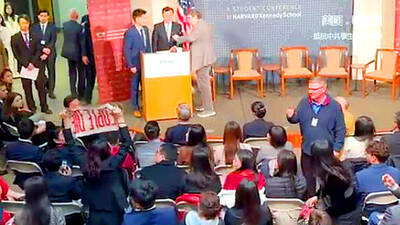
A group of Taiwanese-American and Tibetan-American students at Harvard University on Saturday disrupted Chinese Ambassador to the US Xie Feng’s (謝鋒) speech at the school, accusing him of being responsible for numerous human rights violations. Four students — two Taiwanese Americans and two from Tibet — held up banners inside a conference hall where Xie was delivering a speech at the opening ceremony of the Harvard Kennedy School China Conference 2024. In a video clip provided by the Coalition of Students Resisting the CCP (Chinese Communist Party), Taiwanese-American Cosette Wu (吳亭樺) and Tibetan-American Tsering Yangchen are seen holding banners that together read:

UNAWARE: Many people sit for long hours every day and eat unhealthy foods, putting them at greater risk of developing one of the ‘three highs,’ an expert said More than 30 percent of adults aged 40 or older who underwent a government-funded health exam were unaware they had at least one of the “three highs” — high blood pressure, high blood lipids or high blood sugar, the Health Promotion Administration (HPA) said yesterday. Among adults aged 40 or older who said they did not have any of the “three highs” before taking the health exam, more than 30 percent were found to have at least one of them, Adult Preventive Health Examination Service data from 2022 showed. People with long-term medical conditions such as hypertension or diabetes usually do not
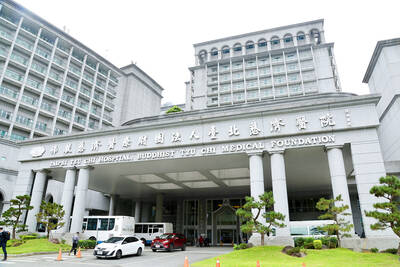
POLICE INVESTIGATING: A man said he quit his job as a nurse at Taipei Tzu Chi Hospital as he had been ‘disgusted’ by the behavior of his colleagues A man yesterday morning wrote online that he had witnessed nurses taking photographs and touching anesthetized patients inappropriately in Taipei Tzu Chi Hospital’s operating theaters. The man surnamed Huang (黃) wrote on the Professional Technology Temple bulletin board that during his six-month stint as a nurse at the hospital, he had seen nurses taking pictures of patients, including of their private parts, after they were anesthetized. Some nurses had also touched patients inappropriately and children were among those photographed, he said. Huang said this “disgusted” him “so much” that “he felt the need to reveal these unethical acts in the operating theater
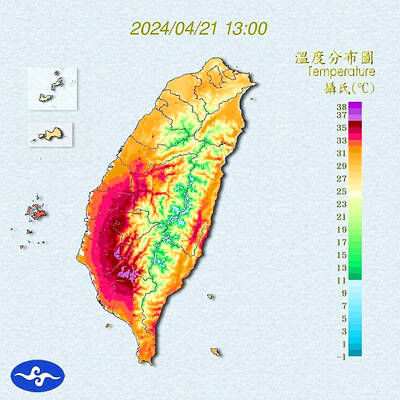
Heat advisories were in effect for nine administrative regions yesterday afternoon as warm southwesterly winds pushed temperatures above 38°C in parts of southern Taiwan, the Central Weather Administration (CWA) said. As of 3:30pm yesterday, Tainan’s Yujing District (玉井) had recorded the day’s highest temperature of 39.7°C, though the measurement will not be included in Taiwan’s official heat records since Yujing is an automatic rather than manually operated weather station, the CWA said. Highs recorded in other areas were 38.7°C in Kaohsiung’s Neimen District (內門), 38.2°C in Chiayi City and 38.1°C in Pingtung’s Sandimen Township (三地門), CWA data showed. The spell of scorching


 RSS
RSS