


Government authorities have started revising laws to permit the use of a biometric verification method for identifying Chinese citizens upon their entry to the country, the nation's top China affairs agency said.
The Mainland Affairs Council (MAC) announced on Thursday that in keeping with international developments in upgrading technology used in personal identification, the agency hoped to complete revising the law by the end of this year.
Article 10-1 of the Statute Governing Relations between Peoples of the Taiwan Area and the Mainland Area (兩岸人民關係條例) currently requires Chinese citizens wishing to enter Taiwan for family union and residency to be fingerprinted.
Yang Chia-chun (楊家駿), director of MAC's Department of Legal Affairs, said the fingerprint identification method was already outdated and should be combined with the use of facial biometric verification, a far more efficient and convenient way to verify the identity of a traveler at a customs checkpoint.
Yang said the country was about to lift the ban on allowing ordinary Chinese tourists to travel to Taiwan, but the mass arrival of the Chinese visitors could impose a burden on national security.
"We need a better security mechanism to cope with the arrival of the Chinese. Biometric verification is a method that is not only consistent with the current trend but also is a less intrusive way to obtain the bio-data of a person comparing with fingerprinting or scanning a person's iris," Yang said.
He said there are about 2,000 facial biometric characteristics in the area around eyes and the nose and such data could be retrieved from a passport-size photo and then be saved in the chip of an electronic passport.
Yang said a number of countries, including Australia, Holland, the UK, Germany, France, Hong Kong, Singapore and Pakistan, had started using the electronic passport, which contains chips with the biometric information of an individual, at their immigration control facilities.
The data shows that verifying a person's iris and fingerprints requires 3.5 seconds and 2.5 seconds respectively, while it only takes 1 second to process using facial biometric verification, Yang said.
In addition to using biometric verification for Chinese tourists, Chinese spouses and Chinese fishermen working from Taiwanese ports may still be required to deliver their fingerprint and iris records to the authorities for more detailed identification.
Currently the Ministry of Foreign Affairs is also in the process of reviewing passport regulations in order to upgrade Republic of China passports to electronic ones incorporating biometric verification technology, the official said.

A group of Taiwanese-American and Tibetan-American students at Harvard University on Saturday disrupted Chinese Ambassador to the US Xie Feng’s (謝鋒) speech at the school, accusing him of being responsible for numerous human rights violations. Four students — two Taiwanese Americans and two from Tibet — held up banners inside a conference hall where Xie was delivering a speech at the opening ceremony of the Harvard Kennedy School China Conference 2024. In a video clip provided by the Coalition of Students Resisting the CCP (Chinese Communist Party), Taiwanese-American Cosette Wu (吳亭樺) and Tibetan-American Tsering Yangchen are seen holding banners that together read:

UNAWARE: Many people sit for long hours every day and eat unhealthy foods, putting them at greater risk of developing one of the ‘three highs,’ an expert said More than 30 percent of adults aged 40 or older who underwent a government-funded health exam were unaware they had at least one of the “three highs” — high blood pressure, high blood lipids or high blood sugar, the Health Promotion Administration (HPA) said yesterday. Among adults aged 40 or older who said they did not have any of the “three highs” before taking the health exam, more than 30 percent were found to have at least one of them, Adult Preventive Health Examination Service data from 2022 showed. People with long-term medical conditions such as hypertension or diabetes usually do not
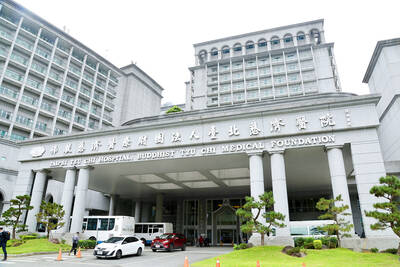
POLICE INVESTIGATING: A man said he quit his job as a nurse at Taipei Tzu Chi Hospital as he had been ‘disgusted’ by the behavior of his colleagues A man yesterday morning wrote online that he had witnessed nurses taking photographs and touching anesthetized patients inappropriately in Taipei Tzu Chi Hospital’s operating theaters. The man surnamed Huang (黃) wrote on the Professional Technology Temple bulletin board that during his six-month stint as a nurse at the hospital, he had seen nurses taking pictures of patients, including of their private parts, after they were anesthetized. Some nurses had also touched patients inappropriately and children were among those photographed, he said. Huang said this “disgusted” him “so much” that “he felt the need to reveal these unethical acts in the operating theater
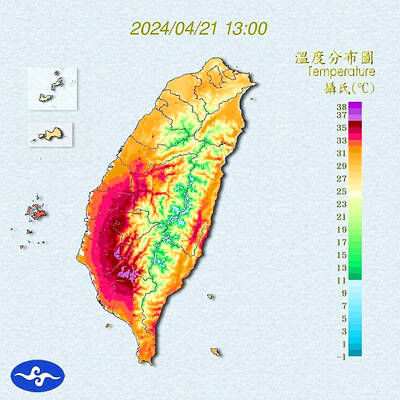
Heat advisories were in effect for nine administrative regions yesterday afternoon as warm southwesterly winds pushed temperatures above 38°C in parts of southern Taiwan, the Central Weather Administration (CWA) said. As of 3:30pm yesterday, Tainan’s Yujing District (玉井) had recorded the day’s highest temperature of 39.7°C, though the measurement will not be included in Taiwan’s official heat records since Yujing is an automatic rather than manually operated weather station, the CWA said. Highs recorded in other areas were 38.7°C in Kaohsiung’s Neimen District (內門), 38.2°C in Chiayi City and 38.1°C in Pingtung’s Sandimen Township (三地門), CWA data showed. The spell of scorching


 RSS
RSS