


The nation's first national influenza research center was established in Taipei yesterday, a date chosen because it was the day three years ago when Taiwan was removed from the WHO's list of areas that had been affected by SARS.
Center for Disease Control (CDC) Deputy Director Shih Wen-i (
Given the recent mutations of the avian flu virus, the country must fully equip itself to face a possible epidemic, Vice Minister of Health Chen Tsai-chin (陳再晉) said at the ceremony.
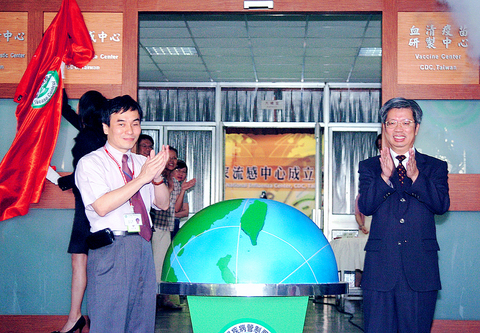
PHOTO: FANG BIN-CHAO, TAIPEI TIMES
The new center will coordinate the reporting, supervision and analysis of flu data.
Shih said the center would become a resource for medical groups at home and abroad to exchange information.
The director of the new center, Wu Ho-sheng (吳和生), said it would be able to verify suspected flu cases within 24 hours and it would be able to handle close to 5,000 cases everyday.
The center will use ferrets in its efforts to develop immunizations because the animal's flu symptoms are similar to humans, Wu said.
He said Taiwan has regularly volunteered influenza virus stems developed in the CDC's laboratory to the WHO since 1979, making the nation part of the international flu virus supervision circle.
The nation currently owns two antibodies for both type A and type B flu viruses, he said.
Wu said the CDC has worked hard to be officially recognized as a member of the WHO's network of influenza centers, but has been blocked because Taiwan is not a WHO member.
The center is the 113th national influenza research center in the world. There are 43 in Europe, 24 in Asia, 24 in North America, 13 in Africa and eight in Oceania.
also see story:
Most flu cases don't need hospital treatment

LOUD AND PROUD Taiwan might have taken a drubbing against Australia and Japan, but you might not know it from the enthusiasm and numbers of the fans Taiwan might not be expected to win the World Baseball Classic (WBC) but their fans are making their presence felt in Tokyo, with tens of thousands decked out in the team’s blue, blowing horns and singing songs. Taiwanese fans have packed out the Tokyo Dome for all three of their games so far and even threatened to drown out home team supporters when their team played Japan on Friday. They blew trumpets, chanted for their favorite players and had their own cheerleading squad who dance on a stage during the game. The team struggled to match that exuberance on the field, with
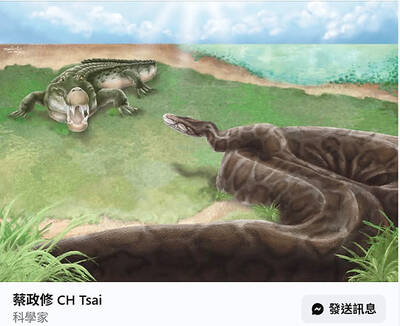
Taiwanese paleontologists have discovered fossil evidence that pythons up to 4m long inhabited Taiwan during the Pleistocene epoch, reporting their findings in the international scientific journal Historical Biology. National Taiwan University (NTU) Institute of Ecology and Evolutionary Biology associate professor Tsai Cheng-hsiu (蔡政修) led the team that discovered the largest snake fossil ever found in Taiwan. The single trunk vertebra was discovered in Tainan at the Chiting Formation, dated to between 400,000 and 800,000 years ago in the Middle Pleistocene, the paper said. The area also produced Taiwan’s first avian fossil, as well as crocodile, mammoth, saber-toothed cat and rhinoceros fossils, it said. Discoveries

Taiwanese paleontologists have discovered fossil evidence that pythons up to 4m long inhabited Taiwan during the Pleistocene epoch, reporting their findings in the international scientific journal Historical Biology. National Taiwan University (NTU) Institute of Ecology and Evolutionary Biology associate professor Tsai Cheng-hsiu (蔡政修) led the team that discovered the largest snake fossil ever found in Taiwan. A single trunk vertebra was discovered in Tainan at the Chiting Formation, dated to between 800,000 to 400,000 years ago in the Middle Pleistocene, the paper said. The area also produced Taiwan’s first avian fossil, as well as crocodile, mammoth, sabre-toothed cat and rhinoceros fossils, it said. Discoveries
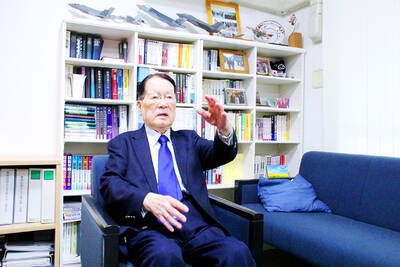
Whether Japan would help defend Taiwan in case of a cross-strait conflict would depend on the US and the extent to which Japan would be allowed to act under the US-Japan Security Treaty, former Japanese minister of defense Satoshi Morimoto said. As China has not given up on the idea of invading Taiwan by force, to what extent Japan could support US military action would hinge on Washington’s intention and its negotiation with Tokyo, Morimoto said in an interview with the Liberty Times (sister paper of the Taipei Times) yesterday. There has to be sufficient mutual recognition of how Japan could provide


 RSS
RSS