


The Cabinet yesterday officially named the newly completed Taipei-Ilan freeway the "Chiang Wei-shui [蔣渭水] Memorial Freeway" in line with a proposal by Taipei Mayor Ma Ying-jeou (馬英九).
"Chiang was Taiwan's nationalist pioneer and a person who inspired the value of democracy. He was also an Ilan native. It is a good idea to name this freeway after him," said Government Information Office Minister and Cabinet Spokesman Cheng Wen-tsang (
"Mayor Ma, who proposed this idea, said he affirmed and appreciated this decision as well," Cheng said.
Trailblazer
On Jan. 15, Ma and Ilan County Commissioner Lu Kuo-hua (呂國華) first proposed that the freeway be named the "Chiang Wei-shui Memorial Freeway" because Chiang was an Ilan native as well as a trailblazer for Taiwan's democracy movement under Japanese rule.
In the 1920s, Chiang set up the Taiwan National Council and the Taiwan People's Party, the first political parties to be established in Taiwan. He was also the first person to seek to improve the status of Taiwanese during the Japanese occupation through the establishment of a democracy movement.
Cheng said Premier Su Tseng-chang (蘇貞昌) decided to make public the official name of the freeway because it will be opened to the public tomorrow.
Cheng also described the freeway as connecting technology, history and civilization.
"[The freeway] begins from Nangang, Taipei City, and goes through Pinglin, Taipei County, and then eventually enters Ilan County. We have high-tech industries in Nangang, famous tea production in Pinglin and historical sites in Ilan," Cheng said.
Freeway workers
On behalf of the premier, Cheng expressed gratitude to the technicians, architects and workers who devoted themselves to the construction of the freeway as well as its controversial Hsuehshan Tunnel (雪山隧道), which has become the fifth-longest tunnel in the world.
"On June 16, we will be very proud to prove wrong those who said that it would be impossible for us to finish the tunnel," Cheng said.
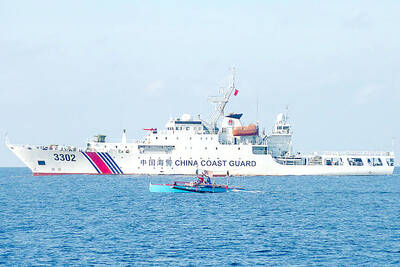
EXPANSIONIST: China deploys an average of 40 to 50 warships and coast guard vessels daily in the South China Sea, despite pledges not to militarize the region, an official said China is attempting to expand its influence across the First Island Chain and increase pressure on Japan by sending coast guard vessels into waters off of Taiwan under the pretext of maritime negotiations with Japan and the Philippines, a national security official said yesterday. China’s recent actions in the waters east of Taiwan and Japan and the Philippines’ exclusive economic zones (EEZ) are attempts to establish dominance in First Island Chain waters, said the official who declined to be named, adding that this is “expansion disguised as law enforcement.” Framing China’s actions solely as a cross-strait issue is a serious misjudgment that
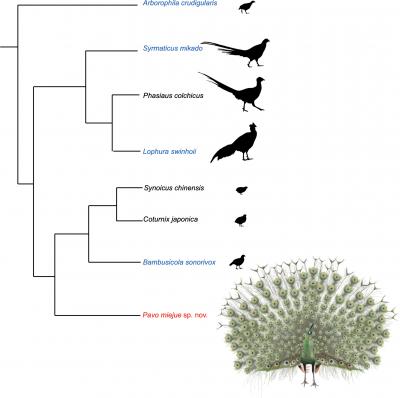
Through analyzing fossil evidence, a research team at National Taiwan University (NTU) discovered the largest endemic bird to have lived in Taiwan, naming it Pavo miejue, or extinct peafowl (滅絕孔雀). The Mikado pheasant, which is printed on the back of the NT$1,000 bank note, was previously believed to be the biggest endemic bird to Taiwan. The research team’s findings suggest that Pavo miejue lived during the Pleistocene epoch tens of thousands of years ago. It is the first endemic extinct bird species discovered and formally named in Taiwan. The study was coauthored by NTU Institute of Ecology and Evolutionary Biology professor Tsai Cheng-hsiu (蔡政修),
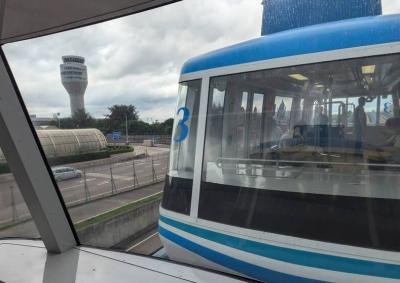
Taiwan Taoyuan International Airport is to suspend its automated Skytrain service connecting Terminal 1 and Terminal 2 starting on July 1 to facilitate connection works for the upcoming Terminal 3, the airport operator said today. Passengers and staff who need to travel between the two terminals after the suspension can instead use the Taoyuan MRT or the airport's 24-hour shuttle bus service, Taoyuan International Airport Corp said. The Taoyuan MRT Airport Line directly links the two terminals, while the shuttle buses are to operate around the clock, the company added. The Skytrain provides free transportation between the airport’s two terminals for travelers and
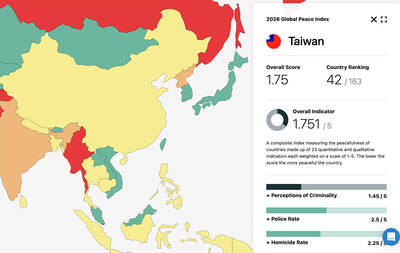
Taiwan ranked 42nd in terms of peacefulness among 163 countries, down five places from last year, according to this year’s Global Peace Index. With an overall score of 1.751, Taiwan dropped from 37th last year, the report published by the global Institute for Economics and Peace showed. The overall score measures a country’s level of peacefulness using 23 quantitative and qualitative indicators across three domains — ongoing domestic and international conflict, societal safety and security, and militarization. While Taiwan ranked 42nd worldwide, it was listed in ninth place among the 19 Asian-Pacific countries in the report, after New Zealand, Singapore, Japan, Malaysia,


 RSS
RSS