


During the Lunar New Year holiday, when others were having family reunions and stuffing themselves with food, 30-something Chen En-jie (
Chen, who has practiced yoga for several years, said that yoga not only helped her to stay in better shape, but also filled spiritual needs. She is one of about 1 million adults in Taiwan who practice yoga -- a number that indicates that the ancient set of movements, which originated in India, has within just a few years crossed over from being just a form of exercise to a trendsetting lifestyle.
According to the ROC Yoga Association, there are at least 1,000 yoga studios in Taiwan. That number does not include private or unaffiliated studios, such as the boutique-style yoga centers like True Yoga and Space Yoga that have mushroomed around the country.

PHOTO PROVIDED BY ANNY LEE
But as yoga becomes fashionable and is promoted as a commercialized product, some say that practitioners may lose sight of the true spirit behind the activity.
"Yoga should not be a luxury. It is something that can be practiced and experienced in everyday life," said Elsa Wu, a yoga teacher who owns a private yoga studio in Taipei City.
In countries where yoga has been in vogue for a while, practitioners have now become interested in the more mysterious and transcendental aspects of yoga. In the US, more than 15 million people practice yoga, and more than 75 percent of fitness centers offered yoga classes. By comparison, less than 8 percent of Taiwan's adult population practices yoga, so the country's yoga development is still considered in its infancy.
While there is nothing wrong with practitioners focusing on the physical or commercial aspects of yoga, Elsa suggested that practitioners should experience more aspects of yoga.
"I used to do yoga in order to lose weight, but the concentration on mind and body of the practice helped to keep me calm and steady," she told the Taipei Times.
Anny Lee, who just opened a yoga studio in Taipei after spending more 10 years teaching yoga and offering psychotherapy in countries including the US, Germany and Costa Rica, agreed that yoga can offer much more than just a workout.
"Yoga will help you go deeper into knowing who you are. So if you stay at the level of just the physical, or just to lose weight, you are not getting the full benefit of yoga," she said.
Yoga is a family of ancient spiritual practices that originated in India, where it remains a living tradition and is seen as a means to enlightenment. Karma, Bhakti, Jnana and Raja yoga are considered the four main categories. However, in other countries it is mainly known by the asnas (postures) of Hatha Yoga, which is now a popular form of exercise.
As a yoga practitioner for more than 16 years, Anny said that compared to yoga practice in other places, India's yoga puts more emphasis on the spiritual.
"In India, people practice yoga in ashrams, which is like a yoga monastery where people go to pursue yoga as a spiritual path," said Anny, who spent time at a yoga ashram in India.
Asked what yoga can offer beyond the physical benefits, Anny shared a story from her yoga class. Several students decided to pay for psychotherapy sessions for a female classmate, who lost her mother and her job two months ago, in order to help her deal with her grief.
"This is what yoga classes can do -- open your heart to helping others," she said.
But for people like Judy Liao (
"Practicing yoga helped me to improve my digestive system ... In my class, people practice yoga for all sorts of reasons besides losing weight. Insomniacs and women who find it hard to get pregnant also turned to yoga for help," she said.
No matter what motivates people to practice yoga, it's undoubtedly a hot global trend. Even in India, yoga centers designed specifically for foreigners have been set up to cater to a crowd of seekers making a pilgrimage to yoga's birthplace, Anny said.
The teaching methods of the "trendy" yoga studios tends to be more functional, emphasizing the curative, slimming, pain-relieving or other beneficial effects of practicing yoga. But Elsa and Anny suggested that continuous practice is needed to truly benefit from the activity, and that yoga is much more than just a sequence of movements to make the body more flexible.
"Don't just buy into the hype. Being more flexible and being stronger [physically] is not going to help you become enlightened," Anny said.

The military has spotted two Chinese warships operating in waters near Penghu County in the Taiwan Strait and sent its own naval and air forces to monitor the vessels, the Ministry of National Defense (MND) said. Beijing sends warships and warplanes into the waters and skies around Taiwan on an almost daily basis, drawing condemnation from Taipei. While the ministry offers daily updates on the locations of Chinese military aircraft, it only rarely gives details of where Chinese warships are operating, generally only when it detects aircraft carriers, as happened last week. A Chinese destroyer and a frigate entered waters to the southwest
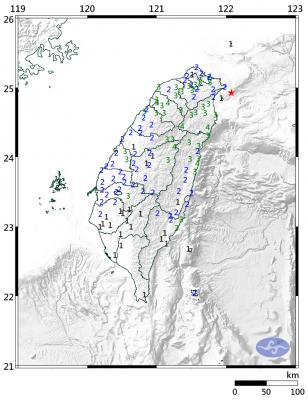
A magnitude 6.1 earthquake struck off the coast of Yilan County at 8:39pm tonight, the Central Weather Administration (CWA) said, with no immediate reports of damage or injuries. The epicenter was 38.7km east-northeast of Yilan County Hall at a focal depth of 98.3km, the CWA’s Seismological Center said. The quake’s maximum intensity, which gauges the actual physical effect of a seismic event, was a level 4 on Taiwan’s 7-tier intensity scale, the center said. That intensity level was recorded in Yilan County’s Nanao Township (南澳), Hsinchu County’s Guansi Township (關西), Nantou County’s Hehuanshan (合歡山) and Hualien County’s Yanliao (鹽寮). An intensity of 3 was

Japanese Prime Minister Sanae Takaichi’s comment last year on Tokyo’s potential reaction to a Taiwan-China conflict has forced Beijing to rewrite its invasion plans, a retired Japanese general said. Takaichi told the Diet on Nov. 7 last year that a Chinese naval blockade or military attack on Taiwan could constitute a “survival-threatening situation” for Japan, potentially allowing Tokyo to exercise its right to collective self-defense. Former Japan Ground Self-Defense Force general Kiyofumi Ogawa said in a recent speech that the remark has been interpreted as meaning Japan could intervene in the early stages of a Taiwan Strait conflict, undermining China’s previous assumptions
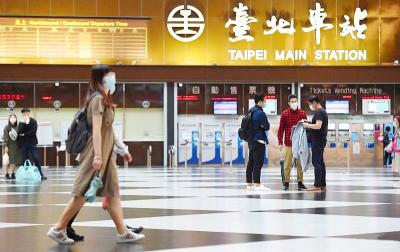
Taiwan Railways Corp (TRC) today announced that Shin Kong Mitsukoshi has been selected as the preferred bidder to operate the Taipei Railway Station shopping mall, replacing the current operator, Breeze Development Co Ltd. Among eight qualified firms that delivered presentations and were evaluated by a review committee, Shin Kong Mitsukoshi was ranked first, while Breeze was named the runner-up, the rail company said in a statement. Contract negotiations are to proceed in accordance with regulations, it said, adding that if negotiations with the top bidder fail, it could invite the second-ranked applicant to enter talks. Breeze in a statement today expressed doubts over


 RSS
RSS