


Filipino laborers and human-rights groups protested the mistreatment of foreign workers outside the Executive Yuan yesterday, loudly chanting slogans such as "Anti-Trafficking and Anti-Slave System," and demanding that attention be paid to their plight.
"In September, Premier Frank Hsieh (
"There are many such cases and when attention is drawn to them, the foreign labor workers involved are often sent home. `White terror' in factories across Taiwan is a serious matter," she added.
Chen spoke of how some workers at Golden Sun Co were repatriated after protesting to the Council of Labor Affairs (CLA) about their working conditions on May 21. There was also the case of 18 Filipino laborers, contracted to Formosa plastics, who were repatriated following a strike at the factory on July 14 and 15 in Mailiao Township (
According to Chen, laborers at Golden Sun Co often worked 16-hour shifts amounting to 200 hours a week, which contravenes labor laws specifying that overtime should not exceed 46 hours a month.
"We don't know why our salaries are so small, we work so many hours. We do so many hours overtime. We work from 8am until 12pm," said Carolyn, a Filipino worker at Golden Sun Co.
Rosemary, another Filipino worker at Kohkawa Co Ltd, spoke of how they were often woken up in the middle of the night to work by male supervisors, who were sometimes drunk.
The secretary-general of the Taiwan International Workers' Association, Ku Yu-ling (
"If this isn't human trafficking, then what is?" he said.
Chen expressed that they were protesting in front of the Executive Yuan because they hoped Premier Frank Hsieh would create an inter-departmental team to investigate and monitor human trafficking.
She said that the CLA had failed to respond to their pleas for a change in policy in the hiring of foreign labor for 6 years.
"Realistically, human trafficking involves many departments and not just the CLA," she said
Chinese Nationalist Party (KMT) Legislator Joanna Lei (
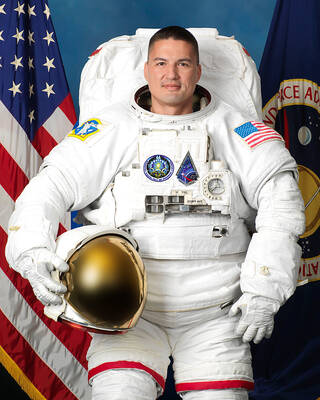
SPACE VETERAN: Kjell N. Lindgren, who helps lead NASA’s human spaceflight missions, has been on two expeditions on the ISS and has spent 311 days in space Taiwan-born US astronaut Kjell N. Lindgren is to visit Taiwan to promote technological partnerships through one of the programs organized by the US for its 250th national anniversary. Lindgren would be in Taiwan from Tuesday to Saturday next week as part of the US Bureau of Educational and Cultural Affairs’ US Speaker Program, organized to celebrate the 250th anniversary of the signing of the Declaration of Independence, the American Institute in Taiwan (AIT) said in a statement yesterday. Lindgren plans to engage with key leaders across the nation “to advance cutting-edge technological partnerships and inspire the next generation of scientists and engineers,”

UNREASONABLE SURVEILLANCE: A camera targeted on an road by a neighbor captured a man’s habitual unsignaled turn into home, netting him dozens of tickets The Taichung High Administrative Court has canceled all 45 tickets given to a man for failing to use a turn signal while driving, as it considered long-term surveillance of his privacy more problematic than the traffic violations. The man, surnamed Tseng (曾), lives in Changhua County and was reported 45 times within a month for failing to signal while driving when he turned into the alley where his residence is. The reports were filed by his neighbor, who set up security cameras that constantly monitored not only the alley but also the door and yard of Tseng’s house. The surveillance occurred from July
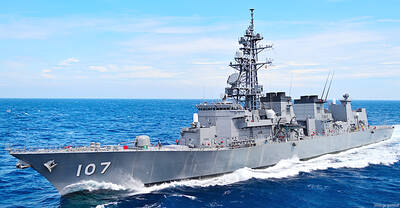
A Japan Self-Defense Forces vessel entered the Taiwan Strait yesterday, Japanese media reported. After passing through the Taiwan Strait, the Ikazuchi was to proceed to the South China Sea to take part in a joint military exercise with the US and the Philippines, the reports said. Japan Self-Defense Force vessels were first reported to have passed through the strait in September, 2024, with two further transits taking place in February and June last year, the Asahi Shimbun reported. Yesterday’s transit also marked the first time since Japanese Prime Minister Sanae Takaichi took office that a Japanese warship has been sent through the Taiwan
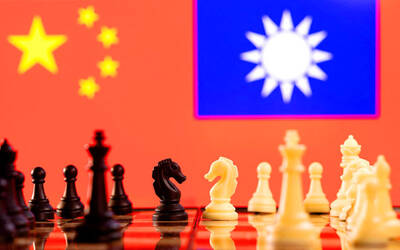
‘SAME OLD TRICK’: Even if Beijing resumes individual travel to Taiwan, it would only benefit Chinese tourism companies, the Economic Democracy Union convener said China’s 10 new “incentives” are “sugar-coated poison,” an official said yesterday, adding that Taiwanese businesses see them clearly for what they are, but that Beijing would inevitably find some local collaborators to try to drums up support. The official, speaking on condition of anonymity, made the remark ahead of a news conference the General Chamber of Commerce is to hold today. The event, titled “Industry Perspectives on China’s Recent Pro-Taiwan Policies,” is expected to include representatives from industry associations — such as those in travel, hotels, food and agriculture — to request the government cooperate with China’s new measures, people familiar with


 RSS
RSS