


Since the Taiwanese government has failed to get the NT$480 billion (US$15 billion) special arms budget approved in the legislature, some analysts have begun to warn that Taiwan could lose its status as a place of major strategic importance for the US in East Asia. Some experts are saying that the US could withdraw its security commitments to Taiwan if the people of the democratic nation decide not to take visible steps to defend their country against the possibility of a military attack from China.
"The US has been impatient at the government's inability to get the special arms bill passed," Bill Chang (張國城), the former director of the Democratic Progressive Party's department of Chinese affairs, said.
"But the US has been even more concerned about whether the boycott of the arms bill by the pan-blue parties and its voters signifies an indifferent attitude by Taiwanese toward their country's defense," he said.
"This would imply that there would be the possibility of a peaceful unification with China in the future," he said.
Chang noted that if the US concluded that unification was possible, the country would gradually withdraw its security commitments toward Taiwan and would stop selling advanced weaponry to the country, because Washington would be concerned that the technology might fall into the hands of the People's Liberation Army (PLA).
Chang said that since the pan-blue's boycott of the arms procurement bill has been through legislative procedures -- a democratic process -- it might be considered a sign that Taiwanese don't see China as a threat. The US would have no choice but to accept the decision reached by the people of a democratic county, Chang added.
He said a vicious circle might occur if the pro-China trend gets stronger in Taiwan, and that once the US gradually withdrew its security commitments toward the ocuntry, the military weakness of the nation would make even more Taiwanese accept the pro-China approach.
Chang said history showed that the US had abandoned its security commitments toward foreign countries when necessary. He said the US had abandoned former president Chiang Kai-shek's (蔣介石) Nationalist government and had withdrawn from South Vietnam.
In fact, the US closed its embassy in Taiwan on March 1, 1979, under the administration of then-president Chiang Ching-kuo (蔣經國), and established the Taiwan Relations Act in the same year.
Chang said "the US would lose few strategic interests in East Asia if Taiwan reconciled with China or even unified with the country in the future."
Chang said that "the US understands" that China would not confront Washington and Tokyo in the Pacific Ocean after it unifies with Taiwan.
"China's strategic interests are in the country's west and south, its oil supply resources and its transportation sea lanes -- not in the east," Chang said.
He said that because of its huge business interests with the US and Japan, China would have no interest in confronting those two countries in the Pacific Ocean.
Chang said that if China unified with Taiwan, it would immediately declare Taiwan a demilitarized area, and also ensure that sea-lanes through the Taiwan Strait were safe for the US, Japan and other countries.
On the other hand, Ou Si-fu (歐錫富), a researcher with the Institute for National Policy Research, who has also provided research papers on the PLA for the Mainland Affairs Council and Ministry of National Defense, said the US would not withdraw its security commitments toward Taiwan, because the US would want to use a containment policy toward China.
Ou said that the US had 80 P-3C Orion maritime patrol aircraft stationed in Japan, and Japan itself had 120 P-3Cs intensively patrolling the waters of East Asia, including the waters around Taiwan.
"That means that the US would not decrease its military deployments in East Asia even if Taiwan was unable to defend itself," Ou added.
Ou said, however, that the US does not have to rely on Taiwan to defend the so-called the "first island chain," which runs from the Aleutians through Japan, South Korea, Okinawa, Taiwan and the Philippines to Singapore, because China has geographic disadvantages in regards to the Pacific Ocean.
He said Chinese submarines must pass through one of the few narrow passages in order to enter waters off of eastern Taiwan, and that the US and Japan's advanced anti-submarine forces could easily bottle up the Chinese subs there.

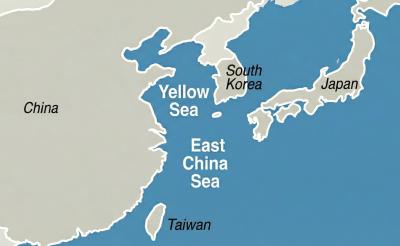
China has reserved offshore airspace in the Yellow Sea and East China Sea from March 27 to May 6, issuing alerts usually used to warn of military exercises, although no such exercises have been announced, the Wall Street Journal (WSJ) reported yesterday. Reserving such a large area for 40 days without explanation is an “unusual step,” as military exercises normally only last a few days, the paper said. These alerts, known as Notice to Air Missions (Notams), “are intended to inform pilots and aviation authorities of temporary airspace hazards or restrictions,” the article said. The airspace reserved in the alert is
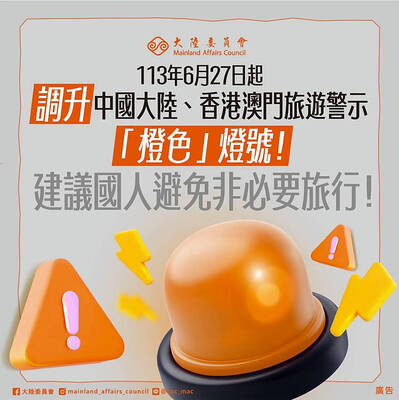
More than 6,000 Taiwanese students have participated in exchange programs in China over the past two years, despite the Mainland Affairs Council’s (MAC) “orange light” travel advisory, government records showed. The MAC’s publicly available registry showed that Taiwanese college and university students who went on exchange programs across the Strait numbered 3,592 and 2,966 people respectively. The National Immigration Agency data revealed that 2,296 and 2,551 Chinese students visited Taiwan for study in the same two years. A review of the Web sites of publicly-run universities and colleges showed that Taiwanese higher education institutions continued to recruit students for Chinese educational programs without
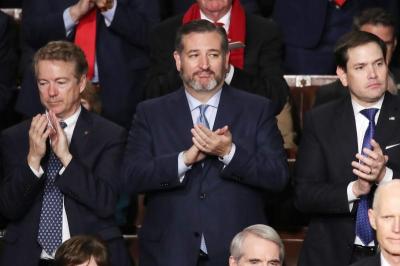
A bipartisan group of US senators has introduced a bill to enhance cooperation with Taiwan on drone development and to reduce reliance on supply chains linked to China. The proposed Blue Skies for Taiwan Act of 2026 was introduced by Republican US senators Ted Cruz and John Curtis, and Democratic US senators Jeff Merkley and Andy Kim. The legislation seeks to ease constraints on Taiwan-US cooperation in uncrewed aerial systems (UAS), including dependence on China-sourced components, limited access to capital and regulatory barriers under US export controls, a news release issued by Cruz on Wednesday said. The bill would establish a "Blue UAS
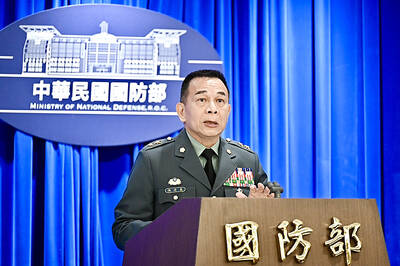
The Republic of China Army Command yesterday relieved Kinmen Defense Battalion commander after authorities indicted the officer on charges connected to using methamphetamine. The Kinmen District Prosecutors’ Office on Wednesday detained Colonel He (何) after the Coast Guard linked him to drug shipments and proceeded to charge him yesterday for using and possessing crystal meth. The man was released on a NT$50,000 bail and banned from leaving Kinmen, the office said. Army Chief of Staff Lieutenant General Chen Chien-yi (陳建義) told a news conference yesterday that He has been removed and another officer is taking over the unit as the acting commander. The military


 RSS
RSS