


Hiring ghostwriters to finish research papers, theses or dissertations has become a widespread phenomenon at Taiwanese universities, legislators said. They yesterday urged the Ministry of Education to come up with solutions to what they say is a growing problem.
"The ghostwriting of theses or dissertations has caused great damage to the quality of higher education. The [ministry] should take action to stop such a trend," said Democratic Progressive Party (DPP) Legislator Huang Wei-cher (
During a press conference held to raise awareness about ghostwriting, Huang and three other DPP legislators, including Cheng Yun-peng (鄭運鵬), Eva Hsieh (謝欣霓) and Winston Dang (陳重信), invited a graduate student and ministry officials to talk about the problem.
According to Hsieh, the ghostwriting of academic papers makes evident the lack of a thesis or dissertation review system at the nation's colleges and universities.
"Our institutes of higher learning should put more emphasis on oral exams and review of a student's academic performance," Hsieh said.
A Google.com search of college Bulletin Board System sites displayed at the press conference showed that information about thesis ghostwriting services or ghostwriter advertisements were easy to come by on the Internet.
"I have friends who ghostwrote theses or dissertations for other students or hire people to write their papers. [Ghostwriting] is becoming popular, and you can find everything about ghostwriting easily online," said the graduate student who wished to remain anonymous.
According to statistics from the ministry, the number of graduate schools has grown from 623 to 2,215 between 1994 and 2003. The quality of higher education, however, failed to keep pace with the growing number of school, the legislators said.
Responding to the criticism, Ma Hsiang-ping (
Since ghostwriting is considered cheating, students who hire someone to ghostwrite for them would be punished with expulsion, Ma said.
"In addition, we will ask colleges and universities to tighten their academic review system to prevent ghostwriting from taking place," Ma added.
According to the research done by the legislators, ghostwriting is popular among students in the liberal arts and business schools.
"Besides focusing more on oral examinations in the review process, replacing traditional dissertations with creative projects, such as performances or displays, could be an alternative to assessing a student's academic achievement," Cheng said.

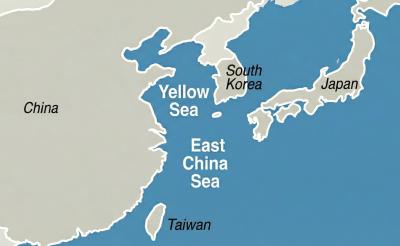
China has reserved offshore airspace in the Yellow Sea and East China Sea from March 27 to May 6, issuing alerts usually used to warn of military exercises, although no such exercises have been announced, the Wall Street Journal (WSJ) reported yesterday. Reserving such a large area for 40 days without explanation is an “unusual step,” as military exercises normally only last a few days, the paper said. These alerts, known as Notice to Air Missions (Notams), “are intended to inform pilots and aviation authorities of temporary airspace hazards or restrictions,” the article said. The airspace reserved in the alert is
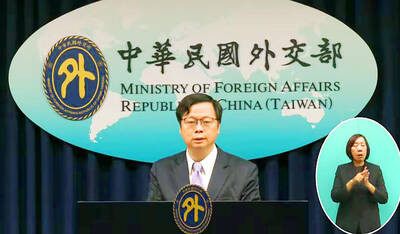
NAMING SPAT: The foreign ministry called on Denmark to propose an acceptable solution to the erroneous nationality used for Taiwanese on residence permits Taiwan has revoked some privileges for Danish diplomatic staff over a Danish permit that lists “Taiwan” as “China,” Eric Huang (黃鈞耀), head of the Ministry of Foreign Affairs’ Department of European Affairs, told a news conference in Taipei yesterday. Reporters asked Huang whether the Danish government had responded to the ministry’s request that it correct the nationality on Danish residence permits of Taiwanese, which has been listed as “China” since 2024. Taiwan’s representative office in Denmark continues to communicate with the Danish government, and the ministry has revoked some privileges previously granted to Danish representatives in Taiwan and would continue to review
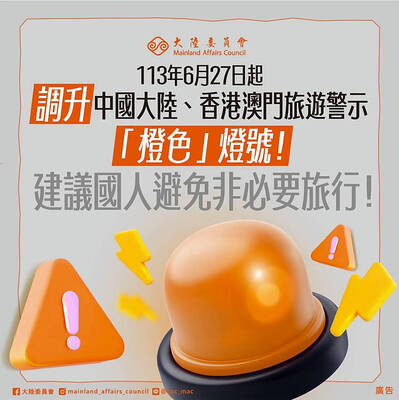
More than 6,000 Taiwanese students have participated in exchange programs in China over the past two years, despite the Mainland Affairs Council’s (MAC) “orange light” travel advisory, government records showed. The MAC’s publicly available registry showed that Taiwanese college and university students who went on exchange programs across the Strait numbered 3,592 and 2,966 people respectively. The National Immigration Agency data revealed that 2,296 and 2,551 Chinese students visited Taiwan for study in the same two years. A review of the Web sites of publicly-run universities and colleges showed that Taiwanese higher education institutions continued to recruit students for Chinese educational programs without
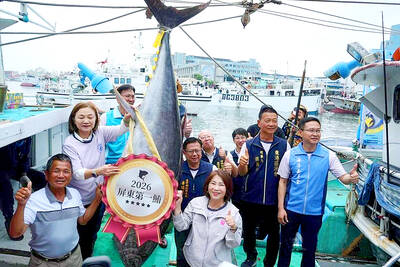
The first bluefin tuna of the season, brought to shore in Pingtung County and weighing 190kg, was yesterday auctioned for NT$10,600 (US$333.5) per kilogram, setting a record high for the local market. The auction was held at the fish market in Donggang Fishing Harbor, where the Siaoliouciou Island-registered fishing vessel Fu Yu Ching No. 2 delivered the “Pingtung First Tuna” it had caught for bidding. Bidding was intense, and the tuna was ultimately jointly purchased by a local restaurant and a local company for NT$10,600 per kilogram — NT$300 ,more than last year — for a total of NT$2.014 million. The 67-year-old skipper


 RSS
RSS