


An ambitious five-year project launched this year will incorporate Taiwan's strong information technology (IT) capability into the biomedical field, with the aim of making the nation an important center for genomics research and clinical research in Asia, Minister Without Portfolio Lin Ferng-ching (
The first details of the "Taiwan-Biomedtech Island (
Three main goals
According to Lin, the project's three major goals include constructing national health information infrastructure (NHII) in Taiwan, building the world's most competitive database of DNA samples aimed at markets in ethnic Chinese communities worldwide and strengthening clinical research for medical professionals.
"Taking advantage of Taiwan's well-developed information technology sector, NHII will become a platform for transporting information, building a standard format for the transportation of medical images and data, and secure Web safety," Lin said.
Lin said that the infrastructure would form the basis for future community-based medical services and personal health management.
In addition, Lin said that a pilot project completed last year that set up Taiwan's first national genetic database -- and involved 3,000 subjects -- will be expanded into the "Taiwan Biobank." The biobank aims to collect DNA samples from about 300,000 Taiwanese people for future medical research.
Officials said that Taiwan might model the UK Biobank database, which plans to track health records over several years, gathering information for research, with the long-term aim of improving human health.
"We have to build the genetic database in the very near future because we are competing with others in Asia, such as Singapore. However, the health records collected over the last decade through our single national insurance system are an advantage," said Chen Tzay-jinn (陳再晉), deputy minister of the Department of Health.
Taiwan's diverse ethnic mix could help make the Taiwan Biobank one of the most competitive health databases among ethnic Chinese communities worldwide, Chen said.
STAG officials said that building a similar database to help develop drugs for common diseases is a global trend, citing famous projects such as Iceland's Decode Project, a US database in Wisconsin, the Estonian Genome Project and the Singapore Tissue Network.
Clinical research
Hwang Jung-chiou (黃重球), director-general of the Department of Industrial Technology at the Ministry of Economic Affairs (MOEA), said that medical practitioners will be encouraged to team up with academics to form a flagship clinical research center in Taiwan.
Medical practitioners will also be encouraged to engage in studies on the genetics of complex diseases or translational medicine research, a field that aims to "translate" discoveries made by scientists or researchers into improvements in patient care.
"It's been worldwide trend. Most leading scientists have been working on translational medicine and Taiwan's advantage in offering better conditions for research might attract more overseas experts in the field," said Alice L. Yu (陳鈴津), associated director of the Genomics Research Center of the Academia Sinica.
In addition, officials said that hospital resources will also be linked with the medical appliance industry.

A group of Taiwanese-American and Tibetan-American students at Harvard University on Saturday disrupted Chinese Ambassador to the US Xie Feng’s (謝鋒) speech at the school, accusing him of being responsible for numerous human rights violations. Four students — two Taiwanese Americans and two from Tibet — held up banners inside a conference hall where Xie was delivering a speech at the opening ceremony of the Harvard Kennedy School China Conference 2024. In a video clip provided by the Coalition of Students Resisting the CCP (Chinese Communist Party), Taiwanese-American Cosette Wu (吳亭樺) and Tibetan-American Tsering Yangchen are seen holding banners that together read:

UNAWARE: Many people sit for long hours every day and eat unhealthy foods, putting them at greater risk of developing one of the ‘three highs,’ an expert said More than 30 percent of adults aged 40 or older who underwent a government-funded health exam were unaware they had at least one of the “three highs” — high blood pressure, high blood lipids or high blood sugar, the Health Promotion Administration (HPA) said yesterday. Among adults aged 40 or older who said they did not have any of the “three highs” before taking the health exam, more than 30 percent were found to have at least one of them, Adult Preventive Health Examination Service data from 2022 showed. People with long-term medical conditions such as hypertension or diabetes usually do not
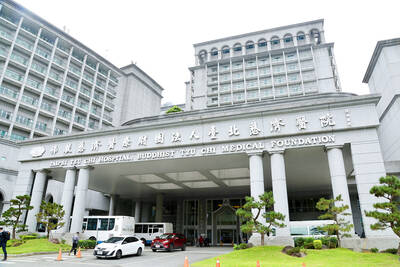
POLICE INVESTIGATING: A man said he quit his job as a nurse at Taipei Tzu Chi Hospital as he had been ‘disgusted’ by the behavior of his colleagues A man yesterday morning wrote online that he had witnessed nurses taking photographs and touching anesthetized patients inappropriately in Taipei Tzu Chi Hospital’s operating theaters. The man surnamed Huang (黃) wrote on the Professional Technology Temple bulletin board that during his six-month stint as a nurse at the hospital, he had seen nurses taking pictures of patients, including of their private parts, after they were anesthetized. Some nurses had also touched patients inappropriately and children were among those photographed, he said. Huang said this “disgusted” him “so much” that “he felt the need to reveal these unethical acts in the operating theater
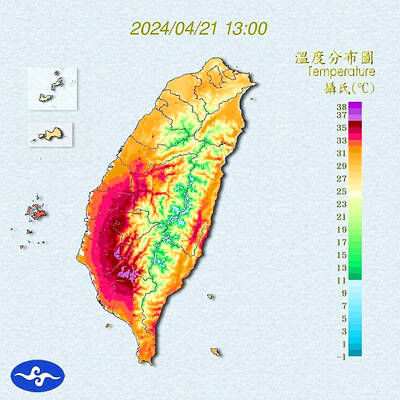
Heat advisories were in effect for nine administrative regions yesterday afternoon as warm southwesterly winds pushed temperatures above 38°C in parts of southern Taiwan, the Central Weather Administration (CWA) said. As of 3:30pm yesterday, Tainan’s Yujing District (玉井) had recorded the day’s highest temperature of 39.7°C, though the measurement will not be included in Taiwan’s official heat records since Yujing is an automatic rather than manually operated weather station, the CWA said. Highs recorded in other areas were 38.7°C in Kaohsiung’s Neimen District (內門), 38.2°C in Chiayi City and 38.1°C in Pingtung’s Sandimen Township (三地門), CWA data showed. The spell of scorching


 RSS
RSS