


Inappropriate use of the Internet, including the viewing of violent and pornographic material, is reaching epidemic proportions among the nation's teenagers, experts said yesterday.
To combat the problem an Internet content rating system and teaching teenagers to make wise choices online are essential, and would create a more ethical cyber world for the minor, they added.
"The cyber world is as informative as it is dangerous for our teenagers," said Dr Ang Peng-hwa (汪炳華), Dean of the School of Communications at Nanyang Technological University, Singapore.
"As governments around the world focus mainly on the economic aspect of the Internet, it is time for governments to set up alert systems and educate both parents and kids about the Web dangers," Ang said.
In an effort to provide a better and safer cyber world for minors, the Taiwan I-Link Community Association and the School of Communications at the National Chengchi University held an international conference entitled "Digital genesis: e-trend for youth" yesterday.
Representatives from non-government organizations (NGOs), academics and government officials shared views on the issue of Internet safety for minors.
Jeong Do-byung, chief executive of Information Communication Ethics Committee (ICEC), an NGO that provides an Internet rating system service in South Korea, said that the conflict between the freedom of speech and Internet content rating makes it hard for the Korean government to promote a more ethical cyber world for the youth.
"Putting the Internet rating system into law may violate freedom of speech. So we encourage parents to download our free content rating software, which categorizes Internet content into five levels and calls on Internet service providers to label their content," Jeong said.
"More importantly, we have initiated campaigns such as `e-clean Korea,' to increase public awareness and educate people about the importance of self-regulation, which is our ultimate goal in creating an ethical cyber world," he said.
According to a survey conducted by the Taipei Youth Activity Center last year, 70 percent of teenagers in Taipei browse the Internet on a daily basis. About 70 percent of those Internet users go online to chat or make new friends on a daily basis. Over 40 percent of the teenagers play online games daily.
A report done by Pew Internet & American Life Project last year showed that 64 percent of online teens say they know more about the Internet than their parents, and 66 percent of their parents agree.
Joseph Lin (林世華), chairman of Internet Consumers Association said that while the Government Information Office established an Internet Rating System Promotion Foundation last year to provide a safe Internet environment for kids, closing the knowledge gap between parents and their children is crucial.
"Parental supervision is important in protecting children from gaining access to harmful online information. [Parents] need to know what their kids do on the Internet," Lin said.
Chi Hui-jung (紀惠容), executive director of the Garden of Hope Foundation, suggested that the wise use of Internet is the ultimate goal, and is necessary for creating a healthier online world.
"In addition to educating our teenagers to have the self-discipline to not view inappropriate content and assistance from the government through relevant policy-making is essential," Chi said.

A group of Taiwanese-American and Tibetan-American students at Harvard University on Saturday disrupted Chinese Ambassador to the US Xie Feng’s (謝鋒) speech at the school, accusing him of being responsible for numerous human rights violations. Four students — two Taiwanese Americans and two from Tibet — held up banners inside a conference hall where Xie was delivering a speech at the opening ceremony of the Harvard Kennedy School China Conference 2024. In a video clip provided by the Coalition of Students Resisting the CCP (Chinese Communist Party), Taiwanese-American Cosette Wu (吳亭樺) and Tibetan-American Tsering Yangchen are seen holding banners that together read:

UNAWARE: Many people sit for long hours every day and eat unhealthy foods, putting them at greater risk of developing one of the ‘three highs,’ an expert said More than 30 percent of adults aged 40 or older who underwent a government-funded health exam were unaware they had at least one of the “three highs” — high blood pressure, high blood lipids or high blood sugar, the Health Promotion Administration (HPA) said yesterday. Among adults aged 40 or older who said they did not have any of the “three highs” before taking the health exam, more than 30 percent were found to have at least one of them, Adult Preventive Health Examination Service data from 2022 showed. People with long-term medical conditions such as hypertension or diabetes usually do not
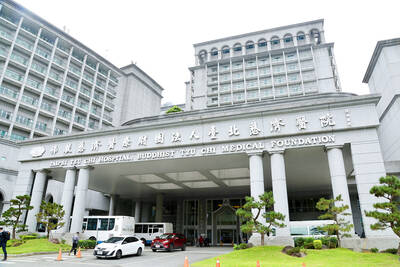
POLICE INVESTIGATING: A man said he quit his job as a nurse at Taipei Tzu Chi Hospital as he had been ‘disgusted’ by the behavior of his colleagues A man yesterday morning wrote online that he had witnessed nurses taking photographs and touching anesthetized patients inappropriately in Taipei Tzu Chi Hospital’s operating theaters. The man surnamed Huang (黃) wrote on the Professional Technology Temple bulletin board that during his six-month stint as a nurse at the hospital, he had seen nurses taking pictures of patients, including of their private parts, after they were anesthetized. Some nurses had also touched patients inappropriately and children were among those photographed, he said. Huang said this “disgusted” him “so much” that “he felt the need to reveal these unethical acts in the operating theater
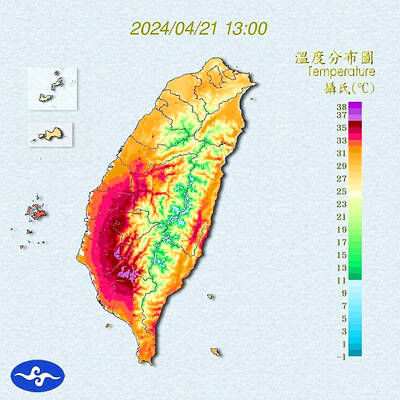
Heat advisories were in effect for nine administrative regions yesterday afternoon as warm southwesterly winds pushed temperatures above 38°C in parts of southern Taiwan, the Central Weather Administration (CWA) said. As of 3:30pm yesterday, Tainan’s Yujing District (玉井) had recorded the day’s highest temperature of 39.7°C, though the measurement will not be included in Taiwan’s official heat records since Yujing is an automatic rather than manually operated weather station, the CWA said. Highs recorded in other areas were 38.7°C in Kaohsiung’s Neimen District (內門), 38.2°C in Chiayi City and 38.1°C in Pingtung’s Sandimen Township (三地門), CWA data showed. The spell of scorching


 RSS
RSS